
India's Asian Games athletics team has been reduced from 77 to 74 members, with javelin thrower Annu Rani, long jumper Shahnavaz Khan, and sprinter Nithya Gandhe dropped due to performance and medical reasons after a confirmatory trial.

India's Asian Games athletics team has been trimmed to 74 members, with prominent athletes like javelin thrower Annu Rani, long jumper Shahnavaz Khan, and sprinter Nithya Gandhe dropped due to performance or medical reasons. The decision followed a confirmatory event, while some injured national record holders were cleared to participate.

The Indian athletics team for the upcoming Asian Games in Japan has undergone significant changes. Commonwealth Games medallist Yashvir Singh replaces an injured Neeraj Chopra, while long-distance runner Abhishek Pal has been dropped due to an alleged doping offence. Tejas Shirse is also out due to injury. The final team comprises 77 members, with six new additions. The Athletics Federation of India is aiming for 25-30 medals.

A small contingent of the 74-member Indian athletics team is still awaiting visa clearance for Japan, potentially impacting their acclimatisation camp ahead of the Asian Games in Aichi-Nagoya. AFI officials are working to resolve the issue, which stems from VFS requirements regarding application locations.

The Athletics Federation of India (AFI) has announced a 77-member squad, comprising 34 men and 43 women, to represent India at the 2026 Asian Games in Aichi-Nagoya, Japan, with steeplechaser Parul Chaudhary leading the women's contingent.
The 65th National Open Athletics Championships begins on Thursday in New Delhi, featuring hammer thrower Nirbhay Choudhary aiming to improve his national record and sprinter Manikanta Hoblidhar making a comeback from injury. Other prominent athletes like race walker Servin Sebastian, Olympians Paramjeet Singh Bisht and Suraj Panwar, and long-distance runner Abhishek Pal are also set to compete, alongside several Asian Games medallists.
Indian athletes secured five medals, including two silvers, at the ongoing Asian Games in Nagoya. Long jumper Ancy Sojan and high jumper Sarvesh Kushare each won silver, while decathlete Tejaswin Shankar, 3000m steeplechaser Parul Chaudhary, and 200m runner Harita Bhadra clinched bronze medals, contributing to India's growing tally.

Double Olympic medallist Manu Bhaker and defending shot put champion Tajinderpal Singh Toor have been named India's flag-bearers for the Asian Games opening ceremony. Both athletes have significant achievements, with Bhaker making history at the Paris Olympics and Toor winning gold in previous Asian Games editions. Their selection highlights the importance of shooting and athletics to India's medal tally.

The Indian athletics team for the upcoming Asian Games in Japan has undergone significant changes, with Commonwealth Games medallist Yashvir Singh replacing an injured Neeraj Chopra.

The Indian athletics team will undergo an acclimatisation camp at the University of Tsukuba near Tokyo before the Asian Games in Aichi-Nagoya. This follows an MoU between SAI and the University. Athletes are also returning from Czech Republic for a training stint and an event in Bhubaneswar, though Neeraj Chopra will not participate. The Athletics Federation of India has already submitted a list of over 72 athletes for the Games to the Indian Olympic Association.

Indian track and field athletes at the Asian Games are facing a growing injury crisis, with Yashas Palaksha, Jyothi Yarraji, and Praveen Chithravel all pulling out or struggling due to fitness issues.
Five Indian track and field athletes, including pole vaulter Sindhushree Ganesh and triple jumper Asha Ilango, who faced visa delays, have now received their travel documents and are set to join the Asian Games contingent in Japan. They will participate in an acclimatisation camp before the athletics competition begins.

Prime Minister Narendra Modi extended his congratulations to Indian athletes who secured medals at the Asian Games. He specifically lauded Neeru Dhanda for her historic individual trap gold, the women's trap team for their silver, and the women's 4x400m relay squad for their gold-winning performance, highlighting their precision, speed, and teamwork.

India's athletics campaign at the Asian Games is set to begin, with star shot putter Tajinderpal Singh Toor aiming for a historic third consecutive gold. Long jumper Murali Sreeshankar and long-distance runner Gulveer Singh are also looking to upgrade their previous medals. Despite Neeraj Chopra's absence, the 75-member Indian team targets 25-30 medals across various events, including steeplechase, javelin, and high jump, facing strong competition from other Asian athletes.
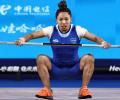
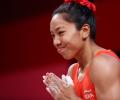
President Droupadi Murmu extended her congratulations to Indian athletes, including Mirabai Chanu, for their impressive medal-winning performances on Day 4 of the Asian Games in Aichi-Nagoya, Japan. She highlighted significant achievements such as Chanu's silver in weightlifting, ending a 28-year drought, and historic bronze medals in shooting and soft tennis.

President Droupadi Murmu extended her congratulations to Indian athletes who won medals on Day 9 of the Asian Games. She specifically lauded the women's 4x400m relay team for their historic gold, shooter Neeru Dhanda for India's first individual gold and a new Asian record, and other medalists in shooting, high jump, relays, distance running, and boxing, highlighting their achievements as a source of national pride and inspiration.

International Olympic Committee (IOC) President Kirsty Coventry and Olympic Council of Asia (OCA) President Sheikh Joaan bin Hamad Al Thani are scheduled to visit the Aichi-Nagoya Asian Games athletes' village on September 20. This visit follows the opening ceremony and will include a tour of the Garden Pier section and interaction with athletes. The Games feature a unique accommodation setup, utilising a cruise liner, temporary villas, and hotels instead of a traditional village. Various logistical and ceremonial details, including team welcome ceremonies and other official meetings, were also discussed.

The Aichi-Nagoya Asian Games are grappling with significant accommodation issues, including male and female athletes being allocated shared rooms and long waiting times for credential activation, forcing even the host Japan team to seek alternative arrangements.
The Sports Authority of India (SAI) Bengaluru has introduced Japanese cuisine into its athletes' diet plan to help them adapt to food culture ahead of the upcoming Asian Games in Aichi-Nagoya, Japan. This initiative aims to prevent performance issues caused by dietary struggles, as observed in past international events, and involves a gradual introduction of dishes and strict adherence to nutritional and safety standards.
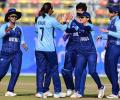
Indian athletes at the Asian Games in Nagoya are facing significant accommodation challenges, including cramped rooms on a cruise ship and long waits for check-in. The host nation's athletes are also affected, with complaints about shared rooms and general mismanagement. Organisers have opted against a traditional Athletes Village, leading to athletes travelling long distances for training, further exacerbating the logistical issues ahead of the mega-event.

India's athletics campaign at the Asian Games started strongly with the mixed 4x400m relay team securing a silver medal, their third consecutive Asian Games medal in the event. Additionally, Seema won a surprise bronze in the women's 10,000m race, marking India's first medal in athletics at the Games. Other Indian athletes also progressed to semifinals in various events.

Prime Minister Narendra Modi congratulated India's Asian Games medallists, praising their outstanding performances and specifically highlighting the women's hockey team's gold medal win after over four decades. India secured a strong position in the medals tally with a six-gold haul on the penultimate day, with Modi acknowledging individual achievements in wrestling, boxing, archery, sepaktakraw, and sailing.

India's Asian Games contingent faces accommodation issues at Costa Serena, as athletes report cramped rooms and long delays amid organisational chaos.

Indian athletes are set for a busy day at the Asian Games on September 30, with competitions across various disciplines including archery, boxing, cycling, golf, judo, sailing, shooting, squash, tennis, and wrestling. Several medal opportunities and crucial semifinal matches await the contingent.

Organisers of the Aichi-Nagoya Asian Games have defended their decision to forgo an Athletes' Village, opting instead for a mix of hotels, container huts, and a cruise ship, despite complaints about cramped conditions and shared rooms.

India's Chef de Mission for the Asian Games, Sahdev Yadav, said that he only learned after arriving in the city that organisers had removed around 30 to 35 Indian athletes from the accommodation list.

India's para sports athletes scripted history at the Glasgow Commonwealth Games as they equalled the haul of all the previous editions put together, winning seven medals, including one gold and silver on Saturday.

Kabaddi player Pawan Sehrawat has replaced shot-putter Tajinderpal Singh Toor as India's male flag-bearer for the Asian Games opening ceremony due to Toor's ceremonial kit not being available. Toor was unable to collect his kit in time to attend the event, leading to the last-minute change.
A comprehensive schedule detailing the events and timings for Indian athletes participating in various sports at the Asian Games, including badminton, boxing, canoeing, equestrian, fencing, hockey, kabaddi, rowing, soft tennis, sepaktakraw, shooting, squash, swimming, table tennis, weightlifting, and wushu.

The Nomad Games, a biannual tournament of traditional nomadic sports, has drawn over 3,000 athletes from more than 100 countries to Kyrgyzstan, including many from Western nations keen to experience ancient Central Asian traditions like horseback archery and Kok Boru.

Indian shooting star Manu Bhaker, a flagbearer at the Asian Games, has called upon her fellow athletes to concentrate on their performance and not be distracted by the organisational challenges and logistical issues marring the event's build-up. She emphasised that the opportunity is rare and should be seized with full dedication.

India's T20I skipper Shreyas Iyer expressed his excitement about participating in the Asian Games in Aichi-Nagoya, highlighting the opportunity to interact with top athletes and understand their mindset, while also focusing on the team's immediate T20I challenges.

Double Olympic medallist Manu Bhaker and defending shot put champion Tajinderpal Singh Toor have been selected as India's flag-bearers for the Asian Games opening ceremony. This decision highlights the significant contributions of shooting and athletics to India's medal tally, with a 158-strong contingent participating in the event.

Due to a delay in receiving his official kit, shot-putter Tajinderpal Singh Toor has been replaced by kabaddi player Pawan Sehrawat as India's flag-bearer for the Asian Games opening ceremony in Nagoya.
A comprehensive schedule outlines the participation of Indian athletes across various disciplines at the Asian Games on September 23, including key events in badminton, boxing, shooting, hockey, and weightlifting, with several athletes vying for qualification and medal rounds.

Seasoned kabaddi player Pawan Sehrawat has been named India's male flag-bearer for the Asian Games opening ceremony, replacing shot-putter Tajinderpal Singh Toor. Toor was unable to attend due to not receiving his ceremonial kit in time, a logistical issue stemming from the athletics team's acclimatisation camp near Tokyo.

World Athletics President Sebastian Coe has confirmed that the governing body's position on excluding Russian and Belarusian athletes from international competition remains unchanged, despite an upcoming Court of Arbitration for Sport (CAS) case. Coe emphasised that the decision is based on maintaining the integrity of competition, not politics. Russian Athletics has filed a fresh appeal with CAS challenging these sanctions, which have been in place since Russia's invasion of Ukraine in 2022.

Pakistan volleyball captain Murad Jehan expressed frustration over logistical mismanagement at the Aichi-Nagoya Asian Games after his team was taken to the wrong venue, leaving them short on warm-up time and forcing players to change on the bus.
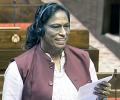
Indian Olympic Association president P T Usha has voiced strong objections to the Aichi-Nagoya Asian Games organisers' decision to forgo a conventional Athletes Village, opting instead for dispersed accommodation including a cruise ship. Usha, a former Asian Games athlete, highlighted the importance of a centralised village for athlete interaction and expressed concerns about logistical challenges and venue distances. She believes the traditional village system will endure despite this experiment and shared her excitement for India's performance and future hosting ambitions.

India's Asian Games campaign saw its medal tally rise to 17 with strong performances in athletics, wushu, kabaddi, and hockey, despite some disappointments in shooting, boxing, and gymnastics. The mixed 4x400m relay team secured silver, while Seema won bronze in 10,000m. Wushu player Roshibina Devi claimed silver, and rowers added a bronze. Kabaddi and men's hockey teams continued their unbeaten runs, advancing to later stages.
