
The Sports Ministry has approved a 768-member Indian contingent, including 503 athletes and 246 officials, for the 20th Asian Games in Aichi-Nagoya, Japan. The athletics team has the largest support staff, while cricket teams also have significant backing. India will compete in 36 disciplines.
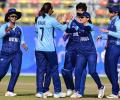
The state-run Pakistan Sports Board is only funding a fraction of the country's 248-member Asian Games contingent, with many athletes and officials relying on federations, the POA, or self-financing. The Pakistan Olympic Association secretary, Khalid Mahmood, confirmed that self-funded medal winners would be compensated and highlighted Pakistan's medal hopes across various disciplines.
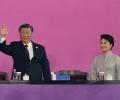
The Sports Ministry, led by Mansukh Mandaviya, has announced stringent selection criteria for the upcoming Asian Games, capping the contingent at 600 athletes. The policy prioritises medal prospects, stating that the Games are not for "exposure tours" or securing jobs. This includes a "realistic chance of winning a medal" and being in the top six continental rankings. The ministry will scrutinise recommendations from National Sports Federations, with specific cases like equestrian Anush Agarwalla and table tennis player Manika Batra highlighting the new approach.

All Indian track and field athletes selected for the Asian Games will compete in the final leg of the Indian Athletics Series on September 10. The schedule for other legs of the series has also been revised, while a group of athletes has departed for Europe to prepare for the Commonwealth Games.
Five Indian track and field athletes, including pole vaulter Sindhushree Ganesh and triple jumper Asha Ilango, who faced visa delays, have now received their travel documents and are set to join the Asian Games contingent in Japan. They will participate in an acclimatisation camp before the athletics competition begins.

Indian esports athletes are rigorously training for the Asian Games in Nagoya, aiming for medals and challenging the traditional perception of gaming as merely a leisure activity. With professional support and coaching, players are balancing academics and intense practice, hoping to elevate esports to mainstream sporting status in India.

The 20th Asian Games have officially commenced in Nagoya with a high-tech opening ceremony. India's 501-member contingent is led by flag bearers Manu Bhaker and Pawan Sehrawat, with some events already underway, including India's women's cricket team reaching the semifinals and a teqball bronze medal opportunity.
The 20th Asian Games have officially commenced in Nagoya with a high-tech Opening Ceremony. India's 503-member contingent is being led by Manu Bhaker and Pawan Sehrawat. Early events have seen India's women's cricket team reach the semifinals and a medal opportunity in debutant sport teqball, building on India's record performance at the previous Games.

India's first Archery World Cup Final male gold-medallist, Dhiraj Bommadevara, has inspired the national team ahead of the Asian Games. Dola Banerjee, India's first World Cup Final gold-medallist, believes his triumph will boost confidence and help the team surpass its previous medal haul, despite a new-look squad.
India's Asian Games athletics team has been reduced from 77 to 74 members, with javelin thrower Annu Rani, long jumper Shahnavaz Khan, and sprinter Nithya Gandhe dropped due to performance and medical reasons after a confirmatory trial.
Sports Minister Mansukh Mandaviya addressed the Indian contingent for the upcoming Asian Games, urging them to perform under pressure and continue the nation's impressive medal growth. He highlighted India's significant increase in medal tally from 2014 to 2023, attributing it to an improved sports ecosystem, and expressed confidence in the 503-member squad's potential.
The traditional flag hoisting ceremony at the Asian Games in Nagoya was delayed and then abruptly halted due to unspecified "trouble," leaving multiple countries, including India, awaiting clarity. This incident adds to growing criticism against organisers for logistical chaos, including complaints about delayed and cramped container-style lodging facilities provided to athletes to cut costs.

Multiple Asian Games medallist rifle shooter Ashi Chouksey expresses confidence in the Indian contingent's performance at the upcoming Asian Games in Aichi-Nagoya, Japan. Having secured two silvers and a bronze previously, Chouksey is focused on achieving gold and highlights the rigorous preparation, including intense training and psychological support, to ensure India's success against strong competitors like China.
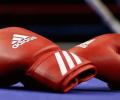
Indian boxers are undergoing intensive training at a multinational camp in Patiala, featuring international medallists, before heading to Japan for a final preparatory stint ahead of the Asian Games. The team aims to build on its strong performance at the Commonwealth Games, despite anticipating tougher competition from boxing powerhouses like Uzbekistan and Kazakhstan at the upcoming continental event.
Indian shooter Elavenil Valarivan secured two silver medals at the Aichi-Nagoya Asian Games, winning an individual silver in the women's 10m air rifle event and contributing to a team silver. Her performance marks an encouraging start for India's shooting campaign, which aims to build on the success of the previous Hangzhou Asian Games.
Indian athletes, including wushu and table tennis players, faced initial check-in difficulties upon arrival for the Asian Games in Nagoya. While some wushu players and coaches reportedly had issues with room allocation on the designated cruise ship, officials stated the problems were resolved. The Games' accommodation plan involves a mix of cruise ships, container rooms, and hotels, with some contingents already raising concerns about the quality and availability of lodging.

Seasoned kabaddi player Pawan Sehrawat has been named India's male flag-bearer for the Asian Games opening ceremony, replacing shot-putter Tajinderpal Singh Toor. Toor was unable to attend due to not receiving his ceremonial kit in time, a logistical issue stemming from the athletics team's acclimatisation camp near Tokyo.

The Sports Ministry has approved a 492-member contingent of athletes, including 265 men and 227 women, for the upcoming Asian Games in Japan. The squad features prominent athletes like Neeraj Chopra, PV Sindhu, and Lovlina Borgohain across various disciplines, with athletics having the largest representation.

India's large contingent of 501 athletes is set to compete at the 20th Asian Games in Nagoya, Japan, aiming to showcase the nation's growing sporting depth and its ambition to become a global top-10 sporting power by 2036. Despite initial accommodation challenges, the focus is on building on the momentum from the record 2022 Hangzhou Games, with strong medal hopes in shooting, athletics, cricket, badminton, and hockey.
The Olympic Council of Asia (OCA) has implemented a stringent Safeguarding Code of Conduct for athletes and officials participating in the Asian Games in Aichi-Nagoya, Japan. The code prohibits inappropriate relationships, degrading language, and harassment, with violations leading to severe penalties including suspension. It also addresses social media use and places special emphasis on protecting minor athletes.
The flag-hoisting ceremony for the Asian Games, involving India and five other contingents, was significantly delayed due to "miscommunication" between the Olympic Council of Asia (OCA) and the local organising committee (ANAGOC). The disruption, which lasted over an hour, initially caused confusion and speculation about political issues, but organisers later clarified it was a communication breakdown, adding to existing organisational challenges for the event.
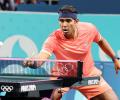
India's deputy chef-de-mission, A Sharath Kamal, has downplayed concerns regarding the unique container room and cruise ship accommodation for athletes at the upcoming Asian Games in Aichi-Nagoya. He stated that Indian athletes have been prepared for these arrangements through mock setups at SAI centres. Kamal also expressed confidence in India's table tennis team, predicting at least one medal, specifically highlighting the men's doubles and mixed doubles pairs.
Former India international and coach Soumyadeep Roy is set to join the national table tennis squad for the upcoming Asian Games as a personal coach, five years after being embroiled in a match-fixing controversy at the Tokyo Olympics. Despite the past issues and the suspension of the TTFI, Roy aims to guide his players and contribute to India's medal prospects.

BCCI Vice-President Rajiv Shukla has confirmed that Indian cricketers participating in the upcoming Asian Games in Japan will stay in designated accommodation provided by the Organising Committee, which, while comfortable, will not be five-star hotels due to scarcity in Nagoya. Both BCCI and IOA have addressed the arrangements, ensuring player comfort and suitable facilities.

Olympic silver medallist Vijay Kumar has urged the 30-member Indian shooting contingent for the Asian Games to prioritise individual medals over team events. He also highlighted the need for significant improvements in coaching, advocating for more former international medallists in the system, and stressed the importance of better grassroots talent identification, drawing comparisons with China. Kumar also commented on the void left by coach Jaspal Rana's death and questioned recent selection policies.

Despite a pre-event declaration by Hockey India president Dilip Tirkey that the teams would revert to blue uniforms, both the Indian men's and women's hockey teams played their opening Asian Games matches in saffron kits, reigniting a controversy over kit colour.

Indian hockey teams will return to their traditional blue jerseys for the Asian Games after a controversial shift to saffron kits sparked widespread criticism and internal discord within Hockey India. The decision to revert to blue was confirmed by HI president Dilip Tirkey, who had previously questioned the saffron kit's adoption without proper approval.

Japan hosted a vibrant opening ceremony for the Asian Games in Nagoya, showcasing its technological advancements and cultural heritage. The event, themed 'Harmonic Heart Beat', welcomed 11,000 athletes from 45 nations, despite prior logistical challenges.
Indian athletes at the Asian Games in Nagoya are facing significant accommodation challenges, including cramped rooms on a cruise ship and long waits for check-in. The host nation's athletes are also affected, with complaints about shared rooms and general mismanagement. Organisers have opted against a traditional Athletes Village, leading to athletes travelling long distances for training, further exacerbating the logistical issues ahead of the mega-event.
The Sports Ministry has approved a 492-member Indian contingent, comprising 265 male and 227 female athletes, for the upcoming Asian Games in Aichi-Nagoya, Japan. Athletics forms the largest group with 73 participants, including star athletes like Neeraj Chopra and Jyothi Yarraji. Other prominent sports like shooting, weightlifting, badminton, boxing, and wrestling also feature strong teams, with some adjustments made due to doping violations.
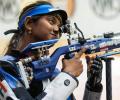
India's shooting campaign at the Aichi-Nagoya Asian Games commenced with a strong performance, securing two silver medals in the women's 10m air rifle event. Elavenil Valarivan was instrumental, winning an individual silver and contributing to the team silver alongside Sonam Uttam Maskar and Vidarsa Vinod. While Valarivan narrowly missed individual gold, her performance, along with the team's, provided an encouraging start for India.
The Indian athletics team for the upcoming Asian Games in Japan has undergone significant changes. Commonwealth Games medallist Yashvir Singh replaces an injured Neeraj Chopra, while long-distance runner Abhishek Pal has been dropped due to an alleged doping offence. Tejas Shirse is also out due to injury. The final team comprises 77 members, with six new additions. The Athletics Federation of India is aiming for 25-30 medals.
Pakistan is set to host the 14th South Asian Games in April next year across Islamabad, Lahore, and Peshawar, after a six-year delay. While the South Asia Olympic Council has approved the dates and venues, India's participation remains uncertain due to political tensions, despite its representative attending the planning meeting.

Japan inaugurated the 20th Asian Games in Nagoya with a vibrant opening ceremony that seamlessly blended advanced technology and rich cultural traditions, despite earlier organisational challenges.
Despite not winning a medal at the recently-concluded Asian Senior Fencing Championships, India's men's foil team secured direct qualification for the upcoming Asian Games, marking a significant step forward for the sport in the country. The event, hosted in India for the first time, provided valuable experience and highlighted the growing competitiveness of Indian fencers against top Asian nations.

India's Commonwealth Games medallists, fresh from a triumphant campaign in Glasgow, received a rousing welcome in New Delhi but quickly shifted their focus to the upcoming Asian Games, expressing determination to secure more medals.
Union Minister Kiren Rijiju expressed confidence that Indian fencers will secure medals at the upcoming Asian Games and qualify for the 2028 Los Angeles Olympics. He emphasized the need to popularize fencing in India, highlighting its potential to capture the youth's imagination and its significant medal opportunities at the Olympics. Rijiju also commented on the government's non-interference policy regarding sports federations' internal affairs, specifically addressing the Manika Batra selection issue.
A national high-performance shooting camp has commenced in New Delhi, bringing together 35 Indian athletes for intensive training. The camp is crucial preparation for the upcoming ISSF World Cup in Hangzhou, China, and the Asian Games in Japan, featuring top talent and international coaching expertise.
India's top 400m runners, including Vishal Thennarasu Kayalvizhi and Jay Kumar, view the upcoming Commonwealth Games in Glasgow as a more challenging competition than the Asian Games. They believe the higher standard of competition, especially from Australia and England, will serve as an ideal proving ground to improve their performance and achieve personal bests ahead of the continental showpiece.
India's top 400m runners, including Vishal Thennarasu Kayalvizhi and Jay Kumar, view the upcoming Commonwealth Games in Glasgow as a more challenging competition than the Asian Games. They believe the higher standard of competition, especially from Australia and England, will serve as an ideal proving ground to improve their performance and achieve personal bests ahead of the continental showpiece.
