
'There should have been more transparency in the process which even today we don't know.'

'What is the need for collecting so much data unless they are going to be used for some other purpose?'

Opposition leaders have questioned how caste responses will be recorded without state-wise pre-prepared lists.

The Union government has deferred census operations in Manipur, originally scheduled to begin on September 1, following persistent demands from civil society organisations for the implementation of the National Register of Citizens (NRC) to address concerns about demographic changes due to alleged illegal immigration.

'They want to sabotage the caste census and bury Muslim backward classes, Hindu backward classes, Sikh backward classes and Buddhist backward classes.'

Amidst ongoing ethnic tensions, a new political alignment in Manipur sees Meitei and Naga groups uniting to demand an update to the National Register of Citizens with a 1951 base year, a move fiercely opposed by Kuki-Zo communities who fear it will disenfranchise them.

The DMK has announced its support for the Centre's proposed Delimitation Bills, following deliberations led by party chief M K Stalin. While supporting the increase in seats, the party is firm on safeguarding Tamil Nadu's parliamentary representation, demanding a 25-year extension of the constitutional freeze based on the 1971 Census to prevent a reduction in its Lok Sabha share. The DMK also criticised its former ally, the Congress, for its "impracticable U-turn" on the delimitation issue.

A new Constitution (132nd Amendment) Bill, 2026, set for Parliament next week, proposes a 50 per cent increase in Lok Sabha seats and extends the delimitation freeze until 2051. This aims to facilitate women's reservation and addresses concerns from southern states like Tamil Nadu regarding representation, by retaining the 1971 Census as the basis for inter-state allocation while allowing intra-state redrawing based on the latest census.

The proposed expansion of the Lok Sabha and delimitation of constituencies have sparked a significant debate in India. Key concerns include the potential widening of the north-south divide due to population-based seat redistribution, the impact on women's reservation, and fears of gerrymandering. The government's proposal for a uniform 50 per cent increase in seats aims to address some of these issues, but opposition parties raise questions about fairness and the timing of using outdated census data.

There were fears in the Opposition camp of several of its MPs being absent on the day of the voting on the Bill.

In addition to caste details, the Census will, for the first time, collect personal information such as the total number of bank accounts held by individuals, along with their mobile number, Aadhaar number, voter ID number, passport number and driving licence status, according to the 40 questions notified by the Registrar General of India on Friday.

'We have never entered into a serious dialogue on how the Lok Sabha and the Rajya Sabha should function together, and a one-day parliamentary debate does not help.'

The Indian government plans to introduce a new constitutional amendment Bill in the Lok Sabha on Monday, proposing a 50 per cent increase in seats for both the Lok Sabha and state Assemblies. This move comes seven months after a previous attempt to implement women's reservation through delimitation was blocked. The Bill aims to address concerns from southern states by ensuring a uniform increase and freezing revised allocations until 2051, with the government confident of securing support from key opposition parties.

The Centre has notified 40 questions for the upcoming Census 2027, including caste and place of Covid vaccination, marking the first time caste details will be collected as part of the decadal exercise. The population enumeration will be a fully digital process, with an option for self-enumeration.
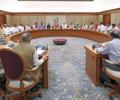
The Union Cabinet has approved a new women's reservation bill, which includes a uniform 50 per cent increase in Lok Sabha seats across all states. The bill aims to implement 33 per cent reservation for women in Parliament and state assemblies by the 2029 general election, using the 2011 Census for delimitation. It addresses concerns of southern states by ensuring no loss of representation and proposes increasing Lok Sabha strength to a maximum of 850 seats.

Leader of Opposition Mallikarjun Kharge has invited all opposition floor leaders to a meeting on Saturday to devise a joint strategy against the government's likely move to reintroduce a constitutional amendment bill involving delimitation. The meeting will include INDIA bloc parties and other opposition parties like DMK, AAP, and BJD, ahead of a special Parliament sitting from November 30 to December 3.

DMK president M K Stalin has asserted that Tamil Nadu's existing 7.18 per cent share of seats in the Lok Sabha must not be reduced under any circumstances, demanding the current proportion of parliamentary representation based on the 1971 Census remain frozen for another 25 years, despite speculation over a proposed delimitation exercise.

A sub-committee has proposed using indirect tax returns, central government salary payments, and annual enterprise surveys as the basis for estimating state-level economic output for the 2022-23 base-year series, aiming to reduce reliance on outdated indicators and fixed ratios.

Prime Minister Narendra Modi has reportedly urged his ministers to prepare for the next Parliament session before December 15, advising against foreign travel. This comes amidst opposition questions over delays in convening the Winter Session. Speculation is rife about the potential introduction of the delimitation-linked women's reservation bill, which faces challenges in securing the required two-thirds majority. The political landscape has shifted, but the government still needs opposition support for the crucial constitutional amendment.

India's Parliament has set a new record with its Monsoon session remaining unprorogued for 100 days, surpassing the previous 2008 record of 87 days. This unprecedented situation fuels speculation about a special sitting to pass the women's reservation bill and a potential increase in Lok Sabha seats through delimitation, amidst opposition demands for an all-party meeting.

Fourteen civil society organisations from Manipur have urged the Centre to update the National Register of Citizens (NRC) in the state before the completion of Census 2027. They argue this is essential to address concerns over demographic changes and alleged illegal immigration from Myanmar, which they believe has altered the state's population profile.

Samajwadi Party president Akhilesh Yadav has unveiled the party's manifesto for the 2027 Uttar Pradesh Assembly polls, promising 25 lakh government jobs, employment for over two crore youngsters, an annual pension of Rs 40,000 for elderly women, and a farm-loan waiver. The manifesto also includes free laptops for Class 12 students, restoration of the Old Pension Scheme, and various welfare measures across education, social justice, agriculture, healthcare, and industrial development.

The government is gearing up for a crucial "special session" of Parliament to secure the passage of the long-pending Constitution amendment bill, aiming to implement 33 per cent reservation for women in the Lok Sabha and state legislative assemblies.

The upcoming Winter session of Parliament, likely in early December, will prioritise the women's reservation bill. This Constitution amendment aims to increase Lok Sabha seats and reserve 33% for women by 2029. Despite government confidence, securing the two-thirds majority (361 votes) will be challenging, as the ruling NDA needs opposition support amidst heightened political tensions over electoral roll revisions. The government is also exploring a formula to address delimitation concerns from southern states.

The BJP-led NDA is exploring pathways to pass a constitutional amendment linking women's reservation to delimitation, potentially securing 319 votes with support from Trinamool rebels and Akali Dal, and up to 353 with DMK, NCP (SP), and YSR Congress backing. This comes amidst speculation of a revived legislative push and upcoming parliamentary sessions.
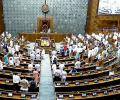
The Indian Parliament is set to reconvene on short notice from November 30, 2026, for essential government business, with strong indications that the delimitation-linked women's reservation bill will be reintroduced, leveraging a historical procedural decision to keep the Monsoon Session technically alive.

A 43-year-old man in Delhi's Dwarka has been convicted by a court for harassing a Census enumerator during her official duty, following a swift investigation and trial.

A coalition of 14 Meitei civil society organisations in Manipur has urged Governor Ajay Kumar Bhalla to implement a National Register of Citizens before the 2027 Census, arguing it is crucial for resolving the state's ongoing ethnic conflict and identifying 'illegal migrants'.
The question is not whether Parliament should have 543, 785 or 850 members. The more fundamental question is whether the people of India are getting value for the enormous public expenditure incurred in maintaining their elected representatives, asserts Sudhir Bisht.

'Once the numbers come out, they fear that the OBCs would start to demand, and articulate what they are lacking, why they are lacking and what should be done to go forward.'

Police in Thane, Maharashtra, have filed an FIR against two government employees assigned census work for alleged dereliction of duty. The employees, a clerk and a compounder, failed to report to their designated office and refused to initiate assigned tasks for the Census 2027, despite repeated contact from higher authorities.
A resident of Bengaluru has been booked for allegedly obstructing and verbally abusing female officials engaged in the National Census-2027 work. The incident occurred in Ward No 43, R T Nagar area, between April 20 and April 25. The accused refused to provide census information and verbally abused the officials. A case has been registered under relevant sections of the Bharatiya Nyaya Sanhita, and investigations are ongoing.

West Bengal Chief Minister Suvendu Adhikari announced that census operations in the state would commence on August 1 and continue until the end of February next year. He criticised the previous government for delaying the process and highlighted the importance of the census for the state.
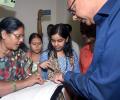
Four Census officials were assaulted in Odisha's Dhenkanal district, prompting the state government to formulate a standard operating procedure (SOP) to safeguard census officials from physical harm and heat-related risks.

Four Census officials, including two women, were allegedly assaulted in Odisha's Dhenkanal district while collecting data as part of the Census exercise.
Over 93,000 individuals in Delhi have participated in the self-enumeration exercise for Census 2027, with North East, South West, and North West Delhi districts leading in registrations. The initiative, part of a broader census effort, allows residents to submit household details online, contributing to the overall data collection process.

SBSP chief Om Prakash Rajbhar has revived the long-standing discussion about dividing Uttar Pradesh, claiming Prime Minister Narendra Modi assured him the state could be split into four parts after a caste census. Rajbhar's statement, made at a rally in Deoria, links the division to the 27% reservation issue and suggests a Rajbhar could become chief minister of a new Purvanchal state. The demand for UP's division has historical precedents, notably from former Chief Minister Mayawati.

Authorities in Delhi have implemented a QR code-based verification system for census enumerators and supervisors to combat rising cyber fraud cases involving impersonation and fake government officials during the Census 2027.

Two school teachers in Odisha, engaged in census work, have died in separate incidents allegedly due to sunstroke, raising concerns about safety during the ongoing heatwave conditions.

Rajasthan Police have issued an advisory warning citizens about potential cyber fraud attempts disguised as part of the ongoing digital census. Scammers may use various methods, including fake calls, messages, and in-person visits, to steal personal and financial information.
