
Total assets of the 699 candidates are worth about Rs 3,952 crore...
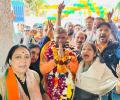
The Delhi Assembly elections saw BJP's Karnail Singh emerge as the richest winner with assets worth Rs 259 crore, Umang Bajaj at 31 as the youngest winner, Tilak Ram Gupta as the oldest contestant at 73, and AAP's Amanatullah Khan the candidate with the highest, 19, criminal cases. Several winning candidates have pending criminal cases, according to a report by the Association for Democratic Reforms.

Polling for the Delhi assembly's 70 seats will be held on Wednesday, February 5, 2025.
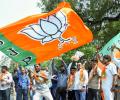
The BJP received the highest amount in large donations among national parties in the financial year 2023-24, with over Rs 2,243 crore declared from 8,358 donations, according to a report by poll rights body the Association for Democratic Reforms (ADR). The report, based on data submitted to the Election Commission, highlighted trends in political donations above Rs 20,000. The total declared donations to national parties stood at Rs 2,544.28 crore from 12,547 contributions - a sharp 199 per cent increase compared to the previous year.

With the Bharatiya Janata Party a clear winner in the Delhi assembly elections, meet the BJP aspirants for the chief minister's post.
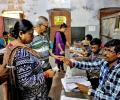
The Supreme Court of India has asked petitioners in two Public Interest Litigations (PILs) to make representations to the Election Commission of India (ECI) regarding their demand for uploading polling booth-wise voter turnout data on the ECI website. The PILs, filed by TMC MP Mahua Moitra and NGO Association for Democratic Reforms, seek a direction for the ECI to upload the data within 48 hours of the conclusion of polling in Lok Sabha and assembly elections. The ECI, represented by senior advocate Maninder Singh, expressed willingness to deliberate on the matter and suggested a meeting with the petitioners to address their concerns. The court has adjourned the hearing to the week of July 28.
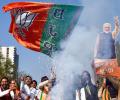
While the BJP received the highest amount, securing Rs 1,685.63 crore, the Congress received Rs 828.36 crore, and the Aam Aadmi Party (AAP) Rs 10.15 crore.
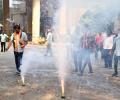
Thirty-one of the 70 candidates elected to the eighth Delhi Assembly have declared criminal cases against their names, according to poll rights body ADR. The figure is lower than the 43 MLAs in the seventh assembly who had declared criminal cases. The Association for Democratic Reforms (ADR) and Delhi Election Watch, which analysed the affidavits submitted by all 699 candidates who contested the assembly elections, said the number of winning candidates with serious criminal cases remained a concern. The analysis found that 17 newly-elected candidates were facing serious criminal cases, including those related to attempted murder and crimes against women. The analysis also highlighted the growth in assets of re-elected MLAs. The 22 candidates re-elected to the House saw their average assets rise 25 per cent from Rs 7.04 crore in 2020 to Rs 8.83 crore in 2025.
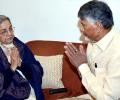
According to a report by the Association for Democratic Reforms (ADR), Andhra Pradesh Chief Minister N Chandrababu Naidu is the richest chief minister in India with assets worth over Rs 931 crore, while West Bengal's Mamata Banerjee is the poorest with just Rs 15 lakh. The average asset per chief minister is Rs 52.59 crore, and the total assets of 31 chief ministers are worth Rs 1,630 crores. The report also highlights that 13 chief ministers have declared criminal cases against themselves, with 10 of them having declared serious criminal cases.

The average age is 56, making the Lower House the oldest in India's parliamentary history and a year older than the previous Lok Sabha.
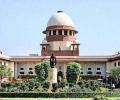
The Supreme Court of India has scheduled a hearing on February 19 for pleas challenging the appointment of the Chief Election Commissioner and Election Commissioners under the 2023 law. The court emphasized the potential consequences if any action is taken before the hearing. The pleas argue that the 2023 law, which excludes the Chief Justice of India from the selection panel, undermines the independence of the Election Commission and allows for undue influence from the executive branch. The court's earlier verdict in March 2023 called for an independent selection panel comprising the Prime Minister, Leader of the Opposition, and the Chief Justice of India to ensure the integrity of the Election Commission. The case highlights concerns about the independence of India's electoral process and the potential for political influence in the appointment of key election officials.
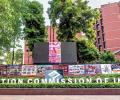
The Supreme Court will hear on February 19 pleas challenging the appointments of the Chief Election Commissioner and Election Commissioners under the 2023 law. The court will take up the matter on a priority basis, after some urgent listed matters. The government has appointed a new CEC and ECs under the new law, which excludes the Chief Justice of India from the selection panel, despite a 2023 Supreme Court verdict directing the inclusion of the CJI in the panel. The petitioners argue that the exclusion of the CJI undermines the independence of the election commission.

The Supreme Court has adjourned pleas challenging the appointments of the chief election commissioner (CEC) and election commissioners (ECs) under the 2023 law. The court indicated the matter would be listed after the Holi festival break due to a paucity of time. Petitioners, including the NGO Association for Democratic Reforms, argued for an urgent hearing, emphasizing the importance of the issue and the potential impact on democratic processes. The appointment of the new CEC and ECs under the 2023 law, which excludes the Chief Justice of India from the selection panel, has been a point of contention, with petitioners alleging it undermines the independence of the election commission.
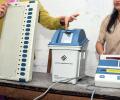
The Supreme Court of India has sought a response from the Election Commission of India (ECI) regarding pleas seeking verification of burnt memory and symbol loading units in Electronic Voting Machines (EVMs). The court directed the ECI to refrain from erasing or reloading data during the verification process and to explain the procedure adopted for verification. The bench also expressed concerns over the high cost of verification and directed the ECI to reduce the fee. The court's directive comes following its previous judgement where it allowed aggrieved candidates to seek verification of EVMs.

Polling for the 90 seats of the Haryana assembly will take place on Saturday, October 5, 2024.

An analysis of the affidavits of all the 90 winning candidates by the Association for Democratic Reforms and Haryana Election Watch show a slight rise in the number of crorepati MLAs, from 93 percent in 2019 to 96 percent this time.

The third and final phase of the three phase Jammu and Kashmir assembly elections will be held on Tuesday, October 1, 2024.
It will be court's opinion versus the legislative power to enact law, the Supreme Court on Wednesday said as it posted the pleas challenging the appointment of the chief election commissioner and election commissioners under the 2023 law on February 4.

The Supreme Court on Friday said the plea seeking a policy for verification of electronic voting machines should go before the same bench that delivered a verdict in April rejecting the demand for bringing back the old paper ballots.

The second phase of the three phase Jammu and Kashmir elections will be held on Wednesday, September 25, 2024.

The first phase of the three phase Jammu and Kashmir elections will be held on Wednesday, September 18, 2024.

Of the 904 candidates, 89.49 per cent or 809 candidates are male candidates. 10.51 per cent or 95 candidates are women candidates in the final phase.

Of the 695 candidates in the fray, 88.2 per cent or 613 candidates are male candidates.

The sixth phase of the Lok Sabha elections for 58 seats will take place on Saturday, May 25, 2024, covering 8 states.

Polling for the seventh and the final phase of the Lok Sabha election will be held on Saturday, June 1, 2024.

According to the report, there are 16 sitting MPs and MLAs who have declared cases related to rape under Indian Penal Code Section 376, which carries a minimum sentence of 10 years and can be extend to life imprisonment.

Of the 1,710 candidates analysed from a total of 1,717 nominees, 90.1 per cent or 1,547 candidates are male candidates.

Polling for the fourth phase of the Lok Sabha election will be held on Monday May 19, 2024.

China, which is building numerous villages in Tibet close to its borders with India and Bhutan, has held several celebratory events to mark its takeover of Tibet in the new border villages with a mix of border troops and the local population, the official media in Beijing reported.

The third phase of the Lok Sabha elections for 94 seats will take place on Tuesday, May 7, 2024, covering 12 states.
Accoding to data collected by the Association for Democratic Reforms, of the 695 candidates in the fray, 227 are crorepatis.

Polling for the sixth phase of the Lok Sabha election will be held on Saturday, May 25, 2024.

8.25 per cent or 134 candidates are women candidates in the first phase.

100 of the 1,198 candidates are women.

Polling for the third phase of the Lok Sabha election will be held on Tuesday, May 7, 2024.

87 seats will go to the polls across 13 states and Union Territories in the second phase of the Lok Sabha election on Friday, April 26, 2024.

29 per cent candidates have declared assets worth Rs 10 million or more in the third phase.

Madhya Pradesh and Chhattisgarh (Phase II) go to the polls on Friday, November 17, 2023.

The Bharat Rashtra Samithi has fielded 114 crorepati candidates followed by the Congress (111), the Bharatiya Janata Party (93) and 30 by the Bahujan Samaj Party.
Accoding to data collected by the Association for Democratic Reforms, of the 1,618 candidates analysed from the total 1,625 candidates in the fray, 450 are crorepatis.
 © 2026 Rediff.com - Advertise with us - Disclaimer - Privacy Policy - Sitemap - Feedback - About us - Terms of use - Grievances