
Trump's message, posted on his Truth Social platform, is a reminder of his 10-day ultimatum given to the Islamic Republic earlier to make progress toward a deal or reopen the vital shipping lane.
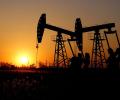
Crude oil prices experienced a sharp decline after US President Donald Trump announced a temporary halt to military strikes on Iran's energy infrastructure, easing geopolitical tensions and supply disruption fears.

Amidst escalating tensions in West Asia, India strongly condemns the recent attacks on energy infrastructure, warning of further destabilisation to the already uncertain global energy market.

"The US President's statements are within the framework of efforts to reduce energy prices and gain time to implement his military plans," the ministry stated.

Facing escalating threats from the US, Iran is mobilizing its citizens to form 'human chains' around power plants as a defensive measure against potential airstrikes, raising concerns about international law and civilian safety.

Iranian foreign ministry spokesperson Esmaeil Baghaei said that the country has held no "direct" talks with the United States as of now and added that it has received messages through some mediators regarding the US' desire for negotiations.

His remarks come after Trump warned Iran of severe consequences if it fails to reopen the strategically vital Strait of Hormuz, a key global energy transit route.
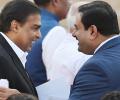
Gautam Adani, Chairman of the Adani Group, has surpassed Mukesh Ambani to become Asia's richest person, with a net worth of USD 92.6 billion, placing him 19th globally according to the Bloomberg Billionaires Index.

As the security situation continues to evolve in West Asia and the Gulf region, an Iranian military source has warned the United States against any ground aggression on Iran, calling it a red line and saying a 'surprise' would await US President Donald Trump, Tasnim News Agency reported on Saturday.
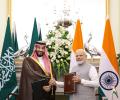
Prime Minister Narendra Modi spoke with Saudi Arabia's Crown Prince Mohammed bin Salman about the ongoing conflict in West Asia, emphasising the need to ensure freedom of navigation and secure shipping lanes.

Indian markets on Dalal Street rallied sharply as easing tensions in the US-Iran conflict and stable oil prices boosted sentiment. Track Nifty 50 and BSE Sensex performance and key global triggers.

The threat has raised concerns about possible asymmetric attacks outside the region. Iran has also stepped up attacks on energy infrastructure in Gulf countries.

A top Iranian intelligence official was killed in an attack, with the Revolutionary Guard blaming the United States and Israel. The incident occurs amid escalating regional tensions, including IDF strikes on Hezbollah infrastructure and ongoing operations in Lebanon.

Iran's Ambassador to Pakistan, Reza Amiri Moghadam, has said there are no ongoing talks between Tehran and Washington, DC, countering United States President Donald Trump's claims of peace overtures.

Indian stock market indices Sensex and Nifty experienced a significant drop in early trade, reversing a three-day rally. The decline was triggered by a sharp increase in crude oil prices, weak global market trends, and continuous outflows of foreign funds.

In a post on Truth Social, Trump used unusually harsh language to convey his message, reminding Tehran of his deadline to 'make a deal' or 'open the Strait'.

In a post on Truth Social, Trump said the decision followed a request from the Iranian government and added that talks between the two sides were 'going very well'.

US President Donald Trump has threatened to target Iran's civilian energy infrastructure, including power plants, oil wells and Kharg Island, if Tehran does not reopen the Strait of Hormuz.

US President Donald Trump on Friday referred to the Strait of Hormuz as a potential "gusher" for the world and spoken about "opening it for the world."

According to Iranian state media, Islamic Republic of Iran Broadcasting (IRIB), the threat was articulated by Ebrahim Zolfaghari, spokesperson for Iran's Khatam al-Anbiya Central Headquarters.

The central headquarters of the Iranian armed forces has issued a stark warning to the United States and its regional partners following recent threats made by President Donald Trump, state broadcaster Press TV reported.

The United States and Iran, with regional mediators, are reportedly discussing a potential 45-day ceasefire to prevent further escalation of conflict, including strikes on Iranian infrastructure and retaliation against Gulf states' facilities.

Citing sources familiar with the matter, the report said Trump believes the conflict is in its final stages and has urged aides to adhere to the four-to-six-week timeline he has outlined publicly.

In a post on X, the embassy said such groups 'may intend to conduct attacks in central Baghdad in the next 24-48 hours', raising concerns over the safety of US citizens and installations in Iraq.

US President Donald Trump has claimed that a significant number of Iranian military officials were killed during a "massive strike" conducted in Tehran.

The container ship SELEN, en route to Karachi, was denied passage by the Islamic Revolutionary Guard Corps (IRGC) Navy due to lack of permission and failure to coordinate with Iranian maritime authorities.

Donald Trump's inconsistent statements and actions regarding the conflict with Iran have drawn criticism and confusion, raising questions about American credibility and the direction of US foreign policy.

...reopen for up to six months. Until then, the Strait stays nearly closed. The world pays. And no one, including the man who started this, can say when it ends, notes Prem Panicker in his must read blog on the Iran War.

Trump claimed on social media that recent US-Iran discussions were 'very good and productive' and aimed at a 'complete and total resolution' of the conflict.

Tensions between Washington, DC and Tehran have reached a boiling point, as a heavy barrage of aerial strikes was reported across multiple locations in Iran on Tuesday.

The deployment could include infantry and armoured units, in addition to the 82nd Airborne Division, which is already stationed in the region.

For weeks, the war skirted the edge of catastrophe without tipping over. Missiles flew, there was much destruction, commanders were assassinated, cities across the Gulf and even in Israel struggled to absorb the shock. But one line held: Energy infrastructure, the arteries of the global economy, remained largely untouched. That is no longer true. Prem Panicker continues his must read daily blog on the Gulf War.

According to an official Iranian military statement, Qader anti-ship cruise missiles were launched at the carrier, forcing it to alter its position in the region.

Both sides have now revealed a preference for escalation over strategic defeat, and each new provocation narrows the space for the next pause. The Touska seizure, Iran's refusal to negotiate under blockade, Israel's strikes on Iranian oil infrastructure -- all of these add up to an increasingly untenable situation. This makes the wild card -- Trump and his motormouth -- more consequential than ever, notes Prem Panicker in his must read blog on the Iran War.

The OECD projects India's GDP to grow at 7.6% in the current fiscal year and 6.1% in 2026-27, despite global economic challenges stemming from the Middle East conflict and energy price volatility.

The diplomatic intervention follows various media reports which attributed comments to Iranian lawmaker Alaeddin Boroujerdi, suggesting that merchant vessels were being charged USD 2 million for safe passage through the "conflict-hit Hormuz."
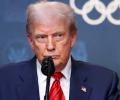
Each time a deadline almost runs out, President Trump hands out a new one.

Gold prices experienced a significant decline in futures trading due to uncertainty surrounding geopolitical tensions in West Asia and conflicting statements regarding the conflict. Investors are also awaiting key macroeconomic data for further direction on interest rate cuts.

The Israeli Air Force (IAF) said it struck several targets in Tehran, Shiraz and Ahvaz simultaneously over the past 24 hours, targeting sites linked to Iran's ballistic missile programme, air defence systems and military headquarters.

Economist Jeffrey Sachs saw Gulf nations' decision to partner with the US through the Abraham Accords as an "invitation for disaster" as it made them more dependent on American protection.
 © 2026 Rediff.com - Advertise with us - Disclaimer - Privacy Policy - Sitemap - Feedback - About us - Terms of use - Grievances