
The subtext here is that nobody else really matters to America today; only China, because nobody else can truly hurt them, points out Mihir S Sharma.
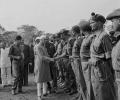
The conversations on July 22 and 23, 1962, meetings in Geneva between V K Krishna Menon, India's defence minister at the time, and Chinese vice premier Chen Yi are important because, had they been followed up, the subsequent border war may perhaps have been avoided, notes former foreign secretary Shyam Saran.

'We are open to all countries around the world as long as we get a fair deal, as long as we are ensured continuity in the engagement.'

Shooter Rudrankksh Patil, a world champion and Asian Games gold medallist, shares his extraordinary journey, from finding shooting boring to achieving global success, while also shedding light on China's formidable and secretive dominance in the sport.

The Indo-Tibetan Border Police (ITBP) is undergoing a significant modernization drive, establishing drone platoons, developing a new 'Strike' course for Galwan-like situations, and constructing underground infrastructure along the Line of Actual Control. This strategic shift, announced by DG Shatrujeet Singh Kapoor, aims to counter China, identified as India's 'biggest adversary,' by embracing modern warfare techniques learned from recent global conflicts.

China has voiced strong opposition to India's recent decision to standardise names for 28 strategic locations and geographical features in Ladakh.

External Affairs Minister S Jaishankar stated that the stability of the Line of Actual Control (LAC) is essential for normalising India-China relations, asserting that border disturbances will have consequences. He connected trade and investment growth to border peace and highlighted significant economic issues, including a severe trade imbalance and lack of market access for India in China. Jaishankar also referenced the 2020 Galwan clashes as a critical turning point, underscoring the profound impact of border tranquillity on the overall bilateral relationship.

India has rejected China's objection to New Delhi's standardisation of names for 28 places and features in Ladakh, reiterating that Ladakh is an "integral and inalienable" part of India. China had strongly opposed the move, calling India's establishment of the Union Territory and the naming "illegal and void".

Olympic champion Zheng Qinwen defeated French Open winner Mirra Andreeva 7-5 6-4 on Sunday to become the first Chinese player to win the China Open. This victory marks Zheng's first WTA 1000 title and her first trophy of the year, following a recovery from an elbow injury.

The International Cricket Council (ICC) is actively pursuing a strategy to expand cricket in China, leveraging the sport's recent inclusion in the Olympics. Plans include establishing a Centre of Excellence, supporting a Tier 2 event, and promoting women's cricket, with significant investment and collaboration with the Chinese Cricket Association to embed the sport deeper into the country's sporting system.

India's Manika Batra exited the singles event at the WTT China Smash after a tough loss to world no. 2 Wang Manyu. However, the mixed doubles pair of Manush Shah and Diya Chitale secured a dominant victory to advance to the quarterfinals, while Manav also progressed in men's singles.

India's Manav Thakkar and Manush Shah suffered a straight-game defeat against South Korea's Lim Jonghoon and Oh Junsung in the men's doubles semifinals at the WTT China Smash.

Russian tennis player Daniil Medvedev was disqualified from his China Open semi-final match against Novak Djokovic after accidentally hitting a spectator with a ball. Djokovic, who was leading at the time, advanced to the final, extending his unbeaten record at the tournament. Another semi-final also saw a retirement due to injury.

Novak Djokovic staged a remarkable comeback to defeat top seed Alexander Zverev 4-6 6-4 6-4 in the China Open semi-finals, maintaining his undefeated streak at the tournament. Despite Zverev's strong start, Djokovic's resilience and clutch play secured his spot in the final, moving him closer to a seventh China Open title and his first trophy of the year.

Indian mixed doubles pair Manush Shah and Diya Chitale made history by becoming the first from the country to reach a WTT Grand Smash semifinal in China, defeating a Romanian duo 3-0. This victory avenged a previous defeat. However, other Indian players, Manav Thakkar and the women's doubles pair of Chitale and Yashaswini Ghorpade, exited their respective events.

The women's hockey final at the Asian Games between India and China was delayed by 45 minutes due to a traffic snarl. India is competing for a historic gold medal, which would also secure direct qualification for the 2028 Los Angeles Olympics, aiming to end a 44-year wait since their last victory in 1982.

Indian mixed doubles pair Manush Shah and Diya Chitale suffered a 1-3 loss to Chinese Taipei's Lin Yun-Ju and Cheng I-Ching in the semifinals of the World Table Tennis (WTT) China Smash on Thursday. Their historic run as the first Indian mixed doubles pair to reach a WTT Grand Smash semifinal concluded, with other Indian players also exiting the tournament.

The article presents the medal tally after Day 14 of the Asian Games, showing China's significant lead, followed by Japan and South Korea. India is positioned fourth with a total of 85 medals.
This article provides the updated medals tally for the Asian Games after Day 12, showing China in a dominant lead, followed by Japan and South Korea. India is positioned eighth with a total of 64 medals.

World number two Aryna Sabalenka exited the China Open in the third round after a straight-sets loss to Nikola Bartunkova, marking another setback in a challenging season where she has not won a trophy since the 'Sunshine Double' earlier this year.

Mirra Andreeva crushed Nikola Bartunkova 6-2, 6-2 to reach the China Open final, setting up a title showdown with home favourite and Olympic champion Zheng Qinwen.

Mirra Andreeva survived Ekaterina Alexandrova in two tight tiebreaks to reach her first China Open semi-final, where rising Czech star Nikola Bartunkova awaits after crushing Karolina Muchova in Beijing showdown.

Novak Djokovic won his seventh China Open title after Alex de Minaur retired injured, extending his unbeaten Beijing streak to 34 matches and securing a 21st consecutive season with a singles title.
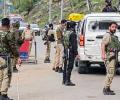
An Army officer's wife has been booked in Jammu for alleged espionage, accused of using AI tools like ChatGPT and Claude to write analytical papers on sensitive national security issues for Chinese intelligence operatives. The well-qualified freelance researcher, who had an IT internship with the UN, is cooperating with investigators after being intercepted at Jammu Tawi railway station. The probe focuses on her alleged contacts with foreign nationals and the nature of the sensitive documents found on her mobile phone.
China leads the Asian Games medal tally after Day 10 with 143 gold medals, followed by Japan and South Korea. India is currently in 10th position with 6 gold, 21 silver, and 25 bronze medals.
The article presents the medals tally after Day 11 of the Asian Games, showing China in the lead with 275 medals, followed by Japan and South Korea. India is currently ranked 8th with a total of 60 medals.

'Therefore, Beijing comes to wrong conclusions.'

American tennis star Coco Gauff has revealed she received an "insane" amount of racial abuse on social media following her controversial win over Chinese teenager Sun Xinran at the China Open, where a replayed point sparked an online backlash.

China's communist party has expelled two senior military officials, including General Zhang Youxia, the highest-ranking People's Liberation Army officer, for serious discipline and law violations.

Xi's bilateral meeting with Modi was substantial and readouts from both sides gave indications of rapprochement, if not a reset of bilateral relations between India and China, notes Ambassador T P Sreenivasan.

'The large number of tariff lines in the 90-99 per cent band highlights how deeply embedded Chinese sourcing has become in India's electronics imports.'

Novak Djokovic began his China Open comeback with a 6-3, 7-6(2) win over Nuno Borges, extending his perfect Beijing record to 30 victories as he targets a seventh title.

India has accumulated experience organically and in public, through blood, sweat and toil -- one commissioning and one agreement at a time -- and is called a regional power. China has accumulated hulls, by misdirecting its industrial capacity, and is mistakenly called a superpower. The Indo-Japan defence agreement pushes this theory to its limits without ever naming the dragon in the room, points out Dr Abhishek Puri.
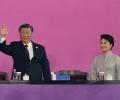
China leads the medal tally at the Aich-Nagoya Asian Games after the fourth day of competitions, securing 78 medals including 48 gold. Japan and South Korea follow, while India is currently placed 13th with 12 medals.

Former US National Security Adviser John Bolton has stated that China is not prepared to back India's bid for a permanent seat on the UN Security Council. He highlighted that any expansion of permanent membership would require a UN Charter amendment, which China could veto. Bolton also discussed the broader institutional challenges facing the UN and suggested that regime change in Iran is crucial for long-term stability in West Asia, linking Houthi attacks to Iran's "ring of fire" strategy.
China has established a significant lead in the Aich-Nagoya Asian Games medal tally after the third official day, securing 53 medals including 32 golds. Japan and Korea follow in second and third place respectively, while India is currently positioned eighth with 7 medals.
This article provides the updated medals tally after Day 8 of the Asian Games, showing China in the lead with 205 medals, followed by Japan and South Korea. India is currently ranked 12th with a total of 37 medals.

China's dominant table tennis team is preparing for the Aichi-Nagoya Asian Games, bringing a mix of Olympic champions and young debutants. They are wary of the host nation Japan, particularly in the women's game, while also focusing on developing talent for the 2028 Olympics.

India and China are in what experts call 'a cooperation-versus-competition situation'.

The Indian women's hockey team defeated South Korea 2-0 to qualify for the Asian Games final, ending a 44-year wait for a potential gold medal. Goals from Ishika Chaudhary and Salima Tete secured the victory, setting up a clash with defending champions China in the final.
