
Former US Secretary of State Antony Blinken stated that the US must respect India's right to self-defence and maintain a zero-tolerance policy towards terrorism, highlighting the "fundamentally different" nature of Washington's relationships with New Delhi and Islamabad. He described US-India ties as global and strategic, while US-Pakistan relations are regional. Blinken also touched upon cooperation in emerging technologies, India's ties with Russia, rapid global changes, US domestic politics, and the West Asia conflict, advocating for a two-state solution.

The flydubai near-tragedy showed how the gratuitous conflicts their governments started in West Asia have made the world unsafe for them (and unfortunate co-passengers of other nationalities), points out Kanika Datta.

The US midterm elections saw the Democratic Party gain control of Congress and key gubernatorial posts, leading international affairs experts to view the outcome as a referendum on President Donald Trump's policies. Analysts suggest the results signal a desire for change in his behaviour and could prompt a more pragmatic approach in his remaining term, with potential implications for global politics and India-US relations.

A dispute has emerged in Mumbai regarding the naming of the new East-West Vidyavihar bridge. The Shiv Sena (UBT) is advocating for it to be named after actor Nana Patekar, while BJP MLA Parag Shah proposed naming it after Captain Smit Machchhar, a pilot recognised for thwarting a hijacking. The controversy highlights differing views on honouring local figures and public service.

The BJP has strongly criticised Congress leader Rahul Gandhi for his comments on the Indian economy made at Columbia University, where he described India as facing an "economic disaster." The ruling party accused Gandhi of engaging in "anti-India propaganda" and repeatedly portraying the nation negatively on foreign soil, despite global agencies recognising India as a fast-growing economy. BJP leaders highlighted India's economic progress and questioned Gandhi's motives for undermining the country's image internationally.

US President Donald Trump received a grand welcome from Chinese President Xi Jinping in Shenzhen for the APEC Economic Leaders' Meeting, culminating in an unprecedented trilateral meeting with Russian President Vladimir Putin. The leaders discussed critical global issues including the Ukraine conflict, Iran, artificial intelligence, and nuclear arms reduction, marking significant political gains for each leader on the international stage.

Congressional scrutiny could increase, but immediate changes to immigration and visa policies are unlikely.

Citing India's 7 percent GDP growth rate and low interest rates by the central bank (RBI), US President Donald Trump on Friday (local time) criticised the American central bank for keeping borrowing costs high, arguing that the US economy could achieve growth of 15 to 20 per cent if interest rates were lowered.

New York City Mayor Zohran Mamdani, at a Diwali celebration, highlighted the recent targeting of Hindu temples in the US and the rise of hate in political campaigns. He urged communities to reject divisive politics and stand united against discrimination, emphasising the importance of diverse cultural heritage and the wisdom of Hinduism.

UBS analysts indicate that Indian stocks' valuation premium over emerging markets remains high, despite concerns over crude oil prices and tighter monetary policy impacting India's growth outlook. They suggest a potential slowdown in AI capital expenditure and moderation in oil prices could alleviate these pressures.

'India will become number one. There is no doubt about it. Andhra Pradesh will be number one in India.'

Jan Suraaj Party founder Prashant Kishor has alleged that "BJP agents" within the JD(U) are facilitating its merger with the saffron party and keeping Nitish Kumar out of public view. He also criticised PM Modi's claims on poverty eradication and commented on India's economic standing, while also slamming the alleged misuse of 'Jeevika Didis'.

Addressing a fireside chat in New York's Columbia University, Rahul Gandhi issued a stark warning about India's economic future, declaring the nation is on the brink of an "economic disaster" due to rampant unemployment, a failing manufacturing sector, and systemic issues within its education system.

BJP MP Kangana Ranaut has launched a sharp attack on Congress leader Sonia Gandhi, questioning her political rise and describing events surrounding the Gandhi family as "way too many coincidences." Ranaut, citing research for her film 'Emergency,' labelled Gandhi a "mysterious foreign national" and linked the deaths of Indira, Sanjay, and Rajiv Gandhi to Sonia's eventual leadership, accusing her of promoting foreign agendas.

Union Minister Kiren Rijiju criticised the Congress party and Rahul Gandhi's "compromised PM" remark against Prime Minister Narendra Modi. Rijiju posed four questions to the Congress, including about the 1962 India-China war and India's economic history, while also alleging the party abandoned armed forces during the 1962 conflict. This political exchange follows Gandhi's comments on Modi's absence from a trilateral meeting at the APEC summit.

US President Donald Trump, Chinese President Xi Jinping, and Russian President Vladimir Putin held an unprecedented trilateral meeting at the APEC Economic Leaders' Meeting in Shenzhen, discussing global conflicts, nuclear arms reduction, and artificial intelligence.

Congress leader Rahul Gandhi has declared Indian democracy 'sacred' and dismissed the idea of boycotting elections, arguing it would dismantle the country's democratic framework. His remarks, made at the University of Chicago, came as the BJP intensified its criticism, accusing him of spreading anti-India propaganda by reiterating vote theft allegations on foreign soil. Gandhi also commented on India's foreign policy and the Israel-Gaza conflict.

Alia Bhatt, Samantha, Taapsee Pannu, Sai Pallavi, Tripti Dimri have been recognised in Time's 100 Next India 2026 list.

Prime Minister Narendra Modi on Thursday discussed with a group of senior ministers the prevailing global security situation and how to maintain supply chain uninterrupted despite conflicts in different zones, including the Strait of Hormuz, the Black Sea, the Red Sea, and the Gulf of Aden.

S Mahendra Dev, chairman of the Economic Advisory Council to the Prime Minister (EAC-PM), stated that India needs to increase the manufacturing sector's share in its GDP from the current 16-17 per cent to 25 per cent by 2047 to achieve developed economy status. This goal requires an average real GDP growth of around 8 per cent annually over the next 21 years, supported by a 34-35 per cent investment rate and diversified long-term financing.

Tata Group's British luxury carmaker Jaguar Land Rover (JLR) announced plans to reduce its global workforce by approximately 4,000 roles over the next two years, aiming for 1.7 billion in savings to enhance sustainable profitable growth and invest in future technologies.

The idea addresses an increasingly difficult problem on Earth: Data centres consume enormous amounts of electricity and water.

External Affairs Minister S Jaishankar stated that using terrorism as an "instrument of statecraft" is unacceptable and cannot be justified. He highlighted that terrorism persists because some states do not exhibit "zero tolerance" and allow political calculations to override historical lessons. Speaking at an event, Jaishankar emphasised the indivisibility of peace and called for stronger global resolve to counter terrorism in all its forms.

In a life fully and adventurously lived, Bunker Roy creatively defied many conventions and opened paths for subsequent generations to follow. Long before the term 'social entrepreneur' was coined, Bunker innovated empowering social processes and village-level production systems that dramatically improved the lives of tens of lakhs of people not only across India but in 96 other countries, notes Rajni Bakshi.

Garment workers in Bangladesh are staging widespread demonstrations and clashing with police, demanding a significant increase in their minimum monthly wage from Tk 12,500 to Tk 30,000. The protests, which have been ongoing for weeks, have led to highway blockades, factory closures, and the deployment of paramilitary forces. This unrest threatens Bangladesh's crucial garment export sector, which accounts for over 80% of the country's earnings. A government-formed Minimum Wage Board is deliberating on a revised pay structure, with its next meeting scheduled for November 23.

Josh Kushner said Thrive Capital misjudged football's political dynamics, would have avoided FIFA's failed $20 billion rights plan, but still supports its aim of broader investment.

A US federal court has sentenced Pakistani national Asif Merchant to 27 years and six months in prison for attempting to orchestrate the assassination of American government officials, including then-President Donald Trump, on behalf of Iran's Islamic Revolutionary Guard Corps (IRGC). Merchant, described as a trained IRGC operative, was convicted of attempting to commit an act of terrorism transcending national boundaries and murder for hire.

Amid escalating debate comparing youth protests in India to political unrest and regime changes in Nepal and Bangladesh, Cockroach Janata Party (CJP) activist Abhijeet Dipke on Tuesday issued a video statement on X.

Tamil Nadu Minister R Nirmal Kumar has challenged former DMK minister S Regupathy's assertion that video evidence in a POCSO case involving industrialist R Veeramani is "shadowy." Kumar accused the DMK of attempting to protect the accused, while Regupathy denied the allegations, defending the previous government's actions and criticising the current administration's handling of public concerns and sensitive case disclosures. The dispute highlights political tensions surrounding a high-profile child protection case.

The climate finance battle once again exposes the deep divide between rich and developing nations.

International Hockey Federation (FIH) President Tayyab Ikram has commended India's professional approach to hockey, urging other Asian nations to adopt similar strategies to improve their global standing. He highlighted India's journey from past Olympic glory to recent bronze medals, positioning it as a model for development in the sport.
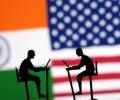
The highly anticipated interim trade deal between India and the United States is currently on hold, awaiting Washington's finalisation of its internal tariff framework, even as the US has assured New Delhi of a crucial comparative tariff advantage over its global competitors.

This article details the quarter-century journey of BRICS, from its inception as an economic acronym by a Goldman Sachs economist to its current status as an expanded eleven-member international bloc. It highlights its growth, key historical moments, and the significance of its upcoming summit, particularly with Iran's renewed importance in discussions.

India does not need to win the model race to win the AI era. It needs to be the country that cannot be switched off, can be trusted by its citizens, and is useful to the rest of the world, asserts Rajeev Srinivasan.

The US State Department has paused visa appointments worldwide to conduct a 'global training initiative' for consular officers, aiming to ensure applicants are not likely to become a 'public charge' and are comprehensively evaluated, intensifying President Donald Trump's immigration crackdown.

Modi's cautious response, omitting the public invite from his telephonic conversation summary, suggests India's reluctance to be drawn into Israel's internal politics, points out M R Narayan Swamy.

Prime Minister Narendra Modi, during his Gujarat visit, pledged to serve India until his last breath. He criticised the Opposition for allegedly spreading panic regarding fertiliser and cooking gas availability amidst the West Asia conflict, accusing them of rejoicing in national crises. Modi also highlighted government efforts to shield farmers from rising global prices and inaugurated 'Bharat Parv 2026' at Ekta Nagar.

A mature democracy like India has to decide who rules the country -- whether the people of India with their votes or Mark Zuckerberg and other social media moguls through their algorithms, asserts Dr Ashwani Mahajan.
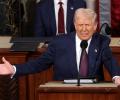
Experts suggest that a significant setback for US President Donald Trump in the midterm elections could compel him to pursue a swift trade agreement with India, as he seeks a quick foreign policy win amidst challenges with Russia, China, and Iran.

Luiz Incio Lula da Silva has clinched a historic fourth term as Brazil's president, navigating a contentious election against Flavio Bolsonaro who refuses to concede.
