
The ministry of defence of the United Arab Emirates on Monday said its air defence systems successfully intercepted multiple aerial threats launched from Iran, as tensions in the region continue to rise.

There are enough people at the top decision-making level in Tehran who are still willing to negotiate, provided Trump can create the right setting for the negotiation to acquire a dynamic of its own, points out Ambassador M K Bhadrakumar.

If Trump wants peace with Iran, Pakistan will offer to help. If Trump seeks Pakistan's aid to spy on Iran, then too Munir will not hesitate to chip in. At the same time, the ISI will not hesitate to tip off Iran now and then, points out M R Narayan Swamy.

Two individuals, including a juvenile, have been arrested for allegedly stabbing a student near Ajmeri Gate in Delhi after he finished an exam. The suspects were apprehended while attempting to flee the city.

An Indian and a Pakistani national were killed in Abu Dhabi after debris from intercepted missiles fell on a street. The incident has raised concerns about regional security.

There are roughly 2,000 ships stranded in the Persian Gulf, carrying more than 20,000 seafarers, according to the International Maritime Organisation, as quoted by The Wall Street Journal.

US President Donald Trump on Sunday announced that the American Navy will henceforth block all maritime traffic entering the Strait of Hormuz.

An Indian national sustained injuries from shrapnel after a drone was intercepted by the UAE's air defence system. This incident follows similar events involving injuries and fatalities to Indian nationals in the region due to intercepted missiles and drones.
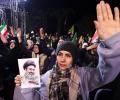
In the video, the Supreme Leader can be seen teaching religious studies to a group of pupils who are listening attentively. The IRIB said that the video of Ayatollah Mojtaba Khamenei was published for the first time.

The two leaders also emphasised the importance of ensuring safe and free navigation through the Strait of Hormuz, the Ministry of External Affairs (MEA) said.
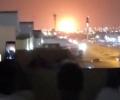
The official statement highlighted that these "blatant Iranian attacks" have also targeted members of the Gulf Cooperation Council (GCC) and several other Arab and Islamic nations.

Economist Jeffrey Sachs saw Gulf nations' decision to partner with the US through the Abraham Accords as an "invitation for disaster" as it made them more dependent on American protection.

Amritpal Singh Mehron, the primary suspect in the murder of social media influencer Kanchan Kumari, has been arrested after being deported to India from the Middle East. He was apprehended at Delhi's airport and is now in police custody.

US President Donald Trump on Wednesday backed Israel's ongoing military operation in Lebanon, stating that Hezbollah "was not included" in the recent ceasefire deal between Washington and Tehran, which halted the conflict in West Asia for two weeks.

The US Navy seized an Iranian-flagged cargo ship in the Gulf of Oman, escalating tensions as ceasefire talks face uncertainty. The incident raises concerns about the fragile ceasefire and the ongoing blockade of the Strait of Hormuz.

Iran has announced the Strait of Hormuz is open to commercial vessels, coinciding with a ceasefire between Lebanon and Israel.

Israel will continue its offensive in South Lebanon aimed at neutralising the threat from Hezbollah, which is backed by Iran.

In a post on Truth Social, Trump outlined key goals of the campaign, including degrading Iran's missile capabilities, dismantling its defence industrial base, eliminating naval and air power, preventing Tehran from acquiring nuclear capability, and protecting United States allies such as Israel, Saudi Arabia and the United Arab Emirates.

A senior Iranian legislator has suggested that Tehran could further escalate pressure on its adversaries by targeting the Bab el-Mandeb Strait, raising concerns about global supply chain vulnerabilities.

The threat has raised concerns about possible asymmetric attacks outside the region. Iran has also stepped up attacks on energy infrastructure in Gulf countries.

The ongoing conflict involving the United States, Israel, and Iran intensified sharply with attacks on critical energy infrastructure across the Gulf, even as US President Donald Trump said he had cautioned Israeli Prime Minister Benjamin Netanyahu against targeting Iran's key South Pars Gas Field.

The ongoing conflict in West Asia is severely disrupting Bikaner's food exports, causing delays, rising costs, and impacting the supply of popular snacks like bhujia and papad to Gulf and European markets.

World leaders often have simple tastes when it comes to food.

US President Donald Trump said on Wednesday that Washington is considering a "joint venture" with Iran to secure the Strait of Hormuz, following his announcement of a two-week ceasefire.

Aseem Mahajan, Additional Secretary (Gulf) in the Ministry of External Affairs, on Saturday informed that five Indians have been killed and one is missing due to the ongoing conflict in West Asia. He added that Indian missions remain open round the clock and are constantly working to provide assistance.

In his first major national address since hostilities began, Trump said the ongoing military campaign, dubbed 'Operation Epic Fury', has delivered 'swift, decisive, overwhelming victories'.

Iran has banned national and club sports teams from travelling to countries it considers hostile, citing concerns over the safety of its athletes.

After the Israeli attack on Iran's South Pars Gas Field on Wednesday night, in retaliation, Iran struck Qatar's Ras Laffan Industrial City, resulting in extensive damage, as per the country's Ministry of Defence.
Iran's Islamic Revolutionary Guard Corps (IRGC) claims control of the Strait of Hormuz and reports striking a US destroyer, escalating tensions in the Middle East following retaliatory strikes between Iran, the US, and Israel.

Trump's remarks marks one of the most direct rebukes yet from Washington to its allies over their refusal to support US-led military operations in Iran and over the energy crisis triggered by disruptions in the Persian Gulf.
The fragile ceasefire in West Asia between the US and Iran to halt the hostilities in the region for two weeks faces renewed uncertainty as Tehran reportedly moved to block the strategic Strait of Hormuz once again due to Israel's intensified offensive against Hezbollah in Lebanon, according to Iranian state media Islamic Republic News Agency (IRNA), which US President Trump says was "not included" as part of the ceasefire deal.

AFC relocates four postponed Asian Champions League Elite last-16 ties to Jeddah as single-leg matches amid Middle East tensions.

It is time for India to step up and get Russia, China and Europe to agree to a joint appeal to all combatants. Time is of essence, tomorrow may be too late, asserts Colonel Anil A Athale, former head of the history division, ministry of defence.

The question is whether the clocks allow enough time for two deeply mistrustful sides to get there, and whether the surface calm holds long enough for the paddling to produce something before the ceasefire ends on April 22, notes Prem Panicker in his must read blog on the Iran War.

The incident came shortly after a spokesperson from Iran's military warned that Tehran could target ports and docks in the United Arab Emirates following recent United States strikes on Kharg Island, a key hub for Iran's oil exports.

The UAE consulate in Erbil, located in Iraq's Kurdish region, suffered structural damage in the aerial attack. Officials said there were no casualties.

Indian companies, however, are now paying a premium of $6-$7 a barrel for Russian oil, compared with discounts of $8-$10 a barrel before the start of the conflict.

The clock on the ceasefire is running out. But everyone's already whispering about round two, possibly as soon as this weekend.

India has refuted claims of payment issues hindering crude oil imports from Iran, clarifying that refiners have the flexibility to source oil from various global suppliers. The Ministry of Petroleum and Natural Gas addressed reports of a tanker rerouting to China, emphasising standard industry practices and secured oil requirements.

Russian President Vladimir Putin is actively working to de-escalate the escalating crisis in the Gulf, engaging with regional leaders following Iran's retaliatory strikes on US facilities after joint US-Israeli strikes against Iran.
