
A dedicated system to make district-wise, five-day forecasts can effectively deliver at one-tenth the Met's expenditure.

Mumbai experienced heavy rainfall after a prolonged dry spell, leading to waterlogging in some areas. The India Meteorological Department has warned of intense showers, thunderstorms, and gusty winds, along with forecasts for high and low tides.

The Commission for Air Quality Management (CAQM) has implemented Stage 1 of the Graded Response Action Plan (GRAP) in Delhi-NCR after the Air Quality Index (AQI) deteriorated to the 'poor' category. Forecasts indicate the AQI will remain poor in the coming days, triggering restrictions like banning coal and firewood in eateries and limiting diesel generator use.

Delhi is experiencing heavy rainfall and strong winds, prompting the India Meteorological Department (IMD) to issue a red alert, which is impacting ongoing preparations for the crucial BRICS Summit.

The southwest monsoon has withdrawn from India, while the northeast monsoon has commenced in southern regions, bringing a wet spell. This year's southwest monsoon saw a rainfall deficit, largely attributed to the strengthening El Nino conditions, which are expected to persist until February 2027 and could become the strongest since 1950.

Nepal is grappling with devastating flash floods and landslides that have claimed over 650 lives and left more than 2,400 missing. Rescue operations are underway, but fresh warnings of heavy rainfall and thunderstorms from the meteorology department threaten to disrupt these efforts, exacerbating the crisis. Chinese authorities have also issued alerts regarding a potential barrier lake breach in Tibet, posing further flood risks downstream.

Heavy rains across Tamil Nadu have caused localised waterlogging and brought down temperatures, particularly in districts like Madurai and Virudhunagar. A tragic incident in Virudhunagar district saw a 17-year-old girl die and her mother injured after a house wall collapsed due to the downpour. Meanwhile, the India Meteorological Department has forecast the formation of a cyclonic storm in the Bay of Bengal by October 26, which is expected to move towards North Andhra Pradesh and South Odisha coasts, though it poses no direct threat to Tamil Nadu.

Heavy rainfall in Delhi led to widespread waterlogging and severe traffic congestion, bringing the national capital to a standstill, with the India Meteorological Department issuing a red alert for further heavy rain.

Assam's flood toll has climbed to 87 with two new fatalities, even as water levels recede in most inundated areas, affecting nearly 1.3 lakh people. The India Meteorological Department (IMD) has issued warnings for extremely heavy rainfall in neighbouring Arunachal Pradesh and Meghalaya, which could impact several bordering Assam districts.

Delhi's Indira Gandhi International Airport experienced waterlogging at its Terminal 2 and 3 approach roads and forecourts due to heavy rainfall. While the accumulated water was cleared, the severe weather conditions led to the diversion of at least nine flights to other cities like Jaipur, Lucknow, and Ahmedabad. The India Meteorological Department had issued a red alert for intense rainfall in the national capital.

The Mumbai civic body declared a holiday for schools and colleges in the afternoon session following an India Meteorological Department (IMD) red alert for extremely heavy rainfall. Citizens have been advised to stay indoors unless necessary, as the city continues to experience significant monsoon downpours, with some areas receiving over 100 mm of rain.

Himachal Pradesh is on high alert with schools and colleges shut in several districts as heavy rainfall triggers landslides, flash floods, and road closures, prompting authorities to issue warnings and activate emergency centres.

This was the fourth-lowest rainfall since 2001 and the 13th lowest since 1901, under the impact of El Niño.

The water levels in the Bhotekoshi River rose again on Sunday, days after a devastating flash flood struck Nepal, authorities warned, urging residents and rescue personnel in flood-hit districts to remain alert.

The India Meteorological Department has issued a red alert for Mumbai, Thane, Palghar, and Raigad districts for Saturday and Sunday, forecasting extremely heavy rainfall. Mumbai has already experienced significant rainfall this week, and the alert indicates continued severe weather conditions, potentially disrupting normal life.

Heavy rainfall has severely impacted Uttar Pradesh, Jharkhand, and Uttarakhand, leading to casualties, widespread flooding, and significant disruptions. The Char Dham Yatra was suspended, flights were cancelled, and standing crops were damaged. Other regions like Himachal Pradesh, West Bengal, Rajasthan, and Delhi also experienced varied weather conditions, including snowfall and light rains.

The India Meteorological Department has forecast intensified heavy rains and thunderstorms for Mumbai and its suburbs. A yellow alert has been issued, and high tides are expected, though traffic and public transport are currently normal.

Rainfall during the monsoon season so far, from June 1 to September 13, has been 15 per cent below normal.

The India Meteorological Department (IMD) has predicted that the June-September southwest monsoon seasonal rainfall over India is expected to be 90 per cent of the long-period average. While the Northeast is likely to witness normal rainfall, the remaining parts of the country may see below normal rainfall.

The southwest monsoon has officially set over Kerala, albeit delayed from its typical June 1 start. The India Meteorological Department (IMD) forecasts below-normal rainfall for the season, expecting around 90% of the long-period average, primarily due to the emerging El Nino conditions.

Heavy rainfall in Maharashtra's Raigad district caused severe waterlogging on the Mumbai-Goa highway, leading to traffic standstills, diversions, and thousands of commuters being stranded. A 'red' alert has been issued for the district, and inadequate drainage infrastructure is being blamed for the recurring flooding.

A deep depression over the Bay of Bengal has brought heavy rainfall to parts of Andhra Pradesh and Odisha, leading to the evacuation of at least 3,500 people and prompting authorities to issue red and orange alerts for several districts.

Assam faces a severe flood crisis with 41 deaths and over 6.5 lakh people displaced, prompting intensified rescue operations and a critical alert for continued heavy rainfall.
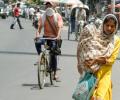
North India is experiencing an intense heatwave, with temperatures soaring to 48 degrees Celsius in some areas. Several states have issued warnings and advisories as the heatwave is expected to continue.

The India Meteorological Department (IMD) has predicted below-normal rainfall for India during the second half of the southwest monsoon season, specifically from August to September. This forecast indicates less than 94 per cent of the Long Period Average (LPA) for the period. While July saw good rainfall activity due to low-pressure systems and the Madden-Julian Oscillation, the Southern Peninsula experienced significantly low rainfall and record high minimum temperatures.

Heavy rainfall has disrupted major pilgrimages in Uttarakhand, including the Kedarnath route and the Kailash-Mansarovar Yatra, prompting the IMD to issue red and orange alerts for extremely heavy rainfall across several districts.

Heavy rainfall in Mumbai on Sunday led to significant disruptions, including a one-hour suspension of flight operations at Chhatrapati Shivaji Maharaj International Airport, widespread waterlogging, and multiple treefall incidents. One person died in Kurla due to a tree collapse, marking the second such fatality in a week. The India Meteorological Department had issued a 'red' alert, with several areas recording over 200 mm of rain.

Heavy rainfall in Delhi led to widespread waterlogging, traffic disruptions, and a significant drop in minimum temperatures across the city. Key areas like Lutyens' Delhi, Supreme Court, and AIIMS were affected, while the air quality remained satisfactory.

Climate scientist Tapio Schneider advocates for expanding early warning systems beyond rainfall events to include other disaster triggers like flash floods, citing the recent Nepal floods. He highlights the inevitability of 1.5 degrees Celsius global warming and discusses the role of advanced climate modelling and AI in improving predictions and research, particularly for regions like India.

Sikkim has identified 40 high-hazard glacial lakes, with 16 at the highest risk of catastrophic outbursts. Following a devastating GLOF in 2023, the state is developing India's first dedicated GLOF Risk Mitigation Protocol, using advanced monitoring and interdisciplinary approaches to protect downstream settlements and serve as a model for other Himalayan regions.

Mumbai and its metropolitan region are experiencing severe monsoon rains, leading to widespread waterlogging, transport disruptions, and the closure of schools and colleges. The India Meteorological Department (IMD) has issued an 'extremely heavy rainfall' alert, with some areas receiving nearly 200 mm of rain in 12 hours, prompting Chief Minister Devendra Fadnavis to urge residents to avoid non-essential travel.

The India Meteorological Department forecasts the southwest monsoon to arrive in Kerala in the next two to three days, slightly delayed from the typical June 1 start. The department also predicts below-normal rainfall for the season due to emerging El Nino conditions.

The India Meteorological Department (IMD) has issued an orange alert for Mumbai, predicting heavy to very heavy rainfall, thunderstorms, lightning, and gusty winds for the next few days. The forecast extends through Friday, with a brief yellow alert on Tuesday. Neighbouring Palghar is under a red alert, and Raigad is under an orange alert for five days.

The administration has been put on high alert following the India meteorological department's (IMD) forecast of extremely heavy rainfall across several districts of Gujarat in the next two days.

As Mumbai grapples with rising temperatures and humidity, many slum dwellers are spending their nights on Versova beach to escape the unbearable heat in their poorly ventilated homes, with the India Meteorological Department (IMD) forecasting a gradual rise in temperatures before a decline, and a yellow alert for isolated rainfall.

Heavy rainfall has caused severe waterlogging across Mumbai, disrupting traffic and daily life. The India Meteorological Department issued a red alert for Mumbai and surrounding districts, advising precautions. Specific areas recorded over 200 mm of rainfall, and the IMD forecasts continued heavy rains for the Konkan region, Goa, South Gujarat, Odisha, and Central India.

Nepal is reeling from devastating flash floods that have claimed over 600 lives and left more than 2,400 people missing. Rescuers are battling difficult conditions, including intermittent rainfall, to find survivors, while families desperately search for loved ones among lists of the injured and deceased. The widespread destruction has left towns and villages buried under mud, with infrastructure severely damaged.

A new barrier lake has formed near the source of Nepal's Bhote Koshi River, with Chinese authorities warning of a potential breach. This poses a fresh flood risk to downstream areas in Nepal, prompting warnings for residents and calls for diplomatic consultations to manage cross-border glacier risks.
Sindh province in Pakistan is experiencing a severe heatwave with temperatures exceeding 45 degrees Celsius and high humidity, leading to a 'feels-like' temperature of up to 54 degrees Celsius in Karachi. Hospitals in the region, particularly in Karachi, are overwhelmed with patients suffering from heat-related illnesses, prompting medical staff to work round the clock.

Floods in Assam have claimed 31 lives, with 21 fatalities reported in the last 24 hours, affecting nearly 5.65 lakh people across multiple districts. Chief Minister Himanta Biswa Sarma visited affected areas, announcing an ex gratia of Rs 4 lakh for each deceased's family and acknowledging difficulties in relief distribution to submerged villages.
