
A R Rahman performed at the first-ever concert at the Attari-Wagah border post, using the platform to promote his soundtrack for Imtiaz Ali's Partition-era film Main Wapas Aaunga.

Held during the Beating Retreat ceremony at JCP Stadium, the event was titled Jai Ho -- A Musical Salute to the Bravehearts and came ahead of the release of filmmaker Imtiaz Ali's new film Main Vaapas Aaunga, a cross border drama which features music by Rahman.

'I thought this generation was no good, will not be able to do much with all this social media etc. But then, they surprised us.'
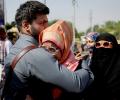
As India's deadline for Pakistani citizens to leave the country passed, chaotic scenes unfolded at the Attari-Wagah land crossing in Punjab.
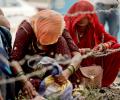
The Attari-Wagah border crossing point between India and Pakistan was shut completely on Thursday following a week-long heavy rush of people from either side to cross over after the Union government ordered all Pakistani citizens with short-term visa to leave India in the wake of the Pahalgam terror attack, sources said.

Punjab Police, in coordination with central agencies, arrested two men in Amritsar, Davinder Singh and Rajwinder Singh, recovering two hand grenades. The accused were in direct contact with foreign-based handlers and were planning terror-related activities, with connections to an individual already in Amritsar Jail.

Meet Deepali Sahay, the singing sensation from Main Waapas Aaunga. Nearly two decades after being voted out of Indian Idol Season 3 and after almost losing her voice to bleeding vocal chords after hosting Season 4, she finally gets the break she deserved with a song for the ages.

About 21 Pakistani nationals stranded at the Attari-Wagah border following the expiry of the Indian government's deadline for them to leave the country crossed over into Pakistan through the land route of the Integrated Check Post on Friday, officials said. In wake of last week's Pahalgam terror attack, the Indian government cancelled all types of visas granted to Pakistani nationals and ordered them to leave by April 30. The Attari-Wagah border, located near Amritsar in India and Lahore in Pakistan, was shut on Thursday after being kept open till April 30. According to reports, about 70 Pakistani nationals were stranded at the border on Thursday after the deadline for them to leave India expired a day earlier. The 21 Pakistani nationals who entered Pakistan till 12 pm on Friday had been camping on the roads outside the Integrated Check Post. About 50 more Pakistani nationals are queuing outside the Integrated Check Post and may be allowed to cross over into Pakistan after due clearance of customs and immigration authorities. Pakistan on Friday announced it would continue to allow the use of the Wagah border crossing for its citizens stranded in India.

Amritsar police have dismantled a cross-border illegal arms smuggling module, arresting four individuals and seizing sophisticated weapons and ammunition.

Several Pakistani nationals visiting India started returning home through the Attari-Wagah land route in Amritsar on Thursday, a day after the Centre set a 48-hour deadline for them to leave the country. The decision came after India announced a raft of measures, including the expulsion of Pakistani military attaches, suspension of the Indus Water Treaty of 1960, and the immediate shutting down of the Attari land-transit post in view of the cross-border links to the horrific terror attack in Kashmir's Pahalgam that killed 26 civilians on Tuesday.
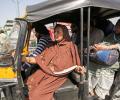
The exit deadline for Pakistani nationals visiting India on SAARC visas ended on April 26, while for the rest, except those on medical visas, it is set to close on Sunday, April 27 amid escalating tensions between the two countries over the Pahalgam terror attack that killed 26 people.

Punjab Police have dismantled a cross-border drug smuggling operation, arresting two individuals and seizing 64.62 kg of heroin in Amritsar. The investigation revealed links to Pakistan-based smugglers and a Portugal-based handler.

Punjab Police have dismantled an ISI-sponsored terror module, arresting two individuals and recovering a cache of arms, including an AK-47 rifle and Glock pistols.

At Border Pillar 609 at Babliyan near Jaisalmer, the one thing that dominates the landscape is something entirely different, something central to our identity -- the Tiranga -- flying boldly above the blazing desert.

"Pakistani officials told us you are Hindu, you cannot go with a Sikh jatha," said Amar Chand, who was sent back along with six of his family members after they crossed over to the neighbouring nation to participate in the birth anniversary celebrations of Guru Nanak Dev.

The Border Security Force (BSF) has scaled down the retreat ceremony held at Attari, Hussainiwala and Sadki along the India-Pakistan border in Punjab following the Pahalgam terrorist attack. The BSF's Punjab frontier said it was suspending the symbolic handshake of the Indian guard commander with the counterpart and the border gates will remain closed during the ceremony. The move is seen as a response to the recent terrorist attack in Jammu and Kashmir, in which 26 people were killed.
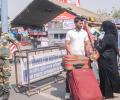
Sana, an Indian woman married to a Pakistani doctor, was forced to hand over her two young children to their father at the Attari border due to visa restrictions imposed by the Indian government following a terror attack in Jammu and Kashmir. Sana, who entered India on a 45-day visa, is unable to return to Pakistan as she is not yet a Pakistani citizen and the process could take another four years. The Indian government revoked the visas of Pakistani nationals on Short-Term Visas, leading to the separation of families at the border.

'Those who call for war from far-off places should realise the repercussions it has on the people who are actually affected.'
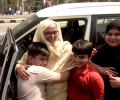
Following a deadly terror attack in Pahalgam, India has ordered all Pakistani nationals to leave the country within 48 hours. This has led to a mass exodus of Pakistani citizens from India, while several women married to Pakistani nationals and holding Indian passports are facing difficulties returning to their families in Pakistan.

The Border Security Force (BSF) has shot dead a Pakistani intruder along the International Border in Punjab. The man was shot during the intervening night of May 7-8 in the Ferozepur sector, officials said. He was found crossing the International Border purposefully in the dark.
'Only those who live through these situations understand the true cost of war.'
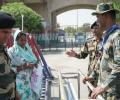
A Meerut woman, married to a Pakistani national, was denied entry to Pakistan at the Wagah border after she presented her Indian passport. She was accompanied by her two children who hold Pakistani citizenship. The authorities permitted the children to cross but Sana refused to separate from them, resulting in her return to India.
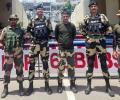
Purnam Kumar Shaw, a BSF jawan who was held captive in Pakistan for nearly three weeks, returned to his home in West Bengal's Hooghly district on Friday evening. Shaw was greeted by his family and well-wishers at Howrah station and was escorted to his hometown Rishra, where he was welcomed by people and a band playing patriotic tunes. Shaw had been taken into custody by Pakistan Rangers on April 23, after he inadvertently crossed the international border in Punjab's Ferozepur district.

India has revoked all visas issued to Pakistani nationals effective April 27, advised Indian nationals in Pakistan to return home, and suspended visa services to Pakistani nationals. The move comes in retaliation to the Pahalgam terror attack that killed 26 people and alleged cross-border links to the attack. This escalation follows India's previous actions against Pakistan, including expelling Pakistani military attaches, suspending the Indus Water Treaty, and shutting down the Attari land-transit post.

India on Monday extended the closure of its airspace for flights operated by Pakistan airlines by another month till July 24.
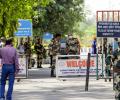
Abdul Waheed was brought from Srinagar by the Jammu and Kashmir police for his repatriation to Pakistan.

The Pakistani military fired unprovoked shots across the Line of Control (LoC) in Kashmir for a second consecutive night, triggering retaliatory action from Indian troops. This escalation follows heightened tension between India and Pakistan after the Pahalgam terror attack that killed 26 civilians. Despite the exchange of fire, no casualties were reported. India has imposed a series of punitive measures in response to the attack, including the suspension of the Indus Waters Treaty and closing the Attari land-border crossing. Pakistan has responded in kind, closing its airspace to Indian airlines and suspending trade with India.

Pakistan on Wednesday handed over Border Security Force (BSF) jawan Purnam Kumar Shaw, apprehended on April 23, to India via the Attari-Wagah border front in Punjab, the force said.
Pakistani troops continued to violate the ceasefire along the Line of Control (LoC) by resorting to unprovoked firing in Jammu and Kashmir's Poonch and Kupwara districts, army officials said. This was the fourth consecutive night that Pakistan resorted to unprovoked firing along the LoC and came amid heightened tension between New Delhi and Islamabad following last week's terror attack in Pahalgam. Indian troops responded swiftly and effectively.

The tension gripped the area after a man was arrested for allegedly sharing an objectionable post about the Yoga Day, they said.
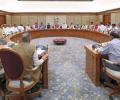
The meeting under the chairmanship of Prime Minister Narendra Modi has been convened at 11 am on Wednesday.
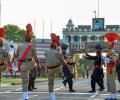
Since March 7, public was not allowed at the Attari border due to COVID-19 restrictions.
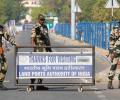
Pakistan Volleyball Federation on Sunday said India have withdrawn their contingent from the next month's Central Asian Volleyball in Islamabad.
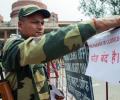
The Border Security Force on Friday said it has killed seven terrorists who were trying to infiltrate from across the India-Pakistan International Border in Jammu, and also destroyed a Rangers post.

A police officer and his eight siblings, including five sisters, were deported to Pakistan on Wednesday despite a court order granting them temporary relief. The nine members of the extended family, who have been living in Jammu and Kashmir for generations, were among more than two dozen people, mostly from Pakistan-occupied Kashmir (PoK), who were served deportation notices following the April 22 Pahalgam terror attack. The deportation has sparked outrage, with protests and appeals for intervention from the home minister and lieutenant governor. The family members claim they are not Pakistani nationals and have been living in the region for generations, presenting revenue records to support their claims. The court has ordered a detailed report on the case within two weeks and will hear it again on May 20.

Emphasising that human rights are the most sacrosanct component of a human life, the Jammu and Kashmir High Court has ordered the Union Home Ministry to facilitate the return of a woman deported to Pakistan following the Pahalgam terror attack.
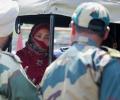
Pakistan's Defence Minister Khawaja Asif on Wednesday said that the chances of conflict with India were increasing with the passage of time despite efforts by different countries to defuse the tensions between the two neighbours.
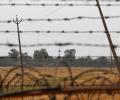
The United States on Thursday said it supports India's right to defend itself and its fight against terrorism as US Defence Secretary Pete Hegseth dialled Defence Minister Rajnath Singh amid rising tensions between India and Pakistan over the Pahalgam terror attack.
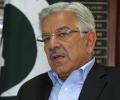
Regarding the possibility of talks, the minister said he was not aware of any such potential engagements.

India's Air Chief Marshal A P Singh met Prime Minister Narendra Modi on Sunday to discuss the security situation arising from escalating tensions with Pakistan. The meeting comes after a similar briefing by the Navy Chief on the situation in the Arabian Sea. This follows a deadly terror attack in Pahalgam, which India has blamed on Pakistan. India has taken several retaliatory measures, including suspending the Indus Waters Treaty and banning imports from Pakistan.
