
Iranian news agencies have denied reports of Iranian officials travelling to Pakistan for negotiations with the United States, even as Pakistan prepares for potential talks and faces criticism from Israel.

The United States and Iran could be set to announce an agreement soon to achieve a complete solution to the hostilities in West Asia, as reported by Saudi state media Al Arabiya on Wednesday, citing sources familiar with the ongoing negotiations.

This sharp Iranian response came after a series of uncompromising remarks from the US president.

The United States military has intercepted and destroyed two Iranian attack drones that posed an immediate hazard to commercial shipping lanes in the Strait of Hormuz, according to an official statement by the US Central Command late Saturday.

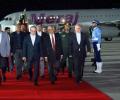
The Iranian delegation, led by Parliament Speaker Mohammad Bagher Ghalibaf, arrived in Islamabad for talks with the US, carrying images of victims from the Minab school attack on their official flight.

Iran has submitted its latest proposal aimed at advancing negotiations to end the ongoing West Asia conflict with the US, days after the Islamic Republic submitted a fresh proposal through regional intermediaries to cease its military operations in the Strait of Hormuz, which is likely to get rejected by Washington.

Security forces in Pakistan have killed five terrorists in intelligence-based operations in the Khyber Pakhtunkhwa province, following an attack on a police checkpost that resulted in the deaths of 15 security officials.

US Vice President JD Vance leads a delegation to Islamabad for talks with Iran, expressing optimism while warning against bad faith negotiations from Tehran.

Despite a ceasefire extension, Iran has rejected the United States' conditions for negotiations, creating uncertainty in ongoing diplomatic efforts.
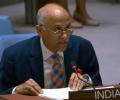
India has strongly criticised Pakistan at the UN Security Council, highlighting civilian deaths and injuries in Afghanistan caused by cross-border violence by Pakistani military forces, accusing Pakistan of 'heinous acts' and 'systematic genocide'.

A source familiar with US Treasury Secretary Scott Bessent's thinking revealed on Saturday that the department "intends to utilise all available authorities to make Iranian assets accessible for rebuilding and repair efforts related to any future damage inflicted by Iran."

India has strongly condemned Pakistan's military airstrikes against Afghanistan, citing significant civilian casualties, and criticised its 'trade and transit terrorism' against Afghan traders, calling these actions blatant violations of international law and UN norms.

The joint statement was issued during Pakistan Prime Minister Shehbaz Sharif's recent visit to China.

If Trump wants peace with Iran, Pakistan will offer to help. If Trump seeks Pakistan's aid to spy on Iran, then too Munir will not hesitate to chip in. At the same time, the ISI will not hesitate to tip off Iran now and then, points out M R Narayan Swamy.

US Vice President JD Vance is set to arrive in Islamabad on Monday evening to lead a high-level American delegation in a second round of ceasefire negotiations with Iran, CNN reported, citing White House on Sunday.

Iran blames the US for 'maximalism' and 'shifting goalposts' leading to the collapse of the Islamabad talks.

Iran has presented a multi-layered proposal to the US in an attempt to break the deadlock in peace talks, focusing on de-escalation and nuclear programme discussions.
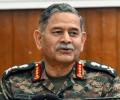
Army Chief Gen Upendra Dwivedi issued a stern warning to Pakistan, stating that if it continues to harbour terrorists and operate against India, it risks becoming 'history'. The remarks were made during an interactive session, days after the anniversary of Operation Sindoor, which involved precision strikes on terror infrastructure in Pakistan and PoK.

Lawyers for Imran Khan and his wife Bushra Bibi have requested an adjournment in the 190 million-pound Al Qadir case, citing difficulties in obtaining instructions from their clients in jail. The case involves allegations of corruption related to the Al-Qadir Trust.

Ebrahim Azizi, head of Iran's National Security Committee, stated that diplomatic talks with the US are governed by national interest and security, viewing negotiations as an extension of military efforts.

The US and Iranian delegations left Pakistan after failing to reach an agreement in historic talks aimed at resolving the West Asia conflict and stabilising global energy markets.

US President Donald Trump warned that the United States is prepared to launch a military strike on Iran if peace negotiations in Islamabad fail, while Vice President JD Vance departed for talks in Pakistan.

As the negotiations continued, the Iranian government said on social media that "talks between Iran and the US in Islamabad entered the expert-level stage as economic, military, legal, and nuclear committees joined in".

Ahead of the expiry on Tuesday of the two-week ceasefire declared by US President Donald Trump in the conflict with Iran, US media outlets reported on Sunday that negotiators Steve Witkoff, special envoy for peace missions and Jared Kushner will head to Islamabad for talks with Iran.

Experts' worries intensified after Pakistan commissioned its first Chinese-built Hangor-class submarine, PNS Hangor, last month.

Speaking to reporters aboard Air Force One, Trump said the US prefers a negotiated settlement and expects cooperation from Iran on securing nuclear-related materials.
A new report alleges Pakistan shielded Iranian military aircraft from potential US airstrikes, raising questions about its role as a neutral mediator in the ongoing US-Iran tensions.

Pakistan is set to host face-to-face talks between the United States and Iran, aiming to solidify a fragile ceasefire and prevent further conflict in West Asia. The discussions will focus on a long-term peace arrangement, including sanctions relief, regional security, and Iran's nuclear program.

Iran has announced the Strait of Hormuz is open to commercial vessels, coinciding with a ceasefire between Lebanon and Israel.

Pakistan's Prime Minister Shehbaz Sharif has welcomed the ceasefire between the US and Iran and invited delegations from both countries to Islamabad for peace negotiations.

US Vice President J D Vance stated that while progress was made during peace talks in Islamabad, it is now up to Iran to further the discussions and address US concerns regarding its nuclear ambitions.

Chaffing under public ridicule in the US as well as internationally for having 'lost' the war, Trump is under immense pressure to do something, cautions Ambassador M K Bhadrakumar.

Iran has reiterated that key preconditions must be met before negotiations with the United States can begin to resolve the conflict in West Asia, including a ceasefire in Lebanon and the release of blocked Iranian assets.

US President Donald Trump has shared an article suggesting that the option of enforcing a naval blockade was available in the context of Iran, as peace talks ended in a stalemate in Islamabad after differences of opinion arose between the two parties on the Strait of Hormuz and Iran's nuclear capacities.

Iranian President Masoud Pezeshkian has confirmed Tehran's participation in Pakistan-facilitated peace talks with the US in Islamabad, according to Prime Minister Shehbaz Sharif. This development follows a conditional ceasefire agreement and aims to address regional tensions.

The Iranian Foreign Ministry has stated that Tehran currently has no plans for a subsequent round of negotiations with the United States, according to the state media Tasnim news agency. This announcement comes as international mediators had hoped for a follow-up to the Islamabad talks before the looming ceasefire deadline.

High-level peace talks between the US and Iran, facilitated by Pakistan, aim to de-escalate the conflict in West Asia and potentially reshape regional stability.

Pakistan has announced its commitment to continue facilitating talks between the United States and Iran, urging both nations to uphold the ceasefire agreement. Deputy Prime Minister Ishaq Dar highlighted Pakistan's role in mediating recent discussions and expressed hope for durable peace and regional stability.

The United States' historical strategic alignment with Pakistan, dating back to the Cold War, has consistently aimed to create a political and military parity with India, despite India's significantly larger size and resources. This long-standing relationship continues to influence regional dynamics, particularly in West Asia and the Indo-Pacific.

Pakistan has intensified its efforts to bring the US and Iran back to the negotiating table to end the war in West Asia, following President Trump's extension of the ceasefire. Pakistani officials have engaged with Iranian, Turkish, and British counterparts to promote dialogue and diplomacy for a peaceful resolution.
