A court in Pratapgarh, Uttar Pradesh, has sentenced five individuals to life imprisonment for the murder of a Dalit man in 2001. The verdict was delivered after the court found the accused guilty based on presented evidence.
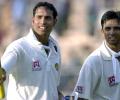
Cricket legends Harbhajan Singh, Venkatesh Prasad, Zaheer Khan, and Sourav Ganguly reminisced about India's historic 2001 Test victory against Australia at Eden Gardens.

Sukanya Verma quizzes you to find out just how much you know about the movies.

A man has been arrested in Kerala nearly 25 years after allegedly murdering his wife in Edachery. The accused, Hameed, had been absconding since September 2001. Police relaunched the investigation, leading to his arrest in Kasaragod district, where he was working as a fish vendor.

Ask rediffGURU and tax expert Mihir Tanna your income tax-related questions.
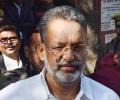
The Allahabad High Court has rejected a plea seeking to halt prosecution proceedings against Sarfaraz Ansari, an alleged sharpshooter linked to deceased gangster Mukhtar Ansari, in connection with the Usri Chatti massacre case.

Former Formula One driver Alex Zanardi, who lost both legs in a racing crash and went on to win Paralympic gold medals, has died at the age of 59.

A look at some of the long-standing barriers or world records which were broken in athletics, cricket and badminton.
Unified Payments Interface (UPI) has reached a record Rs 314 lakh crore in transaction value in FY26, representing more than a 4,000-fold increase since inception.

As Nicole Kidman delivers yet another impressive performance in the OTT series Scarpetta, we explore some of her other compelling movies and shows.

Former Indian Olympic Association (IOA) President Narayana Ramachandran has died in Chennai after a prolonged illness at the age of 77. He served as IOA president from 2014 to 2017 and held key positions in international squash federations.

The last date for candidates who qualified JEE Main 2026 to register for JEE Advanced is May 2, 2026. Fee payment should be completed by May 4, 2026 to be eligible for the exam.

The Bombay High Court has directed the Union government to decide by May 4 on posthumously conferring the Padma Vibhushan award to wrestler Khashaba Dadasaheb Jadhav, India's first individual Olympic medallist.

US President Donald Trump has renewed his call for a high-security ballroom at the White House, citing security concerns after a shooting incident near a journalists' dinner he attended.

Dr B R Ambedkar's legacy has been honoured repeatedly through India's postal history, with stamps capturing his role as the architect of the Constitution and a champion of social justice.

Former India captain Sourav Ganguly supports the BCCI's decision to host Test matches in new venues like Guwahati and Ranchi, alongside traditional centres.

As Riteish Deshmukh turns director again with Raja Shivaji, we look at past actors who stepped behind the camera and delivered some of Hindi cinema's most memorable films.

'You cannot run Parliament with 800 MPs as nobody will get time (to speak in Parliament). And Parliament sits for barely 60 days in a year.' 'Look at the House of Commons of the United Kingdom. They have 650 MPs and they sit for 150 days on an average in a year.'

Rory McIlroy overcame a shaky start to secure his second consecutive Masters title, joining an elite group of golfers who have achieved this feat. His victory came after a tense final round where he held off a strong challenge from Scottie Scheffler.

Apple has announced that John Ternus will succeed Tim Cook as CEO in 2026. Ternus, the current senior vice president of Hardware Engineering, will take over as Cook transitions to executive chairman of the board. This change marks the end of Cook's long tenure and the beginning of a new chapter for Apple.

Ram Gopal Varma celebrated his 64th birthday on April 7 with his friends in Mumbai.

The Devil Wears Prada is getting a sequel in 2026, and reminding us how Bollywood has consistently delivered films and shows that are not just memorable entertainers but also major trendsetters in fashion.
rediffGURU Vipul Bhavsar answers readers' personal income tax queries

Tamil Nadu's AIADMK, leading the NDA in the state, has released its first list of 23 candidates for the upcoming Assembly elections, renominating key leaders and fielding experienced legislators from their traditional strongholds.

Thrissur Rural Police in Kerala have arrested over 100 convicts who had been absconding for years after being sentenced by courts for various crimes. The arrests were made during a special operation called 'Operation Iron Grip'.

Rory McIlroy and Sam Burns share the lead after the first round of the Masters, while Aaron Rai finishes in the top 10. Akshay Bhatia faces challenges on the back nine.

Explore the interesting trend in Bollywood where popular film franchises opt for entirely new lead casts in their sequels.
The Uttar Pradesh Police Special Task Force (STF) has arrested a member of an interstate gang involved in the illegal smuggling of oxytocin injections in Lucknow and seized a large quantity of the drug.
V V S Laxman reflects on his historic partnership with Rahul Dravid during the 2001 Kolkata Test, which helped India recover from a follow-on to win the Test match against a dominant Australian team.

As Jana Nayagan and Avatar: Aang, The Last Airbender become victims of piracy even before they got an official release, Sreeju Sudhakaran looks back at some of the major Indian movies that were impacted by pre-release leaks.

Chennai Super Kings have appointed former England wicketkeeper-batter James Foster as their fielding coach for the upcoming IPL season. Foster brings a wealth of experience from international and franchise cricket.

'The Supreme Court stated that once the delimitation plan is approved by Parliament and receives assent of the President, it cannot be undone. Nor can it be modified.'

Civil Aviation Minister K Rammohan Naidu announced that public sector oil marketing companies will implement a partial and staggered increase in jet fuel prices for domestic airlines, aiming to protect passengers from steep fare hikes.
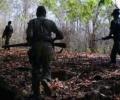
After more than four decades, Chhattisgarh's Bastar region has been declared free of Left-Wing Extremism (LWE), marking the end of the armed Maoist rebellion in the area. The decline is attributed to sustained security operations, improved governance, and socio-economic development initiatives.

The outcome of the assembly elections will not only determine AIUDF's immediate relevance but could also shape its long-term role in Assam's political landscape.

Rajinikanth has praised Aditya Dhar's Dhurandhar The Revenge, starring Ranveer Singh, declaring it a 'must-watch film' as it continues its impressive run at the box office.

As Aamir Khan turns 61 on March 14, Subhash K Jha looks at the 10 turning points in his career through the years.

Much, much, much before Rocky Aur Rani Kii Prem Kahaani fussed over What Jhumka, Asha Bhosle trilled in her alluring voice and teased us with tantalising details about the events leading to her precious Jhumka's loss.

Aviation Turbine Fuel (ATF) prices have more than doubled to a record high, impacting airlines and consumers, while commercial LPG rates also see a significant increase.

Lakshya Sen's quest to become the third Indian to win the All England Open badminton title ended in defeat against Lin Chun-Yi in a closely contested final.
 © 2026 Rediff.com - Advertise with us - Disclaimer - Privacy Policy - Sitemap - Feedback - About us - Terms of use - Grievances