
Bengaluru-based deep-tech company RayVector Technologies is demonstrating its advanced multi-sensor module and wafer-handling technology at SEMICON India. This innovative solution uses sensing, imaging, and AI to detect minute irregularities in semiconductor wafers, helping manufacturers prevent costly production losses. The technology is already being utilised by major global players like Samsung, Intel, and TSMC, highlighting India's growing contribution to the global semiconductor ecosystem.

Bengaluru-based Remidio Innovative Solutions has secured a patent from the Japan Patent Office for its deep learning system that automates retinal image capture. This new patent enhances their existing intellectual property in Japan, strengthening their integrated AI platform and making retinal screening more accessible and cost-effective.

Kerala Home Minister Ramesh Chennithala announced plans to strengthen the state police's Cyberdome to combat cybersecurity threats and deploy indigenously developed robots for traffic management and disaster response. He emphasised the need for coordinated efforts to address growing cyber challenges and protect critical infrastructure, while also highlighting the role of the CoCoN conference in sharing knowledge.

Ranabaali fails to deliver the highs matching the ambitious setup, notes Arjun Menon.

India's cybersecurity agency, CERT-In, has issued a critical advisory warning about autonomous AI agents accessing sensitive data of Indian organisations without authorisation. Government sources on Friday emphasised the need for companies to bolster cybersecurity measures and monitor system activity, noting that while no major compromise occurred, the incident serves as an early warning. Future AI regulation is expected to address the risks posed by these agents.

Telecom industry body COAI and the British High Commission signed an MoU to boost cooperation in AI, connectivity, and digital trust, fostering responsible tech innovation. The pact, signed at the CO.AI 2026 event, focused on AI's role in intelligent networks, security, and public services. Discussions highlighted AI's importance in combating fraud, improving network efficiency, and ensuring secure digital services. TRAI Chairman Anil Kumar Lahoti and Acting British High Commissioner Ben Mellor emphasised the need for balanced governance and international collaboration to ensure secure, inclusive, and responsible digital transformation.

Singeetham Srinivasa Rao, one of Indian cinema's most inventive filmmakers, leaves behind a seven-decade legacy of fearless experimentation.

Finance Minister Nirmala Sitharaman has called upon Indian industry to prioritise not just scale but also resilience, better governance, and deeper technological capabilities to achieve the 'Viksit Bharat' goal by 2047.
Women Inspiring Network (WIN) has launched 'WIN Connect', an AI-powered platform designed to connect global women leaders and enhance opportunities across various sectors. Unveiled in New York, the platform aims to leverage AI to facilitate networking, access to capital, and business growth for its 10,000-strong network across 50 countries.
BRICS leaders, in their New Delhi Declaration 2026, have called for wider access to Artificial Intelligence resources and stronger international cooperation to ensure the technology is safe, secure, inclusive, and reliable. The declaration outlines a broad technology agenda covering AI, cybersecurity, digital public infrastructure, telecom, quantum technologies, and advanced manufacturing, committing to implement the grouping's statement on 'Global Governance of Artificial Intelligence'.

Nasscom President Rajesh Nambiar stated that artificial intelligence is not making India's Business Process Management (BPM) industry obsolete but is instead driving its significant reinvention. He highlighted that the sector has an opportunity to become the world's "intelligent operations and transformation hub" by leveraging AI, analytics, and cloud-based operations, moving beyond traditional call centres. Nambiar outlined three key priorities for the industry, including reimagining processes, building hybrid human-AI operating models, and redefining India's global BPM representation.
HCL Group, a USD 14.8 billion conglomerate, has announced a new partnership with the DP World Professional Golf Tour of India (PGTI). This collaboration aims to leverage technology and innovation to strengthen India's professional golf ecosystem, broaden the sport's reach, and enhance experiences for players, fans, and partners.

Indian equities, particularly the Nifty 50, have significantly underperformed their Asian and global counterparts over the past year, with the index down 10.6 per cent. This lag is attributed to factors like rising global oil prices, rupee depreciation, and a lack of participation in the global chipmaker rally that boosted markets like South Korea and Taiwan.
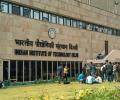
Researchers at IIT Delhi have successfully demonstrated the simultaneous transmission of quantum-entangled photons and classical data over a 50-km optical fibre link. This breakthrough addresses key challenges in integrating fragile quantum signals with existing telecommunications infrastructure, paving the way for more scalable and secure future quantum networks.

India has secured a spot among the top 10 leading emerging-market performers in artificial intelligence (AI) readiness, with private investment in AI more than tripling to USD 4.1 billion in 2025, according to a new World Bank report.

Arunachal Pradesh Chief Minister Pema Khandu and Deputy Chief Minister Chowna Mein paid rich tributes to engineers on National Engineers' Day, commemorating the birth anniversary of Sir M Visvesvaraya. They highlighted the crucial role of engineers in the state's development, infrastructure, and India's overall progress, acknowledging their contributions to nation-building and technological advancement.

RBI Governor Sanjay Malhotra reiterated India's cautious stance on cryptocurrencies due to concerns over monetary sovereignty and capital flows, while actively promoting underlying technologies like distributed ledger technology and tokenisation. He also addressed the global rise in public debt and hardening bond yields, attributing it to increased government and private spending, including that driven by AI, and noted the implications of global interest rates on India's monetary policy.

The BRICS New Delhi Declaration has endorsed India's proposals for a Working Group on Sports Technology and a Sports Goods Manufacturing Conclave, aiming to enhance cooperation and innovation among member nations in the sports sector.
The Automotive Research Association of India (ARAI) has launched comprehensive conformity assessment and certification services for drone manufacturers, aiming to streamline the type approval process for Unmanned Aerial Systems (UAS) in India. This initiative supports the rapidly expanding drone sector by ensuring design, quality, and performance meet evolving safety and airworthiness standards.
A study suggests that targeting the brain's default mode network (DMN), which becomes active during self-reflection, could be a more effective approach to managing chronic low back pain. Researchers found that DMN activates during chronic pain flares, unlike its deactivation during acute pain, indicating chronic pain is deeply linked to one's sense of self. This finding explains why traditional symptom-based treatments often fail and points towards mind-body and psychedelic therapies.
Specialty chemicals maker Anupam Rasayan India Ltd has become the first company globally to commercialise Ethyl trifluoroacetate (ETFA) production using its proprietary continuous flow chemistry platform. This innovative technology offers significant advantages over traditional methods, and ETFA is a crucial component for pharmaceuticals, life sciences, and performance materials, with a global market estimated at USD 500-600 million.

India-Pakistan clashes in cricket and hockey drew big audiences at the Aichi-Nagoya Asian Games, helping fuel stronger viewership and a 20% revenue rise.

Experts laud the decision to impose a 0.4 per cent Merchant Discount Rate (MDR) on UPI transactions exceeding Rs 2,000, effective October 15. This move, along with a dedicated fund for small merchants, is seen as crucial for creating a sustainable digital payments ecosystem, incentivising expansion in rural areas, and funding innovation while keeping most transactions free for users.

Tata Consultancy Services (TCS) has stated that the recent suspension of eight IT firms, including itself, from a US green card programme will not impact its workforce strategy or customer engagements, citing its low number of applications and focus on local hiring.

Canadian author Anne Carson has been awarded the 2026 Nobel Prize in Literature for her "bold and inventive oeuvre" that blends classical tradition with contemporary forms. The Swedish Academy highlighted her distinctive work spanning poetry, translation, and literary scholarship, noting her unique approach to language and ancient texts. Carson's career is marked by her ability to create new literary forms by placing classical authors alongside modern writers and transforming mythological figures into contemporary narratives.

PFRDA Chairperson S Ramann announced an ambitious target to add 2-3 crore new subscribers to the National Pension System (NPS) within the next two years. This growth will be significantly driven by the new 'NPS Tatkal' scheme, which enables direct enrolment and contributions via UPI applications, making the pension system more accessible, especially in tier 2 and tier 3 cities and for the informal sector.

Prime Minister Narendra Modi, speaking at the UPSC centenary, urged a fundamental shift in civil services recruitment and governance. He highlighted the need for services to adapt to an "instant-delivery world" powered by AI, focusing on citizen-centricity and evaluating candidates' motivation beyond academic knowledge. The PM also praised Captain Smit Machchhar's bravery during his address.

Researchers have discovered a method to externally manipulate a cell's automatic waste clearance process, known as autophagy. This breakthrough, involving the protein LC3, could offer new therapeutic targets for diseases like cancer and Parkinson's, where cellular cleansing mechanisms are often impaired.
Arunachal Pradesh Chief Minister Pema Khandu launched a mobile application for the Itanagar Municipal Corporation (IMC) to enhance garbage collection. The app allows residents to track garbage trucks in real-time, report overflowing bins with photos, and ensures accountability through before-and-after tracking, making civic services smarter and more citizen-friendly.

Specialists at AIIMS, Delhi, affirm that robot-assisted procedures significantly improve difficult gallbladder operations by offering enhanced visualisation and instrument control. This technology aids in navigating complex cases involving severe inflammation and unexpected anatomy, and is seen as the next evolutionary step in surgical techniques, potentially phasing out conventional laparoscopy.

Customer experience firm Fusion CX is significantly investing in AI-enabled services and data infrastructure, aiming to increase its share in total turnover to 25% within 12-18 months. The company, which reported a turnover of Rs 1,818.13 crore in FY26, is preparing for an IPO of Rs 800-1,000 crore in October, driven by organic growth, acquisitions, and its AI strategy.

Industry experts advocate for India to develop its own artificial intelligence (AI) safety framework, distinct from US or EU models, to address unique challenges like deepfakes and cyberattacks. They call for a comprehensive commitment involving all stakeholders and a hybrid regulatory approach combining voluntary and binding measures, as the Indian government also considers new AI regulations.

'I don't think the government will sacrifice such a fine institution for monetary gains.'

Microsoft India and South Asia President, Puneet Chandok, discusses the company's strong belief in human-centric AI development, significant investments in India's cloud and AI infrastructure, and the country's pivotal role as an AI market, talent hub, and technology builder. He highlights AI's impact on jobs and the need for responsible innovation.

Finance Minister Nirmala Sitharaman criticised commentators who express pessimism about India's demographic dividend, asserting that the country's youth are actively driving economic growth and innovation. She also highlighted the dual nature of AI and the need for robust safeguards in emerging technologies like quantum computing to balance innovation with safety.
Two IIT Gandhinagar students have developed "TrustGate," an AI-based cybersecurity system designed to protect critical infrastructure like water treatment plants and power grids. The system uniquely combines network traffic and physical sensor data to detect sophisticated cyber attacks, identify affected equipment, and provide real-time alerts to operators, earning them an international award.

Carlos Alcaraz has firmly stated that Grand Slam tournaments should maintain their best-of-five sets format, arguing that shortening men's matches would 'kill the legacy' of tennis's four majors. Instead, the world number three advocates for changes to the sport's demanding tour calendar to address player workload.

Researchers at IIT Indore have developed HGAST, an AI tool designed to correct gender-specific errors in translations from English to Hindi, Marathi, and Gujarati. The tool acts as a correction layer, identifying and rectifying masculine verb forms often used by AI systems when translating female speech, significantly improving accuracy for female speakers without retraining existing models.
IIT Bhubaneswar and IIT (Indian School of Mines) Dhanbad have signed a Memorandum of Understanding to enhance research collaboration and academic interactions, particularly in semiconductor and basic sciences. The agreement facilitates joint research projects, doctoral student supervision, faculty and student exchanges, and shared experimental resources, aiming to advance knowledge and create lasting impact.
The University of Delhi and semiconductor major AMD have signed a Memorandum of Understanding (MoU) to train up to 10,000 students and faculty in industry-relevant artificial intelligence skills over the next year. This collaboration will provide access to AMD's AI Engage Developer Programme, including its open-source ROCm AI software platform, learning resources, and developer GPU cloud credits, aiming to foster indigenous AI capabilities and bridge the gap between academia and industry.
