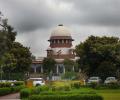
The Supreme Court of India resumed hearing petitions challenging the Special Intensive Revision of electoral rolls in Bihar, addressing the use of Aadhaar and concerns about voter deletions.

Assam has published its draft electoral roll with 2.52 crore electors, an increase of 2.19 lakh voters since the last revision. The list includes detailed breakdowns by gender, age, and disability, with a period for claims and objections until December 11, and the final list due on January 4 next year. This revision is part of a unique Special Revision process for the state.
Opposition parties are questioning the Election Commission's intentions behind the second phase of special intensive revision of electoral rolls in 12 states and Union Territories. The BJP has slammed the Congress and called the opposition a 'herd of dissatisfied souls'.
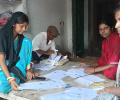
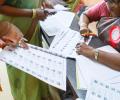
The Election Commission of India (ECI) asserts that major political parties participated in the Special Intensive Revision (SIR) of electoral rolls, deploying booth level agents despite opposing the exercise in the Supreme Court. The ECI defends its authority to conduct the revision to maintain the integrity of elections.
West Bengal Chief Minister Mamata Banerjee has accused the BJP of bribing voters and has labelled the Special Intensive Revision (SIR) of electoral rolls as a major scam. She also predicted the BJP government at the Centre would fall in 2026.

The Bombay High Court in Goa ruled that provisions of the Representation of the People Act and Registration of Electors Rules remain in force during a Special Intensive Revision of electoral rolls. The court directed authorities to include six members of a Goa family in the voter list, criticising the Election Commission's system for rejecting Form 8 applications for residence change, stating it denied citizens their right to vote and amounted to suspending legal provisions.

The draft electoral roll for Uttar Pradesh, published on Tuesday, includes 13.58 crore voters, marking an increase of over 18 lakh voters since April. The revision, with January 1, 2027, as the qualifying date, aims to include new eligible citizens and remove duplicate or deceased entries. Citizens can submit claims and objections until December 16, with the final roll to be published on January 4, 2027. Special camps and online facilities are available for verification and updates.
The Supreme Court has reserved its verdict on a petition challenging the Special Intensive Revision (SIR) of electoral rolls in Bihar, following arguments from various lawyers and the Election Commission of India.

The Supreme Court will hear a batch of pleas on December 9, including one by Congress leader Rahul Gandhi and other INDIA bloc leaders, alleging widespread voter deletions and irregularities in the special intensive revision (SIR) of electoral rolls. The petitioners seek to question the Election Commission on its decision-making process, particularly regarding whether SIR decisions were collective or unilateral, and modifications to online registration systems. The EC has defended its actions, stating that decisions were unanimous and no changes were made to statutory forms.
The Election Commission has informed the Supreme Court that over 37 lakh appeals concerning deletions or inclusions in West Bengal's electoral rolls remain pending under the Special Intensive Revision. The apex court-appointed tribunals have disposed of only a fraction of the 38.20 lakh appeals filed, prompting the Supreme Court to seek data and a plan for streamlining the adjudication process.
Tamil Nadu's ruling DMK has filed a petition in the Supreme Court challenging the Election Commission's plan to implement the Special Intensive Revision of electoral rolls in the state.
Delhi's Chief Electoral Officer, Ashok Kumar, announced the reverification of over 47 lakh voters whose names were removed from draft electoral rolls. This initiative addresses complaints of eligible voters being omitted and aims to ensure no genuine voter is left out before the final lists are published on December 4. Booth-level officers are resolving discrepancies and voters can fill Form 6 for inclusion.

The Election Commission has provided a fresh opportunity for voters in seven states marked as Absent, Shifted, Dead, or Duplicate (ASDD) to be included in the final electoral rolls. This decision comes amidst allegations of disenfranchisement and aims to facilitate the inclusion of electors whose enumeration forms were not returned during the Special Intensive Revision exercise.
The Supreme Court is scheduled to hear a batch of pleas challenging the Election Commission's decision to conduct a Special Intensive Revision (SIR) of electoral rolls in Bihar. Political parties and other petitioners have raised concerns about the revision process.
Uttar Pradesh's electorate has increased by over 84 lakh following the completion of the Special Intensive Revision (SIR), according to the final voter list. The revision exercise, conducted across all 75 districts, aimed to update and refine the electoral roll, resulting in a significant rise in both male and female voters, as well as an improved gender ratio.

Maharashtra has completed 66.42 per cent of its pre-Special Intensive Revision (SIR) mapping work, with significant variations in progress across different districts, according to officials.

The West Bengal government has transferred over 500 bureaucrats ahead of the Special Intensive Revision (SIR) of electoral rolls. The move has drawn criticism from the opposition BJP, who allege it is an attempt to manipulate the electoral process.

Senior Trinamool Congress leader Kalyan Banerjee has commented on the Supreme Court judgment regarding the Special Intensive Revision (SIR) of electoral rolls, emphasising its specific application to the Bihar case and highlighting the Election Commission's limited authority in determining citizenship.

Special Intensive Revision of electoral rolls in Bihar reveals millions of voters missing or deceased, prompting Election Commission action.

52 lakh voters were deleted and 48 lakh were added in Uttar Pradesh's electoral rolls.
The Supreme Court has agreed to hear a plea challenging the Election Commission's decision to conduct Special Intensive Revision (SIR) of electoral rolls in Tamil Nadu, Kerala and West Bengal. The court is also addressing concerns about disenfranchisement and citizenship issues related to the revision process.

"There is bound to be revision," the top court said, "otherwise, how will the poll panel delete the names of those who are dead, migrated or shifted to other constituencies?"

The Election Commission has released the final electoral roll for Tamil Nadu, revealing a significant decrease in the number of voters due to deletions and new additions.

The Election Commission of India (ECI) has announced a revised schedule for the Special Intensive Revision of Maharashtra's electoral roll, pushing the final publication date to November 16, 2026. The period for filing claims and objections has also been extended.
West Bengal Chief Minister Mamata Banerjee is set to hold a dharna in Kolkata against alleged arbitrary deletions in the state's electoral rolls, marking a return to her roots as a street fighter and signalling a key political battle ahead of Assembly elections.
The Supreme Court has directed the Election Commission to address typographical errors and other mistakes in the final Bihar electoral roll. The court will hear further arguments on November 4.

The Election Commission has revised the schedule for the Special Intensive Revision of electoral rolls in Maharashtra, Andhra Pradesh, Haryana, Telangana, Nagaland, and Delhi, extending deadlines for claims, objections, and final publication dates following requests from chief electoral officers.

The Supreme Court on Thursday expressed its primary concern for ensuring access for electors whose names were omitted from Delhi's draft voter list during the Special Intensive Revision (SIR) of electoral rolls. The court noted the Election Commission's provision for downloading enumeration forms and will review the matter on December 2, while also seeking details on applications for various voter forms.

An independent commission of retired judges has formally requested Uttar Pradesh Chief Minister Yogi Adityanath to furnish supporting data for his statement alleging the exclusion of 1.27 crore Hindus from the state's voters' list, amidst concerns over impending elections.
Delhi's draft electoral roll has been published, showing 47.7 lakh voters excluded. Those omitted can file claims until September 30, with the final roll due on November 4. The exclusion follows a Special Intensive Revision exercise where many electors were categorised as "uncollectable."
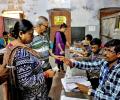
A plea has been filed in the Supreme Court seeking Special Intensive Revision (SIR) of electoral rolls, particularly before parliamentary, state assembly and local body elections. The court has agreed to hear a batch of petitions challenging the Election Commission's decision to undertake special intensive revision of electoral rolls in Bihar.
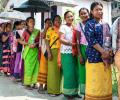
In its instructions issued to the chief electoral officer of Assam, the poll authority said that "software-based" reports should be generated for 'black and white images', 'not to specification images', 'non-human images' and 'no image' entries.

The Supreme Court has directed the Election Commission to investigate allegations of false Form 7 applications being filed for the deletion of electors in the Mustafabad assembly constituency in Delhi. The plea highlighted reports of fraudulent applications, some filed in the names of booth level agents who denied knowledge, and others claiming living individuals were dead or had moved. The EC is tasked with verifying these claims and taking remedial action.

The Supreme Court clarified on Wednesday that it has not yet made a final ruling on the legality of the Election Commission's "logical discrepancy" category used for scrutinising voter details during the Special Intensive Revision of electoral rolls. The court noted that its previous permission for this exercise in West Bengal was only an interim arrangement and its Bihar SIR decision was not a final determination of all related issues.
Following a Supreme Court directive, details of names deleted from Bihar's draft electoral rolls have been published online. The Election Commission defends the special intensive revision process.
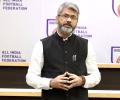
The AIFF-appointed Electoral Officer has approved the withdrawal of Hanif Mohammed from the Karnataka State Football Association's representation in the Electoral College for the December 20 elections. This decision allows All India Football Federation President Kalyan Chaubey to take his place, making him eligible to contest for the AIFF president's post. Hanif cited medical grounds for his withdrawal, which was supported by a medical certificate and accepted by the Electoral Officer.
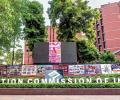
The Election Commission (EC) defended its power to revise electoral rolls and ensure no foreigners are registered as voters before the Supreme Court. The EC argued it has a constitutional duty to maintain the purity of electoral rolls and exclude those not eligible to vote.

The Supreme Court has instructed the Election Commission to probe allegations of irregularities, specifically concerning bulk Form 7 applications, during the special intensive revision of electoral rolls in Uttar Pradesh. The court's directive came after petitioners raised concerns about the deletion of voters' names, with the EC acknowledging bulk submissions but stating they were not acted upon due to being false.

Appellate tribunals in West Bengal have only disposed of a small fraction of the appeals filed against decisions made during the electoral roll revision, raising concerns about the efficiency of the process.
The Election Commission (EC) has published the draft electoral rolls for Bihar, marking a key step ahead of the upcoming assembly elections. The publication follows a month-long Special Intensive Revision (SIR) exercise.
