
India is set to develop its first 100% hydrogen-powered Direct Reduced Iron (DRI) plant, a Rs 207-crore national pilot project led by CSIR-IMMT. This initiative aims to significantly reduce carbon emissions in the steel sector and achieve net-zero commitments, focusing on adapting the technology to India's domestic iron ore conditions.
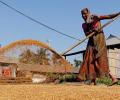
Chandigarh is set to launch the Central Bank Digital Currency (CBDC), or digital rupee, for Direct Benefit Transfer (DBT) under the Pradhan Mantri Garib Kalyan Anna Yojana (PMGKAY) on August 14. This initiative makes Chandigarh the first Union Territory to fully roll out CBDC-based DBT for food subsidy, enhancing transparency and efficiency in welfare delivery. The digital rupee, issued by the RBI, will be purpose-bound for purchasing foodgrains from authorised merchants.

India's markets regulator Sebi has launched 'Demat 2.0', a pilot project for tokenisation of corporate bonds, enabling atomic settlement through integration with RBI's wholesale CBDC. This new market infrastructure uses Distributed Ledger Technology (DLT) to make bond issuance, trading, and settlement faster and more efficient. India is the first country to issue corporate bonds natively on a distributed ledger with central bank digital currency settlement. Additionally, RBI Governor announced new UPI innovations: 'Tap & Pay' for faster POS transactions and MyUPI, an AI-powered customer support solution.

Regional OTT platform STAGE is set to release India's first AI-made biopic on farmer leader Sir Chhotu Ram. The project leverages artificial intelligence for various aspects of filmmaking, from visualisation to character generation, aiming to reduce production costs and expand storytelling possibilities for underserved cultures and languages.

American-born economists Robert E. Hall and Michael Woodford have been awarded the Nobel memorial prize in economics for their groundbreaking work on the microeconomic foundations of macroeconomic stabilisation, demonstrating how individual household and business actions influence the broader economy.

GE Aerospace is set to significantly increase its supply chain spending in India, targeting USD 400 million by 2030, up from USD 200 million in 2025. This expansion reflects the company's commitment to India's burgeoning aviation market, driven by substantial aircraft orders and the strategic importance of its manufacturing and technology centres in Pune and Bengaluru.
AI-managed services firm RapidCanvas, with a significant employee base in India, announced on Friday that it has raised USD 29 million (approximately Rs 275 crore) in Series B funding. The round was led by Vertex Ventures SEA and India, with participation from Hitachi Ventures and existing investors. The company plans to use the funds to expand its go-to-market teams, partner network, and grow its employee base and engineering teams in India, the US, and Brazil, while also investing in product development.

India is developing a 'Gross Domestic Knowledge Product' (GDKP) to identify and define its knowledge assets, a move aimed at safeguarding them amidst global efforts to monetise and 'weaponise' knowledge, according to NITI Aayog member R Balasubramaniam.
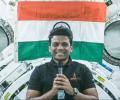
Following astronaut Shubhanshu Shukla's historic visit to the International Space Station, a significant surge in interest for space science careers is observed among Indian students. Srimathy Kesan of Space Kidz India highlights this shift from traditional fields like engineering and medicine, while Nobel laureate Didier Queloz emphasises the crucial role of curious young scientists in shaping the future.

Jio Platforms (JPL) is preparing a capex-light strategy to commercially launch 6G services in the early 2030s through software upgrades, rather than fresh infrastructure investments, according to Akash Ambani, managing director of JPL.
Technopark-based space-tech startup HEX20 has been selected by the UAE Space Agency to develop a spacecraft for an asteroid probe, marking the first time an Indian private company has been chosen for a deep-space mission by the Gulf nation. HEX20 is contributing its expertise in developing the spacecraft bus and software for the Emirates Mission to the Asteroid Belt, which is scheduled for launch in March 2028 to study asteroid 269 Justitia.

National level shooter Homanshika Reddy from Hyderabad has developed Somatrace, a wearable system that tracks spinal movement to prevent injuries in athletes. Her innovation, inspired by personal experience, has earned her a spot in the Top 20 of Samsung Solve for Tomorrow 2026.
Researchers at IIT Indore have developed a groundbreaking method to convert carbon dioxide and glycerol, two common waste materials, into valuable green chemicals like lactic acid and formic acid in just seven minutes. This low-energy process uses a specially designed ruthenium-based catalyst and microwave heating, offering a sustainable solution for waste management and green manufacturing.

Jay Meena dreamed of becoming a cricketer, but fate had other plans.

Karl Deisseroth, Peter Hegemann, and Georg Nagel have been jointly awarded the 2026 Nobel Prize in Physiology or Medicine for their groundbreaking discoveries in light-gated ion channels and optogenetics, a method revolutionising the study of brain function.

Quimcy Dsouza, a former Maharashtra footballer, made an unconventional journey to the Asian Games teqball semifinals after discovering the sport through Ronaldinho. Despite a defeat, she expressed pride in her performance and her role in pioneering teqball in India, highlighting the challenges of limited funding and her dedication to growing the sport.

Singeetham Srinivasa Rao, one of Indian cinema's most inventive filmmakers, leaves behind a seven-decade legacy of fearless experimentation.
Tata Consultancy Services (TCS) has inaugurated India's first Industrial Autonomy & Engineering Lab in Pune, a "lights-out factory lab" designed to advance AI-led manufacturing. The facility features a robotic battery pack assembly line, enabling manufacturers to prototype and scale AI-first production systems with minimal human intervention, simulating self-optimising factories.

Japanese Olympic Committee chief Seiko Hashimoto acknowledged "many problems" at the Aichi-Nagoya Asian Games, particularly regarding accommodation, but emphasized that criticism doesn't reflect the full experience. She highlighted innovative solutions like cruise ship lodging as potential models for future cost-effective international competitions and stressed the importance of learning from challenges, including weather disruptions. Hashimoto also celebrated Japan's record medal haul at the Games.

Jaspal Rana, a legendary Indian shooter and influential coach, has passed away at 49 after battling cardiac issues. He was a pioneer who brought shooting into the national spotlight with his fearless performances and later shaped the careers of many world-class athletes, including Manu Bhaker, leaving an indelible mark on Indian sports.

The Haldwani forest division has launched India's first AI-based forest acoustic surveillance system. This innovative technology uses AI, acoustic sensors, and long-range wireless communication to detect illegal logging, poaching, and other suspicious activities in real-time, even in remote areas. Powered by solar energy, the system provides continuous monitoring, significantly enhancing forest protection, wildlife conservation, and biodiversity monitoring efforts.
TOPGUN Shooting Academy is set to launch Vision Impaired (VI) Shooting across its branches in India. This initiative aims to make the sport accessible to visually impaired individuals, utilising sound-based technology for target aiming, and is recognised by World Shooting Para Sport (WSPS).

Jay Meena, once a mischievous schoolboy rusticated for a prank, has made history by winning India's first-ever Asian Games medal in soft tennis. His journey from a troubled youth to a bronze medallist at the Aichi-Nagoya Asian Games is a testament to destiny and the guidance of his coach. Meena hopes his achievement will boost the sport's profile in India and pave the way for its inclusion in future events like the Commonwealth Games.
A seminar in New Delhi commemorated Acharya Prafulla Chandra Ray's birth anniversary, focusing on his significant contributions to pharmaceutical sciences and his vision for indigenous research and self-reliance. Organised by DPSRU and VIBHA, the event highlighted Ray's pioneering efforts in "Swadeshi science" and his role in establishing India's pharmaceutical industry.

PhonePe, at the Global Fintech Fest 2026, unveiled its strategic vision for the next decade, focusing on inclusive digital progress for individuals, households, and businesses across India. The roadmap details innovations in financial inclusion, wealth creation, credit access, and merchant solutions.

India's first-ever Mixed Martial Arts medallist, Suchika Tariyal, has alleged that "weird weight rules" at the Asian Games robbed her of a deserving gold medal. She claims she was clearly winning her semifinal bout but the outcome was declared a draw, leading to her bronze medal instead of a potential gold.

India has accumulated experience organically and in public, through blood, sweat and toil -- one commissioning and one agreement at a time -- and is called a regional power. China has accumulated hulls, by misdirecting its industrial capacity, and is mistakenly called a superpower. The Indo-Japan defence agreement pushes this theory to its limits without ever naming the dragon in the room, points out Dr Abhishek Puri.
Robotic surgery is poised to transform healthcare in Delhi, expanding access to specialised expertise through the Indian-developed SSI Mantra system. Delhi is emerging as a hub for advanced surgical care, with successful implementations at Rajiv Gandhi Cancer Institute, including pioneering telesurgery. This technology aims to make robotic surgery more accessible and sustainable, fostering an ecosystem for training and innovation.
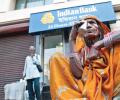
State Bank of India (SBI) is developing an innovative solution to assess the creditworthiness of small businesses lacking GST registration by utilising UPI transaction data. This initiative aims to provide end-to-end digital loans within a day, addressing the financial exclusion of many small enterprises.
Researchers from IIT Guwahati and BHU have devised an eco-friendly biological method to treat textile wastewater, specifically targeting toxic azo dyes. Their novel bacterium, 'Brevundimonas sp. AJZ05', effectively degrades 98.50 per cent of Direct Blue-6 dye, producing non-toxic byproducts, offering a sustainable alternative to conventional chemical treatments.

Chinese President Xi Jinping addressed the BRICS summit, urging the bloc to play a significant role in achieving peace and tranquillity in West Asia and the Gulf region. He highlighted BRICS' growth over two decades, its efforts in tackling global challenges, and its steadfastness in safeguarding the interests of the Global South. Xi called for opposing the Cold War mentality, strengthening multilateralism, and promoting cooperation in emerging domains like AI, as China prepares to chair the next summit.
Veer Ganapathy, son of renowned golfer Rahul Ganapathy, is set to represent Bengaluru Stallions in the AM Green IGPL 2026. The team, also featuring Trishul Chinnappa, Sunhit Bishnoi, and Sudhir Sharma, was unveiled for the second season of India's first franchise-based professional golf league. The IGPL aims to promote golf beyond elite circles and provide exposure to young talent.

Emerging as a prominent voice in the late 1960s and early 1970s, Steinem transformed the national discourse around gender equality, civil rights, and reproductive freedom. She first gained widespread media attention in 1963 with her investigative expos, "I Was a Playboy Bunny," which revealed the sexist and underpaid conditions faced by workers at Hugh Hefner's Playboy Club.

Randhir Singh, a prominent figure in Indian sports and the Olympic movement, has died at the age of 79. He was known for his contributions as an athlete, administrator, and advocate for Indian sports on the international stage.

Professor Deepak Dhar of the International Centre for Theoretical Sciences (ICTS) has been awarded the prestigious 2026 Dirac Medal for his significant contributions to statistical mechanics and complex systems. He shares the honour with three other scientists for their pioneering work extending statistical mechanics into diverse fields like AI and theoretical neuroscience.
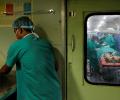
Prof Ajit Kumar Chaturvedi, Vice-Chancellor of Banaras Hindu University, highlighted Artificial Intelligence's transformative potential in healthcare, emphasising its role in augmenting doctors' capabilities and enhancing efficiency. Speaking at PGIMER's Foundation Day, he stressed the need for India to develop AI solutions tailored to its unique healthcare realities, moving beyond being a mere consumer of Western-trained systems. PGIMER Director Vivek Lal also detailed the institute's expansion and commitment to affordable healthcare.

From Tumbbad to Kantara, these folklore-fuelled films prove Indian cinema has plenty of strange, spooky and spectacular myths to bring to the big screen.

Quimcy D'Souza, a self-funded and self-coached Indian teqball player, competed at the Asian Games with the aim of popularising the sport in India. Despite narrowly missing out on two bronze medals, D'Souza views her journey as a crucial first step towards establishing teqball in the country and inspiring more athletes.

Coco Gauff celebrates the historic U.S. Open semi-final clash between Ben Shelton and Frances Tiafoe, marking the first time two Black American men will compete at this stage in a Grand Slam in the Open Era. Gauff, also in the women's semi-finals, expressed her pride and admiration for Tiafoe's inspiring presence on tour.

Lalremsiami Hmarzote, Mizoram's first female Olympian and Asian Games medallist, is now India's offensive lynchpin, aiming for a first Asian Games hockey gold since 1982, after overcoming initial family resistance and training on dirt pitches.
