
Pakistan has voiced concerns over the alleged variations in the flow of the Chenab River and has written a letter to India seeking clarification. They also commented on an incident in Bihar involving the removal of a Muslim woman's veil.
The Indus Waters Treaty, brokered by the World Bank, has governed the use of the Indus River and its tributaries between India and Pakistan since 1960.
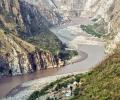
Pakistan may face a significant water shortage during the Kharif season due to reduced water supplies from India.

A Pakistani senator has warned that India's approval of a hydel power project on the Chenab River will further inflame tensions between the two countries, particularly in light of the suspended Indus Waters Treaty.
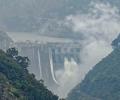
Pakistan has written to India seeking information about the Svalkot hydroelectric project on the River Chenab, according to the Foreign Office spokesperson.

A visual journey through some major events of 2025, from the spiritual grandeur of Mahakumbh Mela in Prayagraj to the strategic success of Operation Sindoor, India's decisive military response following the Pahalgam terror attack.
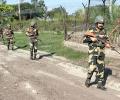
Border Security Force troops in Akhnoor, Jammu and Kashmir, have intensified their patrolling along the Chenab river, a crucial stretch of the India-Pakistan border in the Jammu sector.
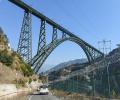
The inauguration of the Chenab Bridge on June 6 marks a historic milestone in India's infrastructure journey, completing the decades-long Udhampur-Srinagar-Baramulla Rail Line project.
It is the first major contact of its kind since the Pakistan-India conflict in May, the paper said, citing sources.
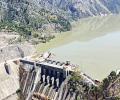
India has stopped releasing water from the Baglihar Dam on the Chenab River and is planning similar measures at the Kishanganga Dam on the Jhelum River, following a recent terror attack in Jammu and Kashmir. These hydroelectric dams offer India the ability to regulate water releases. This decision potentially affects the Indus Waters Treaty, a decades-old agreement between India and Pakistan governing the use of the Indus River and its tributaries. The Baglihar and Kishanganga dams have been points of contention between the two nations in the past.
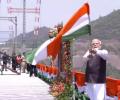
After the Chenab bridge, Modi also inaugurated India's first cable-stayed rail bridge over the river Anji. The prime minister then walked on the Chenab rail bridge holding the tricolour.
India's measures announced against Pakistan on April 23 will remain effective, the sources said.

Lieutenant Governor Manoj Sinha asserts that the Indus Waters Treaty was a 'historic mistake' and its termination will greatly benefit Jammu and Kashmir by allowing it to harness its hydropower potential.

Another official said that India is planning to enhance its current hydropower capacity of around 3000 megawatts on the rivers that were earlier being used by Pakistan and a feasibility study in this regard is planned, the official said
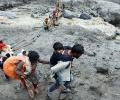
Nine-year-old Devanshi was among the hundreds of pilgrims who had gathered in Chositi for the last leg of the yatra to Machail Mata temple when tragedy struck on Thursday. Buried under mud and debris when a Maggi-point shop was hit by flash floods, she emerged hours later, rescued by her uncle and other villagers.

A new book reveals that India and Pakistan discussed a communal division of Jammu & Kashmir along the Chenab river before the Kargil war in 1999.

The bus, which was on its way from Kishtwar to Doda town, skidded off the road and fell down into Chenab river.

"Not only that, Pakistan is also the enemy of poor's bread and butter. What happened on April 22 in Pahalgam is an example of that. Pakistan attacked 'insaniyat' and Kashmiriyat in Pahalgam.
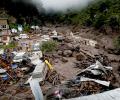
Jammu and Kashmir Chief Minister Omar Abdullah briefed Prime Minister Narendra Modi on a devastating cloudburst in Kishtwar district that claimed 60 lives and injured over 100. Abdullah expressed condolences and assured assistance, while also questioning potential administrative lapses.
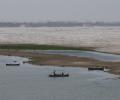
Weeks after India placed the 1960 Indus Waters Treaty (IWT) in abeyance following the April 22 Pahalgam terror attack, Pakistan has signalled its willingness to discuss New Delhi's long-standing concerns about the treaty, sources said.
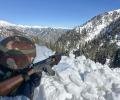
The exchange of fire occurred even though the directors general of military operations of India and Pakistan spoke over the hotline on Tuesday amid rising tensions between the two countries over the Pahalgam terror attack on April 22.

For the ninth consecutive night, Indian and Pakistani troops engaged in small arms fire along the Line of Control (LoC) in Jammu and Kashmir, continuing a pattern of heightened border tensions. The skirmishes, initiated by Pakistani troops in violation of the ceasefire agreement, have led to a tense situation along the LoC and International Border (IB). The incidents come in the wake of the April 22 terror attack in Pahalgam, which claimed the lives of 26 people, mostly tourists. Civilians residing near the border have begun preparing their bunkers, anticipating potential escalation. Despite a recent hotline conversation between the Directors General of Military Operations (DGMOs) of India and Pakistan, where India cautioned Pakistan, the ceasefire violations persist.

Pakistan's ambassador to Russia, Muhammad Khalid Jamali, has warned that Pakistan will respond with "full spectrum of force", including nuclear, if it is attacked or its vital water flow is disrupted. The warning comes amid heightened tensions between Pakistan and India following a terrorist attack in Jammu and Kashmir. Jamali also reiterated Pakistan's stance on the Indus Water Treaty, saying any attempt to stop or divert water flow would be considered an act of war. He urged de-escalation, emphasizing the potential danger given both countries possess nuclear weapons. Jamali further called for a neutral investigation into the Kashmir attack, suggesting the involvement of China and Russia. He also highlighted the need to address the root causes of the conflict, pointing to the unresolved Kashmir issue and its potential for resentment.
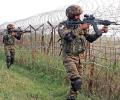
Pakistan troops have violated the ceasefire agreement for the 11th consecutive night, firing on Indian posts along the Line of Control (LoC) in Jammu and Kashmir. The firing began in Kupwara and Baramulla districts and spread to other sectors, including Poonch, Rajouri, Mendhar, Naushera, Sunderbani, and Akhnoor. The Indian Army responded promptly and proportionately. The ceasefire violation comes despite a recent phone call between the Directors General of Military Operations (DGMOs) of India and Pakistan on April 29. This marks the latest escalation of tensions between the two countries, following a terror attack in Pahalgam in April.
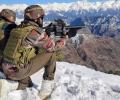
Pakistan's troops have engaged in unprovoked firing along the Line of Control (LoC) and International Border (IB) in five districts of Jammu and Kashmir, prompting retaliation from the Indian Army. This marks the eighth consecutive night of such incidents, following heightened tensions stemming from a recent terror attack in Pahalgam. Civilians residing along the LoC and IB are preparing their bunkers in anticipation of potential escalation.
Pakistan has halted the construction of contentious canals in Punjab province after India suspended the Indus Waters Treaty following a deadly terrorist attack in Kashmir. The decision to suspend the canals project was made after Prime Minister Shehbaz Sharif met with PPP chairman Bilawal Bhutto-Zardari and agreed to address the concerns of Sindh province, where the project had sparked protests. The canals project, aimed at irrigating the desert region in Punjab, was seen as a threat to water resources in Sindh. Both sides have agreed to seek consensus on the issue in the Council of Common Interests (CCI), a high-powered inter-provincial body. Meanwhile, Pakistan has reiterated the importance of the Indus Water Treaty for its water security and economy, and condemned India's move to suspend it.
India has suspended the Indus Waters Treaty with immediate effect, accusing Pakistan of breaching the pact by refusing to negotiate modifications and engaging in sustained cross-border terrorism. The decision follows a recent terror attack in Jammu and Kashmir that killed 26 people. Pakistan has rejected India's move, calling it an "act of war."
'Militarily, it risks escalating tensions with Pakistan, potentially triggering conflict due to Pakistan's heavy reliance on the Indus.'

The 1.3-kilometre-long bridge aims to boost connectivity to the Kashmir Valley and it is being constructed at a cost of Rs 1,486 crore as part of the Udhampur-Srinagar-Baramulla Railway Link project
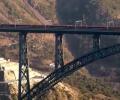
The train, on its maiden trial run, arrived at Srinagar station in the Nowgam area on Srinagar's outskirts from Katra in Jammu.

Terrorism and insurgency in J&K had subsided when India demolished East Pakistan -- for the simple reason that Pakistan understands power. We need to follow Chanakya's dictum of Saam, Daam, Dand, Bhed for strategising against Pakistan, asserts Lieutenant General Prakash Katoch (Retd). The ground truth is that unless we are prepared to acknowledge our shortcomings, including massive intelligence failures, punish those responsible and take corrective actions, we will continue in the same vein, asserts Lieutenant General Prakash Katoch (Retd).

The case pertains to the 340 MW Seli Hydropower Electric Project on the Chenab river in Lahaul and Spiti district.

The much-awaited world's highest railway bridge spans the Chenab river at a height of 359 metres (1,178 feet) above the river, which is 35 metres taller than Paris' Eiffel Tower.

The bridge over the Chenab river is the world's highest single arch railway bridge.

Discover our country through great Indian rail trips!

The Chenab Rail Bridge, the world's highest railway bridge, over the Chenab river will open soon.

Pakistan criticised the laying of foundation stones for the construction of the Rattle and Kwar Hydroelectric Projects on the Chenab River in Kashmir.

A view of the under-construction Chenab bridge above the clouds, in Reasi, Jammu and Kashmir, February 8, 2022.

India agreed to give up the Poonch salient as well as Uri. To the north India also proposed to give up land in the Gurez sector giving the entire Neelam/Kinshanganga valley to Pakistan. In return India sought control of the post dominating Kargil town, points out Colonel Anil A Athale (retd).
'India joined a select group of countries at the global level after this finding and it will fulfil the vision of Prime Minister Narendra Modi's 'Aatmanirbhar Bharat' (self-reliant India)'
 © 2026 Rediff.com - Advertise with us - Disclaimer - Privacy Policy - Sitemap - Feedback - About us - Terms of use - Grievances