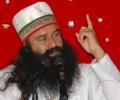
The Punjab and Haryana High Court has acquitted Dera Sacha Sauda chief Gurmeet Ram Rahim Singh in the 2002 murder case of a journalist, overturning a previous conviction by a special CBI court.

The final teams have qualified for the 2026 FIFA World Cup, which will be hosted by the United States, Canada, and Mexico. Find out which teams have qualified and their group stage assignments.

Turkey has qualified for the 2026 World Cup after a 24-year absence, defeating Kosovo in their playoff final. Kerem Akturkoglu's goal secured the victory, sparking celebrations across Turkey.

Nationalist Congress Party (SP) MLC Eknath Khadse and his daughter have been booked for allegedly cheating an elderly woman out of her land in Maharashtra's Jalgaon district.
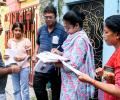
The Election Commission has issued instructions to district election officials in West Bengal regarding voters marked as 'unmapped' due to technical issues during the digitisation of the 2002 electoral rolls.

Bengaluru FC appoint former India coach Savio Medeira as Head of Youth Development, aiming to strengthen its grassroots pathway and nurture local talent.
Nationalist Congress Party (SP) MLC Eknath Khadse and his daughter have been booked for allegedly cheating an elderly woman by assuring a sugar factory on her land and taking its possession with the help of forged papers in Maharashtra's Jalgaon district.

Former India captain Sourav Ganguly supports the BCCI's decision to host Test matches in new venues like Guwahati and Ranchi, alongside traditional centres.

A US-sanctioned tanker carrying Iranian crude oil is heading to India, marking the resumption of oil imports from Iran after seven years.

Cooperation Minister Amit Shah addressed Parliament regarding the challenges faced by Bharat Taxi, a government-backed cooperative ride-hailing platform, including competition from established private aggregators and resistance to digital adoption among drivers.

Filmmaker Aditya Dhar once pursued a cricket career and aimed for the 2002 ICC Under-19 World Cup before a selection setback pushed him toward Bollywood, where he found success as a director.

Bengaluru FC has appointed Savio Medeira, former Indian national team coach, as their head of youth development, aiming to strengthen the pathway for young players to the first team.

An Ahmedabad court has convicted the wife of a former Income Tax Officer in a disproportionate assets case dating back nearly two decades. The husband, also an accused, died during the trial.

India has refuted claims of payment issues hindering crude oil imports from Iran, clarifying that refiners have the flexibility to source oil from various global suppliers. The Ministry of Petroleum and Natural Gas addressed reports of a tanker rerouting to China, emphasising standard industry practices and secured oil requirements.

Wayne Rooney urged Arsenal FC to allow teenager Max Dowman to enjoy his moment after he became the youngest goalscorer in Premier League history at 16.

Gurmeet Ram Rahim Singh, head of Dera Sacha Sauda, has been acquitted by the Punjab and Haryana high court in the 2002 murder case of journalist Ram Chander Chhatrapati, a verdict that is being challenged in the Supreme Court.

A US-sanctioned tanker carrying Iranian crude oil has rerouted mid-voyage from its previously indicated destination of India to China, raising questions about payment issues and the future of India's Iranian oil imports.

'Portfolios built in these phases often deliver the strongest outcomes over time.'
'Portfolios built in these phases often deliver the strongest outcomes over time.'
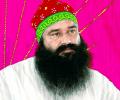
The Punjab and Haryana High Court has acquitted Dera Sacha Sauda chief Gurmeet Ram Rahim Singh in the 2002 murder of a journalist, citing a failure by the prosecution to prove its case and questioning the CBI's investigation.

Donald Trump's inconsistent statements and actions regarding the conflict with Iran have drawn criticism and confusion, raising questions about American credibility and the direction of US foreign policy.

Guwahati will host the India vs Australia Test match in February, while traditional venues like Mumbai and Kolkata have not been given any games in the 2026-27 Border-Gavaskar Trophy.

The Parliamentary Standing Committee on Finance has asked the finance ministry to spell out a clear legal strategy, including options such as a "golden share" or indirect control structures, to maintain strategic oversight in public sector entities if state ownership falls below 51 per cent.

A female suicide bomber, allegedly trained by the Balochistan Liberation Army (BLA), has been arrested in Pakistan, highlighting the group's tactics of brainwashing young individuals for terror attacks.

As the March 31 deadline arrives, a wave of Maoist surrenders suggests insurgency's end, but political and social concerns remain.

Turkey, Poland, and Denmark secured crucial victories in their respective World Cup playoff semi-finals, moving one step closer to qualifying for the 2026 World Cup.
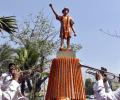
Shaheed Diwas 2026: India observes Martyrs' Day on March 23, marking 95 years since Bhagat Singh, Rajguru and Sukhdev were hanged by the British in 1931. PM Modi leads tributes. History, significance, quotes and how the nation is remembering the martyrs today.

Akshay Bhatia, a three-time PGA Tour winner, is set to make his debut at the Hero Indian Open, fulfilling a long-held ambition to play in his parents' home country. The tournament features a strong field, including defending champion Eugenio Chacarra and Ryder Cup hero Francesco Molinari.

TMC leader Abhishek Banerjee challenges Amit Shah to resign, questioning his commitment to clean politics, citing Shah's past arrest and criticising the BJP's actions against allegedly corrupt leaders.

Since 1945, the United States has carried out aerial bombing operations in an alarming number of countries.
The Election Commission reports a discrepancy of nearly 26 lakh voters' names in West Bengal's current electoral rolls when compared to the 2002 voter list.

Olympian Manu Bhaker emerged victorious in the women's 10m pistol event at the national selection trials, showcasing her shooting prowess.

Awarded to select nominees and winners, the 2026 Everyone Wins Oscar swag bag includes luxury vacation stays in Ibiza and Lapland worth $65,000, a $25,000 facial plastic surgery voucher from a New York-based surgeon, and even a custom prenuptial agreement service, among several other high-end gifts.
The Chief Election Commissioner, Gyanesh Kumar, has stated that the primary goal of the Election Commission is to ensure all voters in West Bengal can participate in the upcoming assembly elections without violence or intimidation.

Manchester United defeated Aston Villa to strengthen their position in the Premier League top four, while Liverpool were held to a draw by Tottenham Hotspur.

Keely Hodgkinson broke the women's world indoor 800 metres record at the World Athletics Indoor Tour Gold meeting in Lievin, France.
Tajinderpal Singh Toor won gold in the shot put at the Indian Open Throws Competition with a throw of 20.51m. Other winners included Damneet Singh in the hammer throw, Seema in the discus throw, and Sanjana Choudhary in the javelin.
Tajinderpal Singh Toor won gold in the shot put at the Indian Open Throws Competition with a season's best throw. Damneet Singh narrowly missed the national hammer throw record.
The Supreme Court has granted furlough to Vikas Yadav, who is serving a 25-year jail term for the murder of Nitish Katara, allowing him temporary release to spend time with his family during Holi.

Initiated by CoE's Head of Cricket VVS Laxman, the camp is part of a broader strategy to involve legends in grooming "targeted players" -- emerging prospects from India A and U-19 setups
 © 2026 Rediff.com - Advertise with us - Disclaimer - Privacy Policy - Sitemap - Feedback - About us - Terms of use - Grievances