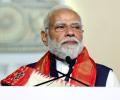
Congress leader Rahul Gandhi has criticised Prime Minister Narendra Modi's call for citizens to make economic sacrifices in response to the West Asia conflict, calling it 'evidence of failure'. Gandhi accused Modi of shifting responsibility onto the public and being incapable of running the country.

The Indian government has increased import duties on gold and silver from 6 per cent to 15 per cent to curb inbound shipments of precious metals amid a rising import bill due to the West Asia crisis.

The United States and Iran could be set to announce an agreement soon to achieve a complete solution to the hostilities in West Asia, as reported by Saudi state media Al Arabiya on Wednesday, citing sources familiar with the ongoing negotiations.

Prime Minister Narendra Modi has strongly refuted a media report suggesting the government is considering levying a tax, cess, or surcharge on foreign travel, calling the news "totally false".

The threat has raised concerns about possible asymmetric attacks outside the region. Iran has also stepped up attacks on energy infrastructure in Gulf countries.

Maharashtra Chief Minister Devendra Fadnavis rode a motorcycle to work following Prime Minister Modi's appeal to cut down fuel consumption amid the ongoing conflict in West Asia.
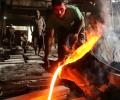
South India's manufacturing, construction, and services sectors are grappling with severe labour shortages, prompting employers to offer attractive incentives like free air tickets and salary increments to lure migrant workers back from their home states after recent assembly elections.
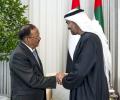
India is the only significant power that all parties trust, or at least do not distrust, notes former defence secretary Ajay Kumar.
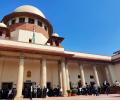
The Supreme Court has decided to hear cases exclusively through video conference on Mondays and Fridays. Judges have also resolved to encourage car-pooling arrangements amongst themselves in order to ensure optimum fuel utilisation.
The Iran conflict led to a sharp correction in Reliance Industries Ltd's (RIL's) share price, which has been partially reversed by a rebound.

US Secretary of State Marco Rubio will visit India from May 23-26 to enhance cooperation in trade, defence, and energy, attending meetings with senior Indian officials and participating in a Quad group meeting in New Delhi.
Pakistan's Interior Minister Mohsin Naqvi has been in Tehran meeting with Iranian officials in an attempt to mediate and resolve the ongoing conflict between the US and Iran. This marks Naqvi's second visit in less than a week as Pakistan seeks to bridge the differences between the two nations and establish long-term stability in the region.

India's consumption stocks, which have outperformed the broader market, are now facing significant pressure due to a gradual rise in fuel prices and the potential for higher inflation. Analysts warn that companies may be forced to pass on increased input costs to consumers, potentially hurting demand across both staples and discretionary categories, with a looming threat of deficient monsoon rainfall further exacerbating inflationary concerns.

Prime Minister Narendra Modi has appealed to citizens to adopt austerity measures, including avoiding destination weddings abroad and reducing edible oil consumption, to mitigate the impact of the West Asia crisis on India's economy.

Indian equity markets experienced a significant decline in early trade, with the BSE Sensex and NSE Nifty dropping, as escalating geopolitical tensions in West Asia and a surge in global oil prices dampened investor sentiment. Track Sensex, Nifty50 movement and key market drivers for May 8, 2026.

Overseas travel spending by Indians, including holiday trips, decreased by $212.43 million to $1.09 billion in March compared to February, according to the Reserve Bank of India's latest data.

Petrol and diesel prices in India have been increased by Rs 3 per litre each, marking the first rate hike in over four years. This decision follows a period of stable prices during recent state elections, despite rising global crude oil prices and significant losses for fuel retailers.

The BRICS foreign ministers' meeting in New Delhi concluded without a joint statement due to disagreements over the West Asia conflict, with Iran blaming the UAE for the lack of consensus. India, as the host, issued a chair's statement highlighting the differing views.

Indian benchmark indices Sensex and Nifty experienced volatile trade, declining in early deals before fluctuating, as investors reacted to unabated foreign fund outflows and rising geopolitical uncertainties, particularly in West Asia.

'PM Modi is trying to reduce the volume of fuel consumed instead of raising prices sharply.'

India's wholesale price inflation surged to 8.30 per cent in April, up from 3.88 per cent in March, primarily driven by a significant increase in the prices of fuel, power, and crude petroleum, according to data from the commerce and industry ministry.

The Indian rupee depreciated 16 paise to settle at a fresh lifetime low of 96.86 against the US dollar, marking its ninth consecutive session of decline, driven by elevated global crude prices and a strong dollar.
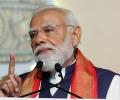
Prime Minister Narendra Modi has urged for restraint in the use of petro products due to the West Asia crisis, emphasising the need to save foreign exchange and reduce the impact of war. He also highlighted India's progress in solar power and ethanol blending, while assuring support to Telangana's development.

Russian President Vladimir Putin and Chinese President Xi Jinping have reaffirmed their commitment to dismantling global hegemonism and building a 'multipolar world' during high-level talks in Beijing.

Airfares to Southeast Asia have surged 25 to 30 per cent, driven by high demand and limited airline seat capacity.

Explore the resilient daily life in Tehran, where residents navigate geopolitical tensions and economic challenges with routine activities, showcasing a striking contrast between normalcy and underlying uncertainty.
Uncertainty stemming from the US-Iran conflict has significantly impacted India's mutual fund industry, leading to a sharp decline in new fund offers (NFOs) in March, despite numerous regulatory approvals. This geopolitical tension, coupled with existing market strain and distributor hesitation, has dampened investor sentiment and affected overall inflows.

Indian benchmark indices, Sensex and Nifty, closed marginally higher after a volatile trading session, driven by value buying in IT and select blue-chip counters, despite global crude price hikes and a weak rupee.

Indian equities on Dalal Street saw volatility as global market trends and fresh tariff concerns linked to Donald Trump impacted investor sentiment. Track Sensex, Nifty50 movement and key market drivers for April 2, 2026.

India's state-run oil marketing companies (OMCs) are projected to incur under-recoveries of approximately Rs 80,000 crore on liquefied petroleum gas (LPG) sales in FY27 if current loss levels persist, according to rating agency Icra.
Indian equity markets, including the Sensex and Nifty, experienced a significant downturn for the second consecutive day, driven by escalating geopolitical tensions in West Asia and persistent foreign fund outflows.

Crude oil prices surged over 3% in futures trade after US President Donald Trump expressed doubts about the Iran ceasefire, reigniting fears of supply disruptions from West Asia and pushing Brent crude above USD 107 per barrel.

Kerala, Tamil Nadu and West Bengal have been fiscally stressed for a considerable period of time, and there are no easy ways to mobilise revenues to meet the cost of the promised freebies, particularly in the prevailing difficult economic scenario, points out M Govinda Rao.

Jan Suraaj Party founder Prashant Kishor has moved to an ashram on the outskirts of Patna to continue his political activities ahead of the next assembly elections. He criticised Nitish Kumar and urged voters to prioritise their own interests.
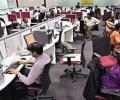
India's services sector growth reached a five-month high in April, with the HSBC India Services PMI Business Activity Index rising to 58.8, primarily driven by robust domestic demand and a shift from international to local suppliers amidst the West Asia crisis.

Air India has deferred annual salary increments for its staff by at least one quarter and urged a "relentless focus on costs" due to external headwinds like the closure of Pakistan airspace, West Asia conflict, rupee depreciation, and a significant surge in aviation turbine fuel prices, though the airline has assured there will be no layoffs.
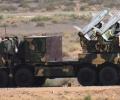
Indian defence stocks have seen an average year-on-year gain of 67 per cent, driven by renewed interest following 'Operation Sindoor' and a broader increase in global geopolitical tensions, with the combined market capitalisation of 18 firms increasing by approximately 2.3 trillion.

Analysts are revising down India Inc's financial year 2026-27 (FY27) earnings growth forecasts, citing persistently high crude oil prices above $100 a barrel due to the West Asia conflict, which is expected to dent corporate financial performance in the coming quarters.

Head of the Iranian Parliament's National Security Committee Ebrahim Azizi on Saturday said that Iran has prepared a "professional mechanism" to regulate maritime traffic in the Strait of Hormuz through a designated route, which will be unveiled soon.

Tata Motors' MD and CEO, Girish Wagh, has identified rising diesel prices as the most significant threat to India's commercial vehicle (CV) industry recovery, despite the sector recently surpassing its pre-FY19 wholesale peak. Diesel costs account for 25-50% of a truck operator's total cost of ownership, making any increase a critical concern for fleet economics.
 © 2026 Rediff.com - Advertise with us - Disclaimer - Privacy Policy - Sitemap - Feedback - About us - Terms of use - Grievances