
The United States military and Kuwaiti air defence forces successfully intercepted multiple Iranian ballistic missile and drone attacks targeting Kuwait and Bahrain, with Iran's state broadcaster claiming American military installations in Kuwait were deliberately targeted.

Prime Minister Narendra Modi and US President Donald Trump exchanged pleasantries and held a brief conversation at the G7 summit, their first in-person encounter in 16 months, setting the stage for high-stakes bilateral talks amidst continuing strain in India-US relations.

Prime Minister Narendra Modi and US President Donald Trump are set to hold comprehensive talks focusing on a bilateral trade deal, defence cooperation, and energy and critical minerals sectors during the G7 summit in Evian-les-Bains, France.

Modi's comments on underlining the importance of ensuring the safety of seafarers came against the backdrop of growing anger in India over the killing of the three Indian crew members in a US military attack on a merchant ship off the coast of Oman last week.
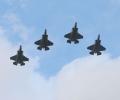
A Congressional Research Service report reveals that at least 42 US aircraft were lost or damaged during Operation Epic Fury, targeting Iran, with costs estimated to reach USD 29 billion.

The United States Central Command confirmed that the USS Rafael Peralta intercepted an Iranian-flagged ship, enforcing a maritime blockade against Iran. The US military is prepared to resume major combat operations if ordered by the President.

Trump further alleged that Iran was behind the attacks on three vessels carrying Indian seafarers near the Hormuz Strait, which resulted in the deaths of three, despite the US Central Command having confirmed that the strikes were carried out by American naval forces, calling the incident "totally unacceptable."

India has strongly protested to the United States after three merchant ships with Indian crew members were attacked by the American military off the coast of Oman, resulting in the deaths of three Indian nationals.

US Marines boarded and searched a commercial ship, M/V Blue Star III, in the Arabian Sea on suspicion of violating the US blockade of Iranian ports, later releasing it after confirming it was not headed to Iran.

The United States has redirected 48 vessels in the Persian Gulf, particularly in the Strait of Hormuz, over the past 20 days amid ongoing enforcement actions related to restrictions on Iranian maritime assets by the US Navy.

A source familiar with US Treasury Secretary Scott Bessent's thinking revealed on Saturday that the department "intends to utilise all available authorities to make Iranian assets accessible for rebuilding and repair efforts related to any future damage inflicted by Iran."

Tensions escalate between Iran and the US over control of the Strait of Hormuz, a crucial shipping lane for global oil supplies, as both sides discuss extending a fragile ceasefire.
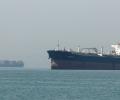
In a significant diplomatic development, US and Iranian negotiators have reportedly reached a tentative 60-day memorandum of understanding (MoU) aimed at extending a fragile ceasefire and paving the way for formal talks regarding Iran's nuclear programme.

Tensions escalate between Iran and the US following an attack on an Iranian commercial vessel in the Sea of Oman, with both sides trading accusations over maritime security and ceasefire violations.

US President Donald Trump has stated that the war with Iran is "close to over," while the US Central Command reports blocking traffic to Iranian ports.

Amidst escalating tensions in West Asia, Iran claims to have inflicted heavy casualties on US forces in Dubai, a claim vehemently denied by the US Central Command, raising concerns about regional stability.

US Central Command (CENTCOM) released footage of a maritime operation where Marines boarded an Iranian-flagged vessel, the Touska, in the Gulf of Oman, leading to heightened tensions and threats of retaliation from Iran.

The US has threatened to prosecute those buying or selling sanctioned Iranian oil and has announced a blockade of the Strait of Hormuz after peace talks failed.

The United States Central Command (CENTCOM) has confirmed the implementation of a naval blockade on Iranian ports, enforcing strict measures on vessels entering or departing, significantly escalating tensions between the two nations.

Tensions escalate as Iranian forces attack a container ship in the Strait of Hormuz after Trump announced the ceasefire extension.

The American warship stopped the tanker "after it attempted to sail to an Iranian port," according to a statement released by CENTCOM.

US President Donald Trump in an exclusive interview to Axios on Wednesday, said that he would continue to keep the naval blockade until Iran agrees to deal with the United States by addressing America's concerns about the nuclear programme.
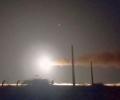
US President Donald Trump maintains that the ceasefire with Iran is still in effect despite recent military engagements near the Strait of Hormuz. He also commented on a recent clash where US forces responded to Iranian attacks on US Navy destroyers.
History is rarely decided by who has the biggest weapons, but by who has the better process. The same rule applies to investing, says Ramalingam Kalirajan.

An Iranian tanker successfully bypassed the US Navy to deliver crude oil to the Asia-Pacific region, despite ongoing tensions and a US blockade.
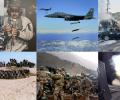
Since 1945, the United States has carried out aerial bombing operations in an alarming number of countries.

Conflicting reports emerge regarding the effectiveness of the US blockade on Iranian ports, with Iran claiming successful transit of vessels and the US asserting complete maritime dominance.

According to the report, the Pentagon is deploying the USS Tripoli ARG, along with the 31st Marine Expeditionary Unit (MEU), part of its own strike group.
Iranian officials allege a US airstrike on Mashhad airport damaged a Mahan Air plane set to collect vital medical aid from India.

The deployment could include infantry and armoured units, in addition to the 82nd Airborne Division, which is already stationed in the region.

The Indian rupee depreciated by 52 paise to settle at 93.35 against the US dollar, driven by failed US-Iran peace talks, surging crude oil prices due to a potential US blockade of Iranian ports, and a global flight to the greenback. This geopolitical uncertainty is also leading to foreign capital withdrawal from domestic equities.

French President Emmanuel Macron on Monday announced that France and the United Kingdom will jointly lead a multinational initiative to restore free and secure navigation in the Strait of Hormuz amid uncertainty over the virtual control of the strategic waterway between the US and Iran.

Media reports based on intelligence sources say nearly half of Iran's missile launchers remain intact, while thousands of one-way attack drones are still part of its arsenal even after continuous strikes targeting military infrastructure over the past five weeks.

An Iranian delegation, led by Foreign Minister Abbas Araghchi, is expected to arrive in Islamabad for the second round of peace talks with the US, according to Pakistani media reports. This follows a phone call between Deputy Prime Minister Ishaq Dar and Araghchi regarding the US-Iran ceasefire and Pakistan's diplomatic efforts.

Iran has strongly criticised US plans to impose a blockade on its ports, warning that maritime security across the Persian Gulf region would be jeopardised if its own security is threatened.

The United States used an array of weapons in the strikes conducted against Iran as part of Operation Epic Fury on Saturday -- which included artificial intelligence services from Anthropic, according to a report by Reuters.

Karex, the Malaysian company that makes roughly one in five of the world's condoms -- about five billion a year, supplying Durex and Trojan among others -- announced this week that it is raising prices by up to 30 percent. The reason is the Strait of Hormuz.

United States President Donald Trump warned Iran of potential strikes on its infrastructure, including bridges and electric power plants, saying the US military 'hasn't even started destroying what's left in Iran'.
There are enough people at the top decision-making level in Tehran who are still willing to negotiate, provided Trump can create the right setting for the negotiation to acquire a dynamic of its own, points out Ambassador M K Bhadrakumar.

The US Navy seized an Iranian-flagged cargo ship in the Gulf of Oman, escalating tensions as ceasefire talks face uncertainty. The incident raises concerns about the fragile ceasefire and the ongoing blockade of the Strait of Hormuz.
