
A new political outfit, the 'Lal Hit Janata Party', has emerged in Delhi, staging a counter-protest against alleged abuse of Prime Minister Narendra Modi and attacks on police.

Thousands of protesters, including farmers, trade unionists, students, and Left party members, marched towards the Election Commission of India headquarters in Delhi, demanding the resignation of Chief Election Commissioner Gyanesh Kumar and the withdrawal of the ongoing Special Intensive Revision (SIR) of electoral rolls, alleging 'vote chori' and exclusion of eligible citizens.

India has strongly rejected a report by a UN human rights expert, Gina Romero, which claimed that young people in India face retaliation or stigmatisation for discussing mental health or gender justice. India's First Secretary Anuj Swarup labelled the report as "hearsay" based on "anonymous and unverified claims," asserting that it does a disservice to the expert's mandate. Swarup highlighted India's constitutional freedoms, independent judiciary, and government's proactive engagement with youth, citing examples like the amendment to the Public Examinations Act and the Viksit Bharat Young Leaders Dialogue.

Online video games are emerging that recreate scenes from the Jantar Mantar protests in Delhi. Games like 'Jantar Mantar Chalo', 'Bhaag Neha Bhaag', and 'Jantar Mantar to Jail' allow players to experience elements of the demonstrations, from gathering crowds and dodging police to collecting 'Accountability' and 'Democracy' coins. Creators, inspired by news and real-life events, developed these games rapidly using AI and coding, gaining significant traction online.

Ajinkya Shinde, a native of Latur, Maharashtra, has taken charge of the Cockroach Janta Party's (CJP) "Jantar Mantar 2.0" protest in Delhi. This follows the detention of CJP's top leaders, including Dipke, Saurav Das, and Ashutosh Ranka, by Delhi Police on Saturday. Shinde, a former computer engineer and AAP activist, is leading the agitation against Chief Election Commissioner Gyanesh Kumar over alleged voter-list manipulation. The national capital saw a significant crackdown on Saturday, with nearly 500 protesters and leaders detained.

The UN human rights office expressed concern over mass detentions during protests in Delhi on Saturday, urging India to respect peaceful assembly rights and release detainees. India rejected these concerns as "misplaced" and "unwarranted interference." The protests, organised by the Gen Z-led Cockroach Janta Party (CJP), demanded electoral reforms and the resignation of CEC Gyanesh Kumar over alleged voter list manipulation, which the Election Commission and BJP deny.

Abhijeet Dipke, founder of the Cockroach Janta Party, used a satirical "resignation" letter to criticise the Mohan Yadav government in Madhya Pradesh over the deaths of over 30 tribal children in Balaghat district. His letter, addressed to the Governor, highlighted failures in compensation, basic amenities like water and education, and tribal welfare, questioning the government's accountability. The issue has also drawn the attention of the Madhya Pradesh High Court, which sought responses from state departments regarding the alleged deaths due to infectious diseases and inadequate facilities.

Chief Justice of India Surya Kant affirmed the judiciary's commitment to protecting students' right to peaceful protest during an interaction at CNLU Patna. He also addressed concerns about collegium transparency, stating that disclosure of dissenting opinions could compromise individual dignity. The CJI also praised a proposal to shorten the law degree duration.

India has strongly asserted that human rights should not be weaponised for political pressure or selective targeting of nations, pushing back against attempts to negatively characterise the world's largest democracy based on unverified allegations and incomplete statistics.

Jharkhand students are protesting alleged recruitment exam irregularities with creative and non-violent methods, including mock job "rate cards," satirical posters, and recitations from the Mahabharata. Their agitation, spearheaded by the JPSC-JSSC Reforms Manch, focuses on demanding reforms, cancellation of the 14th JPSC Civil Services Examination, and an independent probe, while adhering to a strict code of conduct against abusive language.

Thousands of young men and women, joined by prominent personalities, protested at Shivaji Park in Mumbai, demanding the resignation of Chief Election Commissioner Gyanesh Kumar despite police denial of permission. Organised by the Cockroach Janta Party (CJP), the agitation highlighted concerns over transparency in CEC appointments and alleged irregularities in electoral roll revisions.

Dialogue must be encouraged rather than adoption of hardline stands, violence and use of force, recommends Biswajit Dasgupta.

The Cockroach Janta Party (CJP) on Monday called for a protest march in Delhi on September 5, accusing the Centre of failing to honour the promises made on July 25 to convince the outfit to withdraw its 36-day agitation against examination irregularities.

When it pretends to be deaf, a situation can snowball into something it cannot contain. The government cannot dismiss public anger merely because protests are inconvenient or politically embarrassing, asserts Ramesh Menon.

How long can the Cockroach Janta Party remain an agitationist force? asks Saisuresh Sivaswamy.

Opposition leaders have sharply criticised Prime Minister Narendra Modi's appeal to 'forgive' young protesters who used abusive language, accusing him of deflecting from issues of alleged police action and a 'broken education system'.

Gen Z protesters are using memes, music, and sarcastic humour on social media platforms like Instagram and X to demand Union Education Minister Dharmendra Pradhan's resignation over the NEET question paper leak and other examination irregularities.

Union Education Minister Dharmendra Pradhan has resigned from his post amidst widespread nationwide protests concerning the NEET-UG 2026 paper leak controversy, citing the larger interest of students and the need to prevent exploitation by anti-national forces. The government is also preparing to introduce a stringent anti-paper leak law.

The Indian government has significantly altered its approach to the Cockroach Janata Party (CJP)-led agitation over the NEET paper leak, moving from dismissal to calibrated political engagement, including promises of fast-track courts, a new anti-paper leak law, and negotiations with key protest leaders.

Easing Gyanesh Kumar out would create a hazardous political precedent because forcing out a top official, due to public pressure, projects an image of reactive, defensive governing. Furthermore, making a high-level official like the CEC to hand in his papers would validate Opposition claims that Constitutional referees have been compromised, observes Nilanjan Mukhopadhyay.

A new satirical Instagram page, 'Dimagi Naxal Party,' has emerged following Prime Minister Narendra Modi's 'dimagi Naxal' remark.

'After more than 12 years in power, he has been forced to retreat under public pressure. The education minister's resignation is the biggest political climbdown of his government so far.'

Voters who exercise their franchise in favour of a particular political dispensation do not do so unconditionally. Their loyalty is subject to maintaining trust and living up to their expectations. It is subject to allowing the freedoms guaranteed under the Constitution, points out Vice Admiral Biswajit Dasgupta (retd).

When dialogue fails, protest becomes inevitable.
In a democracy, protest is often the only language left once institutions stop listening, explains Ramesh Menon.

Amid sweltering October heat in Mumbai, Uddhav Thackeray turns up the heat against Chief Election Commissioner Gyanesh Kumar, hinting obliquely about Nuremberg-like trials once the wheels of electoral fortune change.

Activist Manish Brahmbhatt has launched the Cockroach Janta Party-Democratic (CJP-D) as an alternative to the existing Cockroach Janta Party (CJP). Brahmbhatt alleges that the CJP, led by Abhijeet Dipke, has deviated from its student-led origins, becoming too aligned with the Aam Aadmi Party (AAP) and failing to represent its diverse volunteer base, particularly regarding issues like examination paper leaks.

Punjabi superstar Diljit Dosanjh has publicly distanced himself from the ongoing protests by the Cockroach Janata Party (CJP) at Jantar Mantar, which are focused on alleged exam irregularities and the NEET paper-leak controversy. Dosanjh reiterated his identity as an artist, not a politician, despite his past support for the farmers' protest and recent appeals to enter politics.

A new digital political phenomenon, the 'E20 Janta Party', is gaining traction on Instagram, mobilising Gen Z against the government's mandatory 20% ethanol-blended petrol (E20) and demanding Union Minister Nitin Gadkari's resignation.

A derogatory 'cockroach' remark by Chief Justice Surya Kant during a Supreme Court hearing inadvertently sparked a nationwide student movement, transforming an insult into a powerful symbol of protest that led to Union Education Minister Dharmendra Pradhan's resignation.

Delhi Police has intensified security across the city, especially at Indira Gandhi International (IGI) Airport and border points, in anticipation of a protest called by the digital outfit Cockroach Janta Party (CJP). Over 1,000 personnel have been deployed, and senior officers have reviewed arrangements to maintain law and order and ensure public safety.

An activist in Mathura, India, protested the pollution of the Yamuna River by dressing as a cockroach and staging a demonstration at the municipal corporation office.

'I had this fear that, dinner table talks would result in brainwashing youngsters as parents talk toxic communal news. But I'm so glad to realise that at least some section of youngsters depend on their own channels to more know more about political developments.'

Voicing concern over the circulation of clips of court proceedings on social media without adequate context, Chief Justice of India Surya Kant has said that his oral remarks were "misquoted" and misused with "malicious intent" to mislead the youth of the country.

Stepping up attack against Education Minister Dharmendra Pradhan, the Cockroach Janta Party founder Abhijeet Dipke on Friday announced the launch of a nationwide campaign to demand his resignation and exhorted students, farmers and civil society groups to join him at Jantar Mantar on June 28.
The Tata Institute of Social Sciences (TISS) has announced Dr C S Pramesh, director of Tata Memorial Hospital, as the new chief guest for its 86th Convocation on August 22, replacing Chief Justice of India Justice Surya Kant, who was unavailable due to a full calendar.

Abhijeet Dipke, founder of the Cockroach Janta Party (CJP), has emerged as a prominent youth leader, transforming a satirical movement into a powerful force that led to the resignation of Union Education Minister Dharmendra Pradhan. Dipke views this as just the beginning, advocating for issue-based politics over identity politics and demanding further reforms in the examination system.

The Delhi High Court has ordered the unblocking of the Cockroach Janta Party's X handle, which was previously withheld due to concerns over potential "chaos" during the NEET re-test. The court's decision came after the Solicitor General stated that the primary concern was no longer relevant as the NEET exam was over. The CJP, a youth-driven satirical movement, aims to hold the government accountable and has gained significant digital traction.
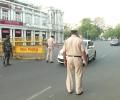
The Delhi Police has confirmed that it has not yet received any official request for permission from the digital group Cockroach Janta Party (CJP) to hold a protest at Jantar Mantar. Authorities are closely monitoring the situation and are ready to deploy personnel to maintain law and order if necessary.

From the record-breaking Dangal to the divisive Bawaal, here's a look at Nitesh Tiwari's five films ranked from worst to best.

Rahul Gandhi, Leader of Opposition, has written to Home Minister Amit Shah, demanding accountability for the "barbaric assault" on students protesting in Delhi. Gandhi questioned the use of "lethal force," including pellet guns, and sought clarification on who authorised the violence against students, many of whom suffered serious injuries. The protests, spearheaded by the CJP movement, gained national momentum following the NEET paper leak and subsequent police crackdown.
