
The upcoming Winter session of Parliament, likely in early December, will prioritise the women's reservation bill. This Constitution amendment aims to increase Lok Sabha seats and reserve 33% for women by 2029. Despite government confidence, securing the two-thirds majority (361 votes) will be challenging, as the ruling NDA needs opposition support amidst heightened political tensions over electoral roll revisions. The government is also exploring a formula to address delimitation concerns from southern states.

India's Parliament has set a new record with its Monsoon session remaining unprorogued for 100 days, surpassing the previous 2008 record of 87 days. This unprecedented situation fuels speculation about a special sitting to pass the women's reservation bill and a potential increase in Lok Sabha seats through delimitation, amidst opposition demands for an all-party meeting.

India's Parliament has set a new record by remaining unprorogued for 88 days since the Monsoon session was adjourned indefinitely on August 13. This unusual procedural move is linked to speculation about convening Parliament at short notice to consider a constitutional amendment for the Women's Reservation Bill. The decision allows for quicker reconvening compared to starting a fresh session.

The government is gearing up for a crucial "special session" of Parliament to secure the passage of the long-pending Constitution amendment bill, aiming to implement 33 per cent reservation for women in the Lok Sabha and state legislative assemblies.
Opposition members of the Joint Committee of Parliament examining the Foreign Contribution (Regulation) Amendment Bill have voiced serious concerns regarding the transparency of the panel's operations. Issues raised include the alleged lack of acknowledgement for stakeholder representations, the absence of opportunities for organisations to depose, and inaccuracies in the recording of meeting minutes. Committee chairman Sanjay Jaiswal has refuted these claims, calling them a "blatant lie" and a delaying tactic.

The Joint Parliamentary Committee (JPC) on the Foreign Contribution (Regulation) Amendment Bill clarified that churches and faith-based organisations receive only about 6 per cent of the Rs 22,000 crore in foreign contributions. JPC chairperson Sanjay Jaiswal stated the committee is examining practical concerns raised by stakeholders, including allegations from opposition parties that the bill targets minority institutions. The government maintains the bill is not religion-specific and aims to regulate foreign contributions. The JPC is conducting nationwide consultations to gather feedback.

Ten days after both Houses of Parliament were adjourned sine die, the Monsoon session is yet to end formally, giving rise to speculation that the government wants to pass a key legislation without convening a new session.

Monday's proceedings demonstrated that the legislative debate has become inseparable from the broader political crisis surrounding the NEET controversy.
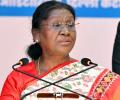
President Droupadi Murmu has returned the West Bengal government's proposed anti-goonda bill for reconsideration. The objection stems from a provision in the bill that may overlap with a central anti-narcotics law, specifically concerning offences under the NDPS Act, 1985, and the PITNDPS Act, 1988. This raises concerns about potential duplication and repugnancy under Article 254 of the Constitution.

Sonia Gandhi's memoir, "Belonging: A Journey of Love," reveals her interactions with former Prime Minister Atal Bihari Vajpayee, including a phone call after the 2001 Parliament attack and a heated exchange during a joint session in 2002 over the Prevention of Terrorism Ordinance (POTO). Gandhi recounts Vajpayee's strong reaction to her criticism and her later reflection on the incident.

Lok Sabha Speaker Om Birla has made a rare move by nominating two Rajya Sabha members as "special invitees" to the Joint Parliamentary Committee (JPC) examining the Foreign Contribution (Regulation) Amendment Bill, 2026. This decision comes as the contentious Bill, referred to the 31-member JPC for detailed examination, faces opposition demands for its withdrawal.

India is set to introduce a new amendment to its anti-paper leak law in the Lok Sabha, aiming to establish fast-track courts across all states and union territories for swift trials and significantly harsher penalties for exam malpractices, including jail terms of 5 to 10 years and fines up to Rs 50 lakh for individuals, and up to Rs 10 crore for organised crimes.

Congress leader Rahul Gandhi has intensified his challenge to Prime Minister Narendra Modi for a one-on-one debate, claiming he possesses proof of allegations against Modi on his phone, which he alleges is being tapped by the Prime Minister. Gandhi asserted that such a debate would end Modi's political career and criticised the BJP for suggesting a parliamentary debate, citing restrictions on his speech in the House. He even proposed Gautam Adani or Mohan Bhagwat as judges for the debate.

The BJP has accused the Congress and its INDIA bloc allies of deliberately disrupting the Monsoon Session of Parliament, alleging that their conduct has prevented discussions on key Bills and exposed the Opposition's 'double standards' on issues such as paper leaks and student protests.

India's Monsoon Session of Parliament concluded with significantly low productivity, marked by frequent disruptions and protests from the Opposition, primarily the Congress, leading to minimal debate on key legislation.

'The BJP has all the instruments with them and they do have a sense of purpose, so I don't think there will be a challenge.'

'Pranab-ji, had developed serious differences with P Chidambaram, and on one occasion, in 2010, I think, after expressing his frustration, he shocked me with the suggestion that perhaps it was time for a change at the top, which I understood as a hint of his long-held desire to become prime minister.'

More than half of the bills introduced in the 18th Lok Sabha have been passed by both Houses in the same session, a significant acceleration compared to previous terms, raising concerns about the time available for legislative scrutiny and stakeholder consultations.

The Lok Sabha's monsoon session concluded on Thursday, marked by relentless opposition protests over critical issues like the NEET paper leak and police action on students, yet saw the passage of several key bills without extensive debate. Home Minister Amit Shah expressed readiness to debate the student protest issue, urging the speaker to allocate time.

The Lok Sabha has referred the contentious Foreign Contribution (Regulation) Amendment Bill, 2026, to a 31-member joint parliamentary committee for thorough scrutiny.

Relentless protests by Opposition parties forced the adjournment of the Lok Sabha for the day after the passage of the Bankers' Books Evidence Bill without a debate on Wednesday, with the government accusing them of coming to the House to disrupt proceedings and not for discussion.

Major bills, including those on women's reservation, delimitation, and the Foreign Contribution (Regulation) Act (FCRA), face an uncertain future in the ongoing Monsoon session of Parliament due to persistent opposition protests and a lack of consensus.

The government is considering sending 'The Foreign Contribution (Regulation) Amendment Bill, 2026' to a joint committee of both houses of Parliament for further examination, even as the Congress and some other opposition parties have demanded that it be withdrawn, sources said on Tuesday.

Congress president Mallikarjun Kharge has said that the Congress will oppose the Foreign Contribution (Regulation) Amendment Bill and the issue will also be discussed at the meeting of floor leaders of opposition parties on Monday.

How a determined new recruit, unburdened by career ambitions, exposed and dismantled a long-standing bribery scheme involving employee transfers within a government department.

The Shiromani Akali Dal (SAD) has called for the immediate passage of the women's reservation bill and the delimitation bill, advocating for a uniform 50 per cent increase in seats for all states to ensure fair and equitable representation.

'In 2013-2014, Modi was asking for regime change. In fact, the words he used were, they should be pulled out and thrown away; ughadke phekna hai. That is part of democracy.'

Karnataka Chief Minister D K Shivakumar has declared the old building of Kumara Krupa Guest House as his official residence, renaming it 'Ganga'. The move has drawn criticism from opposition parties regarding alterations to the 160-year-old heritage building. Shivakumar clarified that only about 10 per cent modification was done, maintaining the building's heritage, and that expenses were kept low by reusing furniture. He plans to officially begin meeting people at the residence from Thursday, after a private pooja was held on Monday.

The Congress party has issued a whip to its MPs in both the Rajya Sabha and Lok Sabha, mandating their presence from August 10-12 for discussions on "very important" issues. This directive comes amidst reports of potential debates on the Foreign Contribution (Regulation) Amendment Bill, 2026, and a Constitution Amendment Bill concerning delimitation, though the government's official business list did not explicitly mention these.

The Supreme Court has agreed to hear petitions challenging Section 16 of the Chief Election Commissioner and other Election Commissioners Act, 2023. This provision grants blanket immunity from civil and criminal prosecution to current and former CECs and ECs for actions taken in their official capacity. Petitioners argue this immunity is unconstitutional and broader than that afforded to other high-ranking officials, potentially undermining accountability.

Kiren Rijiju has strongly criticised the Congress for allegedly 'unfairly disrupting' the recent monsoon session.

Parliamentary Affairs Minister Kiren Rijiju met Leader of Opposition Rahul Gandhi to discuss resolving the persistent deadlock in the Lok Sabha's monsoon session, focusing on the Delimitation Bill and FCRA Bill, though no immediate commitment was secured from the Congress leader.

A joint parliamentary committee has received an extension to submit its report on a significant bill. The Constitution (130th Amendment) Bill, 2025, proposes the removal of a prime minister, chief minister, or other ministers if they are jailed for 30 consecutive days on serious charges. The committee, chaired by BJP MP Aparajita Sarangi, needs further consultations before finalising its report.

As CEC Gyanesh Kumar faces protests over electoral roll revisions, a 20-year-old Kerala corruption case resurfaces.

The Indian Parliament remains deadlocked as the Opposition, led by the Congress, insists on Prime Minister Narendra Modi's reply to discussions on alleged donation theft at the Ram temple in Ayodhya and student protests, rejecting the government's offer for Home Minister Amit Shah to respond.
Parliament has passed The Prevention of Insults to National Honour (Amendment) Bill, 2026, making any insult to the national song Vande Mataram a criminal offence, punishable with imprisonment up to three years or a fine.

The Indian Parliament is scheduled for a significant legislative day, with the Lok Sabha set to consider and pass the Public Examinations (Prevention of Unfair Means) Amendment Bill, 2026. Concurrently, the Rajya Sabha will introduce the Micro, Small and Medium Enterprises Development (Amendment) Bill, 2026, and pass the Prevention of Insults to National Honour (Amendment) Bill, 2026, highlighting a busy agenda for both houses.

The Tamil Nadu Assembly has adopted crucial resolutions against the National Eligibility cum Entrance Test (NEET) and the Foreign Contribution (Regulation) Amendment Bill, 2026, with the lone BJP member opposing both.
BJP sources said the government would introduce a fresh Bill on the issue and has reached out to parties that opposed the earlier legislation.

Mizoram Chief Minister Lalduhoma met Union Home Minister Amit Shah regarding the Foreign Contribution (Regulation) Amendment Bill, 2026. Shah assured that the bill would not be retrospective. Various church and minority organisations have expressed concerns about the bill's impact on NGOs, schools, and healthcare units, urging its withdrawal or referral to a joint parliamentary committee.
