
Modi's greater weakness is his inability since July when he directed the exit of Dharmendra Pradhan, to come up with a political counter strategy. Security measures and executive orders as seen in recent days will only likely further weaken him and make him as lame duck a premier as many prior to him, Indira Gandhi and Manmohan Singh included, observes Nilanjan Mukhopadhyay.

Union Minister Rajnath Singh has accused the Congress and its allies of attempting to instigate a 'Bangladesh-like regime change' in India, leveraging youth energy for political confrontation and anarchy, rather than constructive nation-building.

Chief Election Commissioner Gyanesh Kumar is facing significant scrutiny after an investigation revealed objections from his fellow election commissioners, Sukhbir Singh Sandhu and Vivek Joshi, regarding decisions made during the Special Intensive Revision of voter lists. The objections, reportedly made at least 14 times, concerned issues like changes to voter registration forms and centralised control over electoral roll databases, intensifying criticism of Kumar's tenure and the EC's impartiality.

Congress leader Rahul Gandhi has launched a scathing attack, calling Prime Minister Narendra Modi, Home Minister Amit Shah, and Chief Election Commissioner Gyanesh Kumar 'deshdrohis' (traitors) for allegedly 'destroying' India's voting system and 'stealing elections'.

The Cockroach Janta Party (CJP) founder Abhijeet Dipke called for a 'Lehra do Tiranga' march in Central Park, Connaught Place, on Friday, despite the NDMC announcing the park's closure and Delhi Police citing prohibitory orders against mass gatherings. The march is part of an ongoing protest against Chief Election Commissioner Gyanesh Kumar over alleged irregularities in electoral rolls. Police have urged people to stay away, while Dipke questioned the authorities' stance on waving the national flag and alleged surveillance. The agitation follows the arrest of CJP leaders and the denotification of Jantar Mantar as a protest site.

MPSC aspirants are protesting in Pune, demanding reforms and the resignation of the MPSC chairman due to alleged paper leaks. NCP (SP) MLA Rohit Pawar announced that Rahul Gandhi is expected to meet the protesters on October 7 or 8. The Maharashtra government has already terminated an MPSC secretary and initiated a judicial inquiry into the commission's functioning.

BJP president Nitin Nabin praised Prime Minister Narendra Modi's 25-year journey as a leader, asserting that Modi is India's first prime minister to be directly chosen by the people through a public mandate, unlike previous PMs like Nehru, Indira Gandhi, and Rajiv Gandhi who were initially selected by their party. Nabin highlighted Modi's rise based on organisational experience and public support, not political dynasty.

The Supreme Court has sought responses from the Election Commission and Chief Election Commissioner Gyanesh Kumar regarding a plea filed by Congress leader Rahul Gandhi and 12 other opposition leaders concerning alleged large-scale voter deletions and Special Intensive Revision (SIR) irregularities.

The Congress party has announced a significant organisational reshuffle in its Uttar Pradesh unit, appointing Aradhana Misra-Mona as president and Imran Masood as working president. This strategic move comes ahead of the state assembly elections next year and aims to strike a social balance while strengthening the party's position in the crucial state.

Congress leader Rahul Gandhi urged CEC Gyanesh Kumar to resign and turn approver, stating the opposition's fight is against the "bigger powers" behind him.

The Jammu and Kashmir government has initiated a thorough inquiry into allegations of misconduct against IAS officer Kumar Rajeev Ranjan, who is accused of using abusive language towards a female JKAS officer during a recent virtual review meeting, an incident that has sparked widespread condemnation and calls for strict action.
The article details a history of internal disagreements among Election Commissioners in India, highlighting instances from 1993 to the present, including clashes between CECs and commissioners over various issues like removal recommendations, dissent notes, and affidavits, culminating in recent objections regarding voter list revisions.

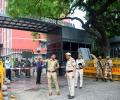
Glimpses of the INDIA bloc's protest march from Parliament House to Nirvachan Sadan, the Election Commission headquarters, in New Delhi on Tuesday, October 6, 2026.

Shiv Sena (UBT) chief Uddhav Thackeray accused Chief Election Commissioner Gyanesh Kumar of acting as a 'weapon' for the ruling BJP, while MNS leader Raj Thackeray demanded the cancellation of Maharashtra's Special Intensive Revision (SIR) of electoral rolls, amidst a large protest march in Mumbai.

Rahul Gandhi led INDIA bloc leaders in a surprise dharna near Jantar Mantar, protesting against Chief Election Commissioner Gyanesh Kumar. For the second consecutive day, police detained Gandhi and other opposition MPs, stalling their planned demonstration. The protest saw dramatic moments, including Priyanka Gandhi Vadra lying on the street, as leaders vowed to continue their fight for electoral integrity.

Unless the Congress stops seeing a CIA and RSS in everyone who disagrees with it, many well-meaning people will find it difficult to rub shoulders with Rahul Gandhi, notes M R Narayan Swamy.

Five southern states are stepping up coordination on delimitation, tax devolution and language issues, reviving calls for a stronger collective South platform.

Opposition MPs from the INDIA bloc, including prominent leaders like Rahul Gandhi and Priyanka Gandhi Vadra, marched to the Supreme Court to file a petition against Chief Election Commissioner Gyanesh Kumar, alleging 'vote chori' and irregularities in electoral rolls.

The INDIA bloc, comprising 17 opposition parties and civil society members, met at Rahul Gandhi's residence to strategize against alleged "vote chori" and the denotification of Jantar Mantar as a protest site. Leaders, including Rahul Gandhi, Mallikarjun Kharge, and Tejashwi Yadav, vowed to continue their united political and people's resistance, demanding the resignation of Chief Election Commissioner Gyanesh Kumar and asserting that those responsible for undermining democracy would be held accountable.

The Lok Sabha Secretariat has issued notices to 20 rebel Trinamool Congress (TMC) MPs, seeking their replies within seven days regarding petitions filed by TMC leader Abhishek Banerjee for their disqualification under the anti-defection law.

Groups of men wearing saffron scarves, claiming affiliation with the Hindu Raksha Dal, threatened and assaulted demonstrators during Saturday's protests against Chief Election Commissioner Gyanesh Kumar in central Delhi. Four members have been arrested for an assault on DDU Marg, while videos show larger groups operating unhindered, openly supporting police and administration, and justifying violence against "anti-national" protesters. The group's chief, Pinki Chaudhary, claimed responsibility for the attacks on social media.

Opposition MPs from the INDIA bloc intensified their protest at Jantar Mantar, demanding the resignation of Chief Election Commissioner Gyanesh Kumar over 'vote chori' allegations, leading to the detention of Rahul Gandhi and Priyanka Gandhi Vadra by Delhi Police.

The Delhi High Court has directed the Centre to consider a representation for standard operating procedures (SOPs) regarding the mandatory use of 'always-on' body-worn cameras by police and Rapid Action Force personnel during crowd control and protest management. The court asked the government to respond within six months, emphasising accountability in situations involving allegations of excessive force.

JD(U) MLA Anant Kumar Singh openly defied his party by supporting a rival candidate, Anuj Singh of the Jan Suraaj Party, for the Bihar legislative council elections. This move is seen as a direct challenge to JD(U)'s official candidate, Neeraj Kumar, with whom Singh has a long-standing rivalry. The JD(U) leadership is reportedly considering action against Singh.

Congress leader Rahul Gandhi arrived in Chennai on Saturday for the sixth edition of 'Chhatron Ki Goonj,' a youth outreach programme. He is scheduled to meet Chief Minister C Joseph Vijay, marking their first interaction since the formation of the SSJV alliance and TVK joining the INDIA bloc. The visit includes an unscripted interaction with students at Island Grounds, focusing on critical issues, amidst tight security arrangements.

Madhya Pradesh Chief Minister Mohan Yadav released two cheetahs, Vyom and Neera, into the Veerangana Durgavati Tiger Reserve, making it the state's third cheetah habitat. This expansion is part of India's Cheetah Project, which has seen the big cat population grow to 60. The initiative aims to boost wildlife tourism and local economies, with the government also supporting villagers through revenue sharing and homestay schemes.

Rahul Gandhi dramatically shifted the INDIA bloc's protest after their march to the Election Commission was stopped and leaders were detained. He entered Akashvani Bhavan, leading to a standoff and a continued sit-in joined by other opposition leaders, including Priyanka Gandhi Vadra, to protest against alleged threats to democracy.

The INDIA bloc has formulated a joint action plan to address the Special Intensive Revision (SIR) row and concerns over Electronic Voting Machines (EVMs). Following a meeting of key opposition leaders, the alliance announced a series of "save democracy" marches, demonstrations, and a march to the Election Commission, demanding a return to ballot papers for elections and alleging electoral malpractices by the ruling government.

AICC general secretary K C Venugopal announced that Rahul Gandhi would lead the INDIA bloc in the 2029 Lok Sabha elections, dismissing reports of TVK proposing C Joseph Vijay as a prime ministerial candidate. Venugopal highlighted Gandhi's widespread appeal and campaigns on key issues, while also addressing internal alliance differences and criticising the BJP government's actions.

The Tamil Nadu government revoked a controversial order exempting its Public (Law and Order) Department from the RTI Act, 2005.

Amid sweltering October heat in Mumbai, Uddhav Thackeray turns up the heat against Chief Election Commissioner Gyanesh Kumar, hinting obliquely about Nuremberg-like trials once the wheels of electoral fortune change.

With the anti-Gyanesh Kumar campaign, Rahul Gandhi is showing he is determined to not let anyone else claim credit for what follows, notes Saisuresh Sivaswamy.

The BJP has initiated a motion to remove the Speaker of the Jammu and Kashmir Legislative Assembly, Abdul Rahim Rather. This action stems from the Speaker's decision to allow a resolution by Chief Minister Omar Abdullah demanding full statehood restoration, which the BJP claims violates assembly rules. The Speaker, however, defended his actions, citing procedural rules for such motions.

AJUP chief and Naoda MLA Humayun Kabir has hinted at quitting electoral politics and his assembly membership after his arrest during the Rejinagar bypoll. Kabir, who claims the BJP will win Rejinagar due to a "looted mandate," expressed disillusionment with the democratic system and vowed not to attend the state assembly as long as Chief Minister Suvendu Adhikari is in office. He also alleged betrayal by Adhikari regarding his son's bypoll prospects.

More than half of the bills introduced in the 18th Lok Sabha have been passed by both Houses in the same session, a significant acceleration compared to previous terms, raising concerns about the time available for legislative scrutiny and stakeholder consultations.

The Congress party in Maharashtra has accused the police of illegally entering its Mumbai headquarters, Tilak Bhawan, and arresting tribal students and NSUI members who were protesting. While the police deny these claims, stating no arrests were made from the building, the Congress has threatened to gherao the Chief Minister's residence if the detained individuals are not released, escalating a political confrontation over student protests.

Ten days after both Houses of Parliament were adjourned sine die, the Monsoon session is yet to end formally, giving rise to speculation that the government wants to pass a key legislation without convening a new session.

The Eknath Shinde faction on Wednesday defended the Election Commission's decision to recognise it as the real Shiv Sena and allot it the bow-and-arrow symbol in the Supreme Court. Senior advocate N K Kaul argued that no subsequent Shiv Sena constitution was submitted to the EC after 2011 and emphasised the importance of inner-party democracy. The hearing, which also touched upon the timing of the EC's decision and the pendency of disqualification petitions, remained inconclusive and will continue on Thursday.

The Supreme Court is examining the Election Commission's decision to allot the Shiv Sena's bow-and-arrow symbol to the Eknath Shinde faction. The court questioned the validity of relying primarily on legislative strength, particularly when MLAs face disqualification. Arguments from the Shinde faction defended the EC's test, while the court raised concerns about the "sentiment of the symbol" for defectors and the practicalities of assessing grassroots support. The hearing remains inconclusive.

Leaders of the Cockroach Janta Party (CJP), including Saurav Das and Ashutosh Ranka, have vowed to escalate their agitation against Chief Election Commissioner (CEC) Gyanesh Kumar, expanding protests nationwide after their release from detention. They allege an "emergency-like situation" created by the Modi government, illegal detentions, and harassment of protesters, drawing parallels to the 1975 Emergency. The CJP is protesting alleged irregularities in voter rolls and demanding Kumar's resignation, accusing authorities of suppressing dissent.
