
Experience ultra-smooth visuals with a 120 Hz display, enjoy smarter interactions through the Sola AI Assistant, and count on reliable long-term performance backed by a four-year fluency commitment. Grab the smartphone now for just 9,999.

The Lenovo Yoga 7a 2-in-1 is available alongside the newly-introduced Lenovo Yoga Slim 7 and IdeaPad 5 2-in-1 range. The refreshed Yoga portfolio includes the Yoga 7a 2-in-1, Yoga Slim 7x, Yoga 7i 2-in-1 Aura Edition, and Yoga Slim 7i Ultra Aura Edition variants.

The Infinix Note 60 Pro is now on sale across India -- the entry model is equipped with 8 GB memory and 128 GB storage. It is priced at 31,999.

Xiaomi has unveiled the Redmi A7 Pro 5G in India. The handset begins at 11,499 and comes equipped with an impressive 6,300 mAh battery.

Samsung has unveiled a pair of fresh Galaxy handsets for the Indian market, expanding its A-range with the A57 5G alongside the A37 5G.

The Lenovo ThinkPad X13 Gen 6 (AMD) is offered in India with a starting price of Rs 162,282. The compact business laptop comes with AMD's latest Ryzen AI processor, a 13.3-inch WUXGA display, and Wi-Fi 7 connectivity.

The Tecno Spark 50 5G is priced from 16,999 for the 4 GB RAM with 128GB storage version, whereas the 6 GB RAM and 128 GB variant costs 18,999. Sales kick off on 3April through both digital platforms and physical stores, with interest-free EMI plans available for up to eight months.

A better, faster, more efficient 2-in-1 gaming tablet with 1TB storage

The Realme P4 Lite can currently be bought across India through Flipkart as well as the Realme India web shop.

Boasting an elegant 6.9 mm profile, this device pairs a sleek, lightweight build with a stunning 10.4-inch WUXGA+ screen that etches every detail.

Samsung Galaxy A07 5G comes with a starting price of 15,999 for the entry-level model featuring 4 GB of memory and 128 GB internal capacity. The higher-end version, which includes 6 GB RAM paired with the same 128GB storage, carries a price tag of 17,999.

The Telecom Regulatory Authority of India (Trai) said on Wednesday that instead of calculating charges for backhaul spectrum on a weighted-average formula based on the number of carriers a telco may have, a flat low rate should be applied.

The smartphone is expected to be priced from 22,999, positioning it as a competitive offering in its segment.

OPPO has rolled out its high-end Reno 15 smartphone family, featuring three distinct variants -- the Reno 15 Pro, Reno 15 Pro Mini and regular Reno 15.

The Realme Narzo 90 5G is available in India starting at approximately 15,200. Officially, the variants are priced around 16,999 for the 6 GB RAM with 128 GB storage model, while the 8 GB RAM with 128 GB storage version retails for about 18,499.

Aggressive pricing by brands have made the 5g mobile phone affordable; you can get good options around Rs 10,000.

Realme has rolled out its latest premium offerings in the Indian market with the debut of the Realme 16 Pro and Realme 16 Pro+.

'We hope we will be able to at least end crashes that involve collisions with stationary vehicles as there will be an automatic warning.'

The handset runs on Qualcomm's Snapdragon 8 Elite Gen 5 platform and packs a substantial 7,000mAh power unit, offering extended endurance.

Telecom service providers have doubled down on their demands for a proposed fair-share charge (FSC) to be levied on major over-the-top (OTT) service providers, opening up the 6 GHz spectrum band and increasing the number of testing labs for telecommunication products. Telecom industry body Cellular Operators Association of India (COAI) on Wednesday said these were the topmost demands for Prime Minister Narendra Modi-led National Democratic Alliance (NDA) government. The industry body wants this additional capital expenditure to be borne by these Large Traffic Generator (LTGs) OTTs as a proposed fair-share charge.
The government may not auction spectrum frequency range between 27.5-28.5 gigahertz and leave it for satellite services, according to official sources. The Telecom Regulatory Authority of India (Trai) had recommended a base price for this frequency range and suggested that it can be used for both mobile as well as satellite services. Two official sources acknowledged that Department of Telecom (DoT) is considering auctioning spectrum only up to 27.5 Ghz as sharing between the two services is difficult.
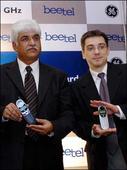
The phones are priced in the range of Rs 1,995-Rs 4,995.
Spectrum auction for mobile radiowaves services worth Rs 96,000 crore ended with bids worth about Rs 11,000 crore, according to sources. The government has put over 10,500 Mhz spectrum in eight frequency bands -- 800 MHz, 900 MHz, 1,800 MHz, 2,100 MHz, 2,300 MHz, 2,500 MHz, 3,300 MHz and 26 GHz, valued at Rs 96,238 crore at base price, for auction.

Bharti Airtel may end up cumulatively bidding for more spectrum than market leader Reliance Jio in the upcoming auctions. This is owing to its need for spectrum renewal, and a requirement for 900 MHz in a few circles, analysts have said. Despite the muted bidding expected in the upcoming auctions, Airtel may end up making more bids than Jio, they added.

The Department of Telecom (DoT) on Tuesday postponed the spectrum auction by 19 days to June 25, as per information available on its website. According to amendments made in the notice inviting applications for bids on Tuesday, the new date for "start of the live auction" has been changed to June 25 from June 6. The government will auction eight spectrum bands for mobile phone services at a base price of about Rs 96,317 crore.
The next spectrum auction will be held in late February 2024 and the reserve price for most bands will remain the same as the 2022 auction, department of telecommunications (DoT) officials have said. The government expects operators to go for low bands beginning in 600 megahertz (MHz), licences for many of which are lapsing soon. Back in September 2021, the government had decided that spectrum auctions should be held annually.
The auction of radio waves used for mobile services saw a muted opening on Tuesday, with five rounds attracting bids worth about Rs 11,000 crore from telecom companies. The government has put over 10,500 Mhz spectrum in eight frequency bands -- 800 MHz, 900 MHz, 1,800 MHz, 2,100 MHz, 2,300 MHz, 2,500 MHz, 3,300 MHz and 26 GHz, valued at Rs 96,238 crore at base price, for auction.

Most telcos say the speed will surpass fixed broadband as the 5G roll out, which is currently on 360,000 towers, crosses 400,000.

The Ministry of Information and Broadcasting (I&B ministry) may launch its review of the government's plan to potentially reserve the crucial C-band of radio frequencies for 5G and 6G telecommunication (telecom) use, said officials. While the incumbent broadcasting operators have warned that the plan will leave "precious little spectrum" for broadcasting services, telecom service providers (TSPs) have pressed hard for getting access to the C-band. In multiple letters to the I&B ministry over the past month, the News Broadcasters & Digital Association (NBDA) has said the industry would be left with precious little spectrum for broadcasting services if the Department of Telecommunications (DoT) further allocates the scant C-band for 5G.

'If the airlines are not given a clear deadline to change the altimeters by the DGCA, why should they do it voluntarily?' 'It means that the aircraft will be grounded for a while and lose money.'

India's first auction of 5G spectrum, that powers ultra-high data speeds, is currently underway with a total of 72 GHz (gigahertz) of radiowaves worth at least Rs 4.3 lakh crore up for bidding. Billionaire Mukesh Ambani's Reliance Jio, Sunil Mittal-led Bharti Airtel, Vodafone Idea and a unit of billionaire Gautam Adani's flagship Adani Enterprises are in the race to bid for 5G spectrum, that offers speeds about 10 times faster than 4G, lag-free connectivity, and can enable billions of connected devices to share data in real-time. In addition to powering ultra-low latency connections, which allow downloading full-length high-quality video or movie to a mobile device in a matter of seconds (even in crowded areas), Fifth Generation or 5G would enable solutions such as e-health, connected vehicles, more-immersive augmented reality and metaverse experiences, life-saving use cases, and advanced mobile cloud gaming among others.

Adani group opened a $1.2 billion copper plant, bought a port in Odisha, raised stakes in a cement company and stitched an alliance with rival Mukesh Ambani's Reliance Industries, all in a matter of one week in signs that the apples-to-airport conglomerate has shrugged off the Hindenburg effect and is back to rapid expansion spree. In the last one week, Adani group has through regulatory filings and press statements announced expansions and investments in its mainstay ports business, diversification into metal refining, fund infusion into a two-year-old cement foray and continuing progress in the commissioning of its mega solar project.
Bharti Airtel has quietly narrowed its adjusted gross revenue (AGR) market share gap with Reliance Jio, the country's largest player in the game, in the last three years. Despite Jio's aggressive entry into 4G and now into 5G, Airtel's gap with Jio, which was 6.4 percentage points in Q1 of FY21 and went up to 7.2 percentage points in Q1 of FY22, has fallen to only 4.4 percentage points in Q1 of FY24. Currently, Reliance Jio's AGR market share is 41.6 per cent while Airtel's is at 37.2 per cent.
Telecom operators will need to shut down 5G services in high-frequency bands in and around airports following restrictions imposed by the Department of Telecom at the request of the civil aviation ministry, according to sources. Based on buffer and safety zone details provided by the aviation ministry, the DoT has asked telecom operators to not install 5G base stations in the 3.3-3.6 Ghz band in the area of 2.1 kilometres from both ends of the runway and 910 meters from the centre line of the runway of Indian airports with immediate effect. "Telecom operators will need to shut down 5G service in the 3.3-3.6 Ghz band only in and around airports based on the order.

With better than expected Rs 1.45 lakh crore bids coming in on the first day, the auction of 5G spectrum entered the second day on Wednesday with the opening of the fifth round. Firms run by tycoons Mukesh Ambani, Sunil Bharti Mittal and Gautam Adani as well as Vodafone Idea are participating in the e-auction to buy fifth-generation (5G) airwaves. The government received confirmed spectrum bids worth Rs 1.45 lakh crore after the completion of four rounds of spectrum bidding on the opening day on Tuesday.

Reliance Jio's decision to acquire 700 MHz in combination with the possible use of an advanced standalone (SA) 5G network could give it an edge over its rivals, according to most analysts. The dissenters argue that the stiff price tag touching Rs 40,000 crore to grab 10 MHz of spectrum in 700 to provide coverage for its SA 5G network which offers ultra-low latency (unlike non-standalone or NSA), has a long way to go in India in terms of finding use cases that can be monetised. Globally, 700 MHz is a pivotal band which provides huge coverage, indoor penetration (especially useful in India where walls are thick) and is already considered by the European Union to be the 'pioneer band' for 5G, with 3.5 GHz and 26 GHz, both of which were auctioned in India recently.
The Indian Navy has expressed reservations in vacating 100 Mhz of the spectrum, proposed to be sold in the tender expected next year, sources said. This could delay the Centre's plans to proceed with the 5G auctions in 2022. A department of telecom (DoT) official said, "The Indian Navy is showing reluctance in vacating the spectrum from the 3.3 GHz-3.4 GHz band that it is using. "Unless there is some traction with them on this issue, we can't seek consultation from TRAI." The 3300 MHz-3600 MHz (or 3.3GHz-3.6GHz) will be auctioned for the first time in the proposed 5G auctions, likely next year.

'We have informed the government multiple times that the situation in the US and India are different.' 'Here, there will be a 500 MHz gap in the frequencies which will safely allow aviation without interference.'
It came as a surprise to all stakeholders - competing telecom companies (telcos), most analysts and even the government's internal projections on revenues from the 5G auctions. Reliance Jio disrupted all calculations by paying a stiff Rs 40,000 crore to buy 10 MHz of spectrum in the 700-MHz band, globally considered a key band for efficient 5G service coverage, along with the default 3.5 GHz band and the ultra-high speed and low-latency millimetre band of 26 GHz band. So what made Jio pay almost 45 per cent of its total spend in this auction for the 700 MHz band - much more than what it rustled up even for the 3.5 GHz band?

A record over Rs 1.5 lakh crore worth of 5G telecom spectrum was sold in a seven-day auction ending on Monday, which saw billionaire Mukesh Ambani's Jio emerging as the top bidder to consolidate its leadership position. Sources with direct knowledge of the matter said provisional data puts the total bids at Rs 150,173 crore. The mop-up from the 5G spectrum, capable of offering ultra-high speed mobile internet connectivity, is almost double at Rs 77,815 crore worth 4G airwaves sold last year and triple of Rs 50,968.37 crore garnered from a 3G auction in 2010.
 © 2026 Rediff.com - Advertise with us - Disclaimer - Privacy Policy - Sitemap - Feedback - About us - Terms of use - Grievances