
FIFA has selected India as one of 12 countries for its Women's Development Programme, aimed at building sustainable models for women's football clubs and preparing them for the upcoming AFC club licensing system.

Chinese President Xi Jinping called for global collaboration in artificial intelligence development, emphasising a "symphony of global collaboration" over a "solo performance" by any single nation. Speaking at the World Artificial Intelligence Conference in Shanghai, Xi highlighted the need for ethical AI governance, shared prosperity, and addressing challenges like the widening digital divide. He also announced China's commitment to support developing countries with 5,000 AI research projects and training programmes. The event also saw 29 countries sign an agreement to establish the World Artificial Intelligence Cooperation Organisation (WAICO) in Shanghai.

Arunachal Pradesh Chief Minister Pema Khandu lauded the state's first 10-day artificial intelligence boot camp and hackathon at IIT-Guwahati. The programme aims to build AI skills, promote innovation, and create a future-ready digital workforce, offering hands-on training in AI/ML, Python, and NLP to 40 young participants.

Global technology giant Google has announced the selection of 20 Indian AI startups for its 2026 Google for Startups Accelerator programme, marking the 10th anniversary of its accelerator initiatives.

The University of Delhi and semiconductor major AMD have signed a Memorandum of Understanding (MoU) to train up to 10,000 students and faculty in industry-relevant artificial intelligence skills over the next year. This collaboration will provide access to AMD's AI Engage Developer Programme, including its open-source ROCm AI software platform, learning resources, and developer GPU cloud credits, aiming to foster indigenous AI capabilities and bridge the gap between academia and industry.

Haryana's Chief Minister Nayab Singh Saini reviewed the progress of the Haryana AI Development Programme (HAIDP), a Rs 474-crore initiative developed with the World Bank, focusing on AI skilling, startup incubation, and ethical AI governance.

A report by policy think tank The Dialogue reveals that India's artificial intelligence (AI) ecosystem is primarily constrained by a shortage of skilled talent and a lack of data standardisation, rather than market concentration. The study, which surveyed 308 stakeholders, found that talent availability and data usability are major concerns, with a significant reliance on open-source AI models.
The World Bank's "World Development Report 2026" urges developing countries to adopt low-cost AI tools to accelerate progress in healthcare, education, and judicial services. The report highlights AI's potential to boost productivity and improve public services, while noting that jobs in high-income countries are more at risk from automation than those in developing nations.
Andhra Pradesh Chief Minister N Chandrababu Naidu has approved the establishment of India's first dedicated Quantum and AI University campus in Amaravati by NIELIT. This significant project, funded by the MeitY, Government of India, will focus on advanced technologies like Quantum, AI, and Semiconductors, integrating education, research, and entrepreneurship.
A three-day 'AI Champions for Digital Governance' programme has commenced in New Delhi, hosted by ITDC, SCOPE, and LBSNAA. The initiative aims to train senior leadership and operational teams in applying artificial intelligence within public sector organisations, aligning with the IndiaAI Mission. Experts highlighted AI's role in improving efficiency, productivity, and public service delivery, while also emphasising responsible adoption and data quality. The programme seeks to build an AI-ready nation and contribute to India's vision of future-ready governance systems.
A three-day 'AI Champions for Digital Governance' programme has commenced in New Delhi, hosted by ITDC, SCOPE, and LBSNAA. The initiative aims to train senior leadership and operational teams in applying artificial intelligence within public sector organisations, aligning with the IndiaAI Mission. Experts highlighted AI's role in improving efficiency, productivity, and public service delivery, while also emphasising responsible adoption and data quality. The programme seeks to build an AI-ready nation and contribute to India's vision of future-ready governance systems.

Leading global technology companies OpenAI, Anthropic, and Google have introduced new AI models with enhanced capabilities, including advanced cybersecurity and coding. However, these releases have ignited significant debate among researchers regarding the transparency and monitorability of AI reasoning, particularly concerning OpenAI's Astra model and its "recurrent depth" architecture.
Samsung India has launched an Innovation Campus in Karnataka, in partnership with Nrupathunga University, to train 2,000 young individuals in industry-relevant AI skills. This initiative aims to support Karnataka's goal of building an AI-native ecosystem and developing a future-ready technology workforce, expanding access to practical AI education.
OpenAI, Anthropic, and Google have introduced new AI models with enhanced capabilities. OpenAI's Astra model, achieving a 'Critical' cybersecurity tier, has ignited a debate among researchers due to its "recurrent depth" architecture, which some fear makes its reasoning harder to monitor. Anthropic and Google also released new models, focusing on coding, scientific research, and cybersecurity, alongside new image and video AI tools.

The Central Bureau of Investigation (CBI) has arrested a Sub-Divisional Agriculture Officer (SDAO) and two others in Jammu and Kashmir for allegedly demanding and accepting a bribe to release a subsidy under the Holistic Agriculture Development Programme (HADP) scheme.

Students are learning to combine technology with agriculture, healthcare, biotechnology, architecture and fashion, explains Mandeep Singh, assistant professor and deputy dean, Lovely Professional University.
Salesforce executives, including South Asia CEO Arundhati Bhattacharya, predict a significant shift in India towards wider enterprise AI adoption, moving from experimentation to production deployments. The company plans to invest in physical infrastructure and talent upskilling in India. Salesforce's vision for the "agentic enterprise" involves a four-layer architecture, emphasising the need for robust security and governance for autonomous agents. Executives also highlighted the evolving nature of jobs, with AI handling repetitive tasks and creating new specialised roles, positioning India as a potential leader in agentic innovation by 2030.

A new report by CIEL HR indicates a massive 260 per cent year-on-year surge in demand for Agentic AI engineers in India by 2026. This growth highlights AI's increasing role in automating routine tech functions and the evolving landscape of technology skills, prompting organisations to invest in reskilling and talent development to meet the rising demand for AI, cloud, and cybersecurity expertise.
Chinese President Xi Jinping has called for global collaboration in Artificial Intelligence development, stating it should be a "symphony" rather than a "solo performance." His remarks came at the World Artificial Intelligence Conference (WAIC) in Shanghai, where 29 countries also signed an agreement to establish the World Artificial Intelligence Cooperation Organisation (WAICO), an independent intergovernmental body headquartered in Shanghai. China also pledged 5,000 AI research projects and training for developing nations.
OpenAI, Anthropic, and Google have unveiled new AI models with enhanced capabilities, including advanced cybersecurity and coding. OpenAI's Astra model achieved a 'Critical' cybersecurity tier, but its novel architecture, using "recurrent depth," has sparked significant safety concerns among researchers who fear it makes monitoring the model's reasoning more difficult. Anthropic and Google also introduced new models and features, further advancing AI technology while the debate over responsible development intensifies.

The Central Board of Indirect Taxes and Customs (CBIC) is set to significantly increase its use of artificial intelligence (AI), machine learning (ML), and real-time analytics in Customs processes, aiming for a near-touchless, near-digital clearance experience, according to Chairman Vivek Chaturvedi.

The Central Bureau of Investigation (CBI) has arrested a sub-divisional agriculture officer and two others in Jammu and Kashmir in connection with a bribery case. The officer allegedly demanded a bribe for releasing a subsidy under the Holistic Agriculture Development Programme (HADP).

Indian firm Bharat Forge and US defence major Pratt & Whitney Canada have announced a collaboration to support the development of India's high-altitude, long-endurance (HALE) unmanned aerial vehicle. This partnership involves integrating advanced turboprop engines into a DRDO-designed UAV, bolstering India's indigenous defence capabilities under the Aatmanirbhar Bharat initiative.
Leading technology companies OpenAI, Anthropic, and Google have announced new AI models with advanced capabilities, including OpenAI's Astra reaching a "Critical" cybersecurity tier. However, these advancements have ignited a significant debate among safety researchers and netizens, particularly concerning the transparency and monitorability of OpenAI's novel "recurrent depth" architecture.
Bihar Chief Minister Samrat Choudhary has called upon ministers and legislators to extensively use digital technology and Artificial Intelligence (AI) for balanced development and improved public outreach. He highlighted the state government's existing use of AI in welfare programmes and project cost reduction, stressing its importance for Bihar's progress in the digital era.

The National Skill Development Corporation (NSDC), in collaboration with Amazon Web Services (AWS) and Cultus Education, has launched a nationwide initiative to provide cloud and AI skilling to 1.5 lakh learners. This programme aims to equip youth, especially from Tier 2 and Tier 3 cities, with essential technology skills and job-ready training, contributing to India's goal of becoming a global innovation hub.
Indian government agencies and private sector firms have secured access to Anthropic's advanced AI model, Mythos, through Project Glasswing. This initiative aims to enhance cybersecurity by identifying software vulnerabilities in critical infrastructure. Anthropic has also urged a moderated pace of AI development due to potential societal risks.

Arundhati Bhattacharyya, Salesforce President and CEO for South Asia, highlighted how cloud and AI are democratising capabilities, offering India a unique opportunity to leapfrog in the technology revolution. Speaking at the IMC Chamber of Commerce, she emphasised that AI will create more jobs by addressing unmet business demands and could significantly boost India's GDP, with NITI Aayog estimating a USD 500-600 billion addition by 2035. She urged Indian businesses to transform using technology, focus on data, redesign work, and invest in skills, stressing that AI is not just for large corporations.

India is strategically positioned to develop a robust domestic semiconductor ecosystem, driven by increasing electronics consumption, strong government support through incentives, and a global shift in supply chains. Boston Consulting Group Managing Director Ankush Wadhera highlights India's potential as a safe haven for investments, with the AI boom further fuelling demand for advanced chips. The nation aims to expand its capabilities across the entire semiconductor value chain, attracting significant global and domestic investments.

Chief Justice of India Surya Kant stated that while artificial intelligence (AI) can augment judicial reasoning, it cannot substitute judicial conscience, and a permanent apex body is proposed to supervise AI adoption and accountability within the judiciary.

The aim is to win over the country's enterprises, developers and startups as AI systems shift from answering questions to autonomously executing tasks.

The Karnataka government is collaborating with ElevenLabs to explore pilot projects using voice AI across various sectors including skilling, investment promotion, healthcare, culture, and citizen services. This initiative aims to leverage advanced AI to enhance accessibility and efficiency of government services, with a strong focus on responsible AI use and safeguards against misinformation.
Robotic surgery is poised to transform healthcare in Delhi, expanding access to specialised expertise through the Indian-developed SSI Mantra system. Delhi is emerging as a hub for advanced surgical care, with successful implementations at Rajiv Gandhi Cancer Institute, including pioneering telesurgery. This technology aims to make robotic surgery more accessible and sustainable, fostering an ecosystem for training and innovation.
Karnataka Chief Minister D K Shivakumar met with AI major Anthropic to discuss a long-term partnership aimed at accelerating AI adoption across governance, education, healthcare, research, and the state's startup ecosystem. The collaboration focuses on deploying AI solutions responsibly, ensuring data privacy, and developing AI-focused skilling programmes and an AI University.
An industry-led AI curriculum taskforce has recommended shifting the present lecture-based teaching system for technical education to learning from real industry use cases and enhancing practical exposure of students.
Haryana Chief Minister Nayab Singh Saini met with a World Bank delegation to discuss advancing Artificial Intelligence, digital governance, and skill development in the state. The discussions focused on leveraging technology to enhance citizen services, with plans to showcase Haryana's AI Sandbox globally and develop a dedicated AI model for the state.

Global tech major Salesforce has committed to equipping one million learners across India with AI-focused skills by 2030, leveraging government partnerships, virtual internships, academic centres, and its partner network.
The HUMAIN AI Literacy Mission (HAILM) has been launched in India to integrate structured artificial intelligence education into schools nationwide. The initiative provides an age-appropriate AI curriculum for Classes 3-12, teacher training, and digital learning resources, aiming to equip students and educators with responsible AI understanding.
BIT Mesra has launched 'HimClimX', an AI-powered platform designed for Himalayan climate intelligence and visualisation. It integrates over a century of climate data to offer trend analysis, anomaly detection, spatial visualisation, impact assessment, and AI-driven forecasting for the Himalayan region.
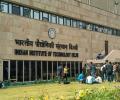
Researchers at IIT Delhi have successfully designed India's first working indigenous micro Graphics Processing Unit (GPU). This significant development aims to reduce the country's reliance on imported GPUs, which are crucial for AI, Machine Learning, and various embedded applications, and could help bridge the digital divide.
