
Former CDS Anil Chauhan stated that China poses a long-term and comprehensive challenge to India, with the boundary issue remaining unresolved due to differing perceptions of the Line of Actual Control. However, he emphasised that India's ties with Beijing cannot be solely defined by border disputes, advocating for engagement through platforms like SCO and BRICS. He also highlighted the broader global geopolitical flux and instability in India's neighbourhood as significant security concerns, stressing the need for self-reliance.

Security forces in Jammu and Kashmir initiated extensive search operations along the International Border and Line of Control in Samba and Rajouri districts following multiple overnight sightings of suspected Pakistani drones. The increased drone activity has prompted concerns over potential air-dropping of narcotics, weapons, or facilitation of infiltration, leading to heightened surveillance and anti-drone measures.

National security advisor Ajit Doval arrived in Beijing on Monday for a two-day visit to take part in the Special Representatives talks on the India-China boundary question with his Chinese counterpart and Foreign Minister Wang Yi.
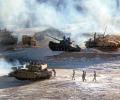
While tensions have eased at several friction points and mechanisms for managing the boundary have been reactivated, underlying differences persist. Disputes over naming practices in Arunachal Pradesh, continued infrastructure development on both sides, and unresolved questions regarding patrolling rights indicate that the structural gap remains, notes Dr Kumar.

India on Tuesday conveyed to China the importance of maintaining peace and tranquility along the Line of Actual Control (LAC) for overall bilateral ties as national security advisor Ajit Doval held talks with Chinese Foreign Minister Wang Yi focusing on delimitation of the frontier and sustaining work on trans-boundary cooperation.

The captain of the Pakistani naval ship was overconfident, reckless and professionally incompetent. He displayed false bravado and by his actions would have caused grievous injuries to his men onboard and severely damaged the ship. On the other hand the captain of INS Kolkata maintained his cool, composure, displayed excellent seamanship skills and maintained his course and speed to avoid a major catastrophe. Comparison of the two captains shows the levels in professional competence of the two navies which are miles apart, points out Commodore Venugopal Menon (retd).

India and China are in what experts call 'a cooperation-versus-competition situation'.

Pakistani drones were spotted hovering along the Indo-Pak border in the Poonch and Samba districts of Jammu and Kashmir, prompting security forces to activate their anti-drone measures. The drones were seen along the Line of Control (LoC) and the International Border.

'The Chinese military cannot advance much in Ladakh, even if they want to.' 'Similarly, in Arunachal Pradesh, they can rename a village or two, intrude here or there, but cannot do much more realistically.'

The FCNR (B) stratagem relies on using public money to defend the rupee. The State subsidises foreign borrowing to attract dollars. This tool requires large-scale borrowing to make a material difference against a gross external flow of $11 billion a day. A commensurately large fiscal cost falls upon the exchequer. The ministry of finance will choose how much it is willing to spend in exchange for this round number, points out Ajay Shah.

Subedar Hokato Sema lost his leg in a mine blast on the Line of Control. Today he is a champion para shot-putter and among the most decorated para soldier-athletes.

'Instead of choosing dialogue, the government chose repression... Force ought to be the last resort, not the first.'

Glimpses of Indian Army personnel celebrating Diwali along the Line of Control in the Akhnoor sector, on the outskirts of Jammu.

Phunchuk Stobdan's forte was candour and strong views on India's defence. Naturally, India's adversaries were in awe of him, fearing his views and unyielding stand on boundary issues, remembers Tarun Vijay.
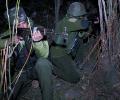
For the ninth consecutive night, Indian and Pakistani troops engaged in small arms fire along the Line of Control (LoC) in Jammu and Kashmir, continuing a pattern of heightened border tensions. The skirmishes, initiated by Pakistani troops in violation of the ceasefire agreement, have led to a tense situation along the LoC and International Border (IB). The incidents come in the wake of the April 22 terror attack in Pahalgam, which claimed the lives of 26 people, mostly tourists. Civilians residing near the border have begun preparing their bunkers, anticipating potential escalation. Despite a recent hotline conversation between the Directors General of Military Operations (DGMOs) of India and Pakistan, where India cautioned Pakistan, the ceasefire violations persist.
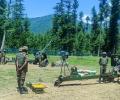
'India's security challenges are no longer confined to the Line of Control or the Line of Actual Control.'
'They also span cyber networks, economic systems, information warfare, technology ecosystems, maritime routes, and internal social cohesion.'

People along the Line of Control and International Border in the Jammu region continue to live under the shadow of death, with unexploded mortar shells fired by Pakistani troops still embedded in farmlands and residential areas even though hostilities have stopped for nearly a week. IMAGE: Kindly note that this image has been posted for representational purposes only. Photograph: / Rediff.com Despite the May 10 understanding between India and Pakistan, locals describe the border areas as a 'death trap'. Sixty-two-year-old Balvinder Singh, who returned to his home in Pargwal sector on May 14, recounted a narrow escape. "Two shells exploded in our compound, damaging our house. Three more landed on our farmland. We were terrified and told our family to stay away from the fields until the Army could help," Singh told PTI. Army engineers later came to the village and safely defused the unexploded shells, bringing a temporary sense of relief. "Fear is writ large on the faces of people to these death traps in border hamlets", he said. Scenes of destruction are evident rooftops torn apart, broken houses, windows punctured by shrapnel, and carcasses of cattle lying in pools of blood. The acrid smell of gunpowder still lingers in the air. Sardar Gurmeet Singh faced a similar ordeal. His family could not re-enter their home as a live mortar shell had sunk into the compound in a village close to the International Border. "The army's bomb disposal squad removed it after four days, allowing us to finally enter, back home," he said. Indian Army engineers have launched a sweeping clearance operation across border districts, defusing over 80 unexploded shells in the past five days -- including 6 in Pargwal, 19 in Rajouri, 42 in Poonch, and 12 along the IB. "These shells, mostly 120 mm calibre, have a range of 15 to 30 km and pose a serious threat to both civilian and military targets," an Army officer said. "Many of them were fired by Pakistan during recent hostilities." On May 7, the Indian Army launched Operation Sindoor, conducting precision strikes on nine terror hubs in Pakistan and Pakistan-occupied Jammu and Kashmir (PoJK) in response to the April 22 terror attack in Pahalgam that killed 26 people, most of them tourists. The subsequent retaliation by Pakistan pushed the region to the brink of war. From 7 to 10 of May, 27 civilians were killed and over 70 injured in Pakistani shelling in the Jammu region. Farid Din Gujjar, a resident near the border, expressed fear about returning to his fields. "Several shells created deep craters in our paddy land. We cannot resume work until all unexploded ordnance is cleared. It's a death trap," he said. Army units, in coordination with Jammu and Kashmir Police, have evacuated high-risk zones and issued stern warnings to residents not to touch any suspicious objects or unexploded shells. In one major operation, 42 live shells were safely destroyed in the Poonch villages of Jhullas, Salotri, Dharati and Salani. "All safety protocols were followed. The shells posed a serious danger to local lives," an Army spokesperson said, calling the effort a 'continued commitment to protect civilians and restore normalcy'. Poonch saw the vast majority of deaths due to shelling. Security officials said that Pakistan used a mix of mortar shells, armed drones, and missiles during the shelling spree, specifically targeting civilian habitations and border towns in Jammu, Samba, Kathua, Rajouri, and Poonch. As clearance operations continue, the border residents are slowly returning to their homes, but with caution, fear, and lingering uncertainty about shelling that may yet happen in the future.

The Punjab government has allocated Rs 11,577 crore to home affairs, justice, and jails in the 2026-27 budget, focusing on strengthening institutional capacity, technology-driven surveillance, and prison security.

The Indian Army effectively repulsed multiple drone attacks and other munitions launched by Pakistan's armed forces along the western border on the intervening night of May 8-9. Pakistan also violated ceasefire along the Line of Control in Jammu and Kashmir. The Indian Army said it responded with force, asserting that all nefarious designs will be countered.

The army has been behind the other two forces in capex since FY21.

If one has to compare the tenures of the two prime ministers one must credit Nehru with laying the foundations on which Modi is building a grand edifice, asserts Colonel Anil A Athale (retd).

Villagers living near the International Border and Line of Control in Jammu are on high alert following the recent terror attack in Pahalgam, preparing underground bunkers and accelerating crop harvesting. The incident has heightened security concerns despite a renewed ceasefire agreement between India and Pakistan in 2021. Residents are demanding swift action against the perpetrators and their handlers.
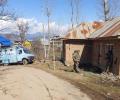
Security forces reported suspected drone activity in forward areas along the International Border (IB) and Line of Control (LoC) in Samba, Rajouri, and Poonch districts of Jammu and Kashmir. A search operation has been launched.

China and Bhutan held the 15th Expert Group Meeting to discuss boundary alignment, focusing on areas where there are no disputes, and agreed to maintain the momentum of negotiations.
Indian Army troops fired upon and took down multiple suspected Pakistani drones that entered Indian territory from across the Line of Control (LoC) in the Rajouri district of Jammu and Kashmir. This is the second such incident in three days.
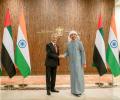
Frankly, was it really necessary in the middle of a fratricidal war for External Affairs Minister S Jaishankar to travel to Abu Dhabi for a one-on-one with the sheikh on April 12?Or, for National Security Advisor Ajit Doval to follow up on April 26? Or, for PM Narendra Modi to follow through today? There are no easy answers, notes Ambassador M K Bhadrakumar.

Aamir Khan's upcoming film, aims to shed light on the 1952-1953 India-Pakistan series, which occurred just five years after Partition and marked Pakistan's first official Test series.

There are enough people at the top decision-making level in Tehran who are still willing to negotiate, provided Trump can create the right setting for the negotiation to acquire a dynamic of its own, points out Ambassador M K Bhadrakumar.
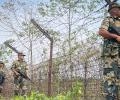
The Border Security Force (BSF) is set to receive government approval for 16 new battalions, comprising around 17,000 personnel, and two forward headquarters for its western and eastern commands. The move aims to strengthen security along the India-Pakistan and India-Bangladesh borders, respectively. The new battalions and headquarters are part of a larger plan to address evolving security dynamics and challenges in the border regions.
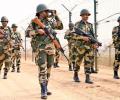
The Border Security Force has ordered mobilisation of additional manpower at posts along the India-Pakistan border in Punjab and Jammu as part of its measures to strengthen the anti-infiltration grid and check the intrusion of drones carrying ammunition or drugs, official sources said Monday.

'The unexpected turn of events and assertion of sovereignty by the Taliban has baffled the Pakistan security establishment.'

The core issues to be settled -- access to Hormuz, Israel's aggression in Lebanon, the question of Iran's nuclear programme, sanctions relief and compensation -- are thorny enough to require weeks of patient negotiation. The most likely outcome of the opening sessions is that both sides take the measure of each other, establish what is and is not negotiable, and return home without having broken anything. That would count as progress.

'At the first sign of real trouble, that money will move. There will be a run.'

The Border Security Force (BSF) is training specialized 'drone commandos' and 'drone warriors' for modern warfare, with plans to deploy them in missions like Operation Sindoor. A 'School of Drone Warfare' has been inaugurated to provide training in UAV operations, anti-drone warfare, and surveillance.

The 19th edition of the Indian Premier League gets underway in Bengaluru on Saturday, a touch lighter on overseas firepower but buoyed by a confirmation of its robust financial health this week.

Trump has made it clear: the US will not lift its blockade of Iranian ports until a deal is signed.

A combination of security pressure and rehabilitation efforts has significantly weakened Naxalism in India, leading to numerous surrenders and the elimination of key leaders.
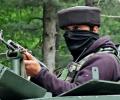
The firing exchanges are taking places in five districts out of seven border districts of Jammu and Kashmir. So far, there has been no firing reports along International Border in Samba and Kathua districts.

'China continues to perceive its relations with India through the prism of India-US relations, with the US using India to counter balance against China in the Indo-Pacific and beyond.'
Jammu and Kashmir was peaceful last night with no hostilities between the Indian and Pakistani militaries along the Line of Control and the International Border.
