

What we are watching is something different: A fog manufactured and maintained by the people who started the war, so that the question of why it was started never has to be answered, observes Prem Panicker in his must read blog on the war in the Middle East.

For years, I argued -- at least in my head -- that India should jettison its Westminster-style parliamentary democracy in favour of the American presidential model.
My case rested on a single premise: In the Indian system, electability and not competence is the supreme qualification.
A Cabinet minister need not know anything about the portfolio he runs; he merely needs to have won a plurality (not even a majority) in some constituency.
The result is under-qualified, and occasionally even semi-literate, but hugely popular politicians running ministries that govern key ministries such as aviation, atomic energy, finance, defence.
Manmohan Singh, arguably the most learned prime minister of the modern era, could never win a direct election on his own.
The system that made him finance minister during a critical period in India's economic history, and later elevated him to prime minister, was a result of Rajya Sabha arithmetic.
Key Points
- The Strait of Hormuz disruption has triggered energy supply concerns and exposed limitations in securing global shipping routes.
- Cheap drones and asymmetric warfare tactics are challenging the world's most advanced militaries and reshaping battlefield dynamics.
- The war's ripple effects are reaching India through LPG shortages, supply chain disruptions, and rising costs for food and medicines.
The American presidential model seemed to me to solve this problem elegantly.
You elect one person. That person then assembles a cabinet from the entire talent pool of the nation: Economists, generals, diplomats, scientists.
The elected president does not have to deal with constituency pressures, caste arithmetic, coalition obligations.
There was nothing to stop him, or her, from picking the best person for each job.
Yes, there were failures.
Colin Powell, arguably the best-qualified secretary of state of his generation, still stood at the UN podium and made the false case for Iraq's weapons of mass destruction.
But that seemed like an exception.

Trump Team's Iran War Decisions
I no longer believe as I did.
What I am watching unfold in the Iran war has dismantled my argument more thoroughly than any academic critique could.
The American president chose, freely and without any electoral constraint, to staff the most consequential decisions of this war with a Fox News television host as secretary of defence and two men -- Jared Kushner and Steve Witkoff, neither of whom hold security clearances -- as the architects of nuclear negotiations with Iran.
By Trump's own account, these are the people who made his mind up for him.

And now we have the results of those choices.
The nuclear programme is not actually a war goal.
Regime change is not a war goal.
The Strait of Hormuz is effectively closed, and the US Navy has no plan to reopen it.
US intelligence confirms, privately, that the Iranian regime is intact and not at risk of collapse.
Twelve days in, the most powerful military on earth cannot secure its own embassies from fifty-thousand-dollar drones, one of which breached the Baghdad compound while another destroyed the CIA station on the top floor of the Riyadh embassy.
Systems, I now understand, are only as strong as the people managing them.
And the people managing this one have brought us to a place where a war launched without congressional authorisation, without a clear goal, and without a plan for the morning after is now being declared as won -- 'In the first hour it was over,' Trump said (external link) at a rally yesterday -- even as the Strait remains closed, tankers sit anchored, and his own advisers privately acknowledge they have no idea how to end what they started.
Clausewitz famously wrote that war is the continuation of policy by other means.
The fog of war, he argued, is not just the confusion of battle -- it is the confusion of purpose.
Watching Washington this week, I wonder if there was ever even a purpose to see through.
- MUST READ! The New Fog of War
- Has US Repeated Its Iraq Mistake?
- Hormuz Crisis Threatens Global Economy
Today's big find:
Foreign Affairs (external link) has dropped its paywall for three days.
The magazine has been doing some of the most rigorous analytical coverage of the Iran war.
Use the opportunity to read and, if you are like me, print out the articles that you want to preserve. It won't be available free for long.

How the miscalculation happened
The New York Times has the most comprehensive reconstruction so far of how the Trump administration misjudged Iran's response.
Ten days before the war, Energy Secretary Chris Wright told an interviewer he was unconcerned about oil supply disruption.
'Oil prices blipped up and then went back down,' he said, referring to last June's strikes.
Trump was privately briefed on the oil price risk, acknowledged it, and directed his treasury and energy secretaries to develop options, but did not speak publicly about those options until more than 48 hours after the war started.
Inside the administration, some officials are now privately pessimistic about strategy, but have been careful not to tell the president, who continues to declare the operation a complete success.
Pentagon officials told closed congressional briefings that $5.6 billion in munitions were used in the first two days alone ($11.6 billion in the first six days (external link)), a burn rate far higher than had been publicly disclosed. [New York Times (external link), paywalled]
Amateur hour
A detailed investigation by MS NOW reveals that the nuclear negotiations which collapsed 36 hours before the first US strikes were conducted by Steve Witkoff and Jared Kushner.
Neither of them are nuclear experts, neither hold security clearances, and they did not bring technical advisers to the table.
Iran had presented a seven-page proposal, which Witkoff and Kushner were incapable of understanding. The talks were abandoned.
Witkoff's own defence of his qualifications: 'I wouldn't tell you I'm an expert in nuclear, but I've learned quite a bit.'
The IAEA, meanwhile, has said it had no evidence Iran was building a nuclear bomb.
Iranian Foreign Minister Araghchi's summary: 'When complex nuclear negotiations are treated like a real estate transaction... bombing the negotiation table out of spite.' [MS NOW (external link)]

What the briefings revealed
Senator Chris Murphy (D-Connecticut) emerged from a two-hour classified briefing with a thread that should be read in full (external link).
While Murphy couldn't go into details since the briefing was classified, he did sum up what he had learned: The nuclear programme is not a war goal; regime change is not a war goal.
This is important, because in public those two line items are touted as the rationale for the war -- but behind closed doors, the administration says no.
The stated goals -- destroying missiles, boats, and drone factories -- come with no answer to the obvious question of what happens when Iran restarts production.
And on the Strait of Hormuz, there is no plan.
Murphy's verdict: 'This part of the disaster was 100% foreseeable.'
US intelligence, meanwhile, has separately confirmed to Reuters the regime is intact, retains control of the Iranian public, and is not at risk of collapse.
Israeli officials in closed discussions have acknowledged the same.
In sum, the two countries prosecuting this war do not privately believe their own publicly stated rationale.
Senator Richard Blumenthal, who too was present at the briefing, was equally outraged.
'I emerge from this briefing as dissatisfied and angry, frankly, as I have from any past briefing in my 15 years in the Senate,' he told reporters, going on to elaborate on the reasons for his anger. [Chris Murphy (external link); Reuters (external link); Richard Blumenthal (external link)]
The war that dare not speak its name
The Trump administration has spent considerable energy avoiding the word 'war' while waging one.
The Atlantic traces the history of presidential euphemisms: Truman's 'police action' in Korea, Obama aide Ben Rhodes's 'kinetic military action' in Libya.
The piece notes something distinctive about the current evasion: It is combined with an aesthetic glorification of war, a 'warrior ethos' that Secretary of Defence Pete Hegseth pumps into every speech.
The piece invokes Marinetti's 1909 Futurist Manifesto, which called war 'the world's only hygiene'.
Saturday Night Live had its own summary: 'This isn't a war; it's a situationship.' [The Atlantic (external link)]
The Secretary of War
A Guardian profile of Pete Hegseth traces his trajectory from Princeton conservative to Fox News co-host to Pentagon chief.
The piece documents his Crusader tattoos, his church's ties to a pastor who advocates a theocratic vision of society, and the more than 200 complaints received from service members about commanders invoking Christian 'end times' rhetoric to justify the Iran war.
The Military Religious Freedom Foundation notes the obvious strategic liability: Casting this as a holy war gives Iran exactly the narrative it needs to sustain its own. [The Guardian (external link)]
And while on Hegseth, a report widely publicised in the media says the US department of defence spent #93.4 billion (yeah, that is billion with a 'b') on luxury food items etc in just one month of the last fiscal year, including $50.1 billion in just five days.
The details are staggering: $15 million on rib eye steaks, nearly 7 million on lobster tails, etc. [Newsweek (external link); The New Republic (external link); Fox 11 (external link)]

The drone war no one planned for
Drone Warfare Reshaping Modern Conflict
New York magazine's Jeff Wise writes about a battlefield reality the Pentagon is still absorbing: Iran has drawn the US into a protracted attritional drone war unlike any it has fought directly.
The core technology -- cheap, proliferating, increasingly precise -- evolved at hyperspeed during four years of war in Ukraine, and the US is now on the receiving end of that learning curve for the first time.

A single drone killed six American soldiers at a base in Kuwait.
A Kuwaiti F-18 apparently shot down three US F-15s in a friendly fire incident.
Drones and missiles rained on Israel, Bahrain, Kuwait, Saudi Arabia, Qatar, and the UAE simultaneously.
And now, the Baghdad diplomatic compound has been breached, the CIA station in Riyadh destroyed.
The US can flatten every IRGC headquarters in Iran, but it now finds that it cannot secure its own embassies from a $50,000 drone.
That asymmetry, twelve days in, remains unsolved. [New York magazine, paywalled (external link)]
The Strait: Theory versus reality
Strait of Hormuz Crisis Deepens
Trump told Fox News that tankers should 'show some guts' and sail through the Strait of Hormuz.
Reuters reports that the US navy has been turning down near-daily requests from the shipping industry for military escorts, telling industry briefings the risk of attack is too high.
The US energy secretary posted that the US navy had successfully escorted a tanker through, then deleted the post, causing markets to lurch twice in one day.
A maritime security expert's assessment: 'Neither France, the United States, an international coalition or anybody is in a position to secure the Strait of Hormuz'. [Reuters (external link)]
For the technical backdrop, Professor Caitlin Talmadge's 2008 paper >e,?Closing Time remains essential reading.
Her conclusion: Iran does not need to physically seal the Strait to cause catastrophic disruption.
A modest mining campaign of a few hundred mines could take between 37 and 112 days to fully resolve.
The US navy's mine-clearing assets are scarce, vulnerable, and designed for permissive environments.
Given how narrow the Strait of Hormuz is, the US navy comes under shore-based Iranian guns and missiles if it attempts to enter the Strait to sweep it clear of mines.
Here's the thing: every strategic assessment this administration needed to prepare for this war is out there, in the public domain.
Apparently, no one bothered to read. [Caitlin Talmadge, International Security (external link)]

The escalation pattern
University of Chicago political scientist Robert Pape identifies five recurring dynamics: The Escalation Trap (tactical success that doesn't translate to political concession); the Smart Bomb Trap (precision strikes creating the illusion of control); Horizontal Escalation (weaker states widening the battlefield to shipping lanes and energy infrastructure); Parallel Attack (the theory that hitting everything simultaneously collapses systems, a theory history keeps disproving); and the Air Power Trap (bombing that rallies populations around governments rather than against them).
The money quote: 'Vietnam. Kosovo. Iraq. And now the expanding confrontation with Iran.' [Robert Pape (external link); video (external link)]
The succession, explained
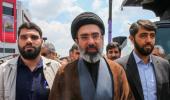
Iran Analytica's comprehensive analysis of Mojtaba Khamenei's elevation makes a counterintuitive case: external pressure compressed the regime's decision-making and made dynastic continuity the safest option rather than the planned one.
Trump's public rejection of Mojtaba as an acceptable successor inadvertently strengthened his candidacy: in the Islamic Republic, the candidate most opposed by external enemies is most easily framed as the revolution's truest guardian.
The regime's recurring pattern: crises consolidate it rather than transform it. [Iran Analytica (external link)]
The Kremlin reads out a different call
Hours after Trump boasted that Putin told him he was 'impressed' by the Iran moves, Moscow offered its own version of the call.
According to Putin's spokesman, Trump did not raise Ukraine ceasefire, directly contradicting Trump's claim.
When asked whether Russia had provided Iran with targeting intelligence, Peskov did not deny it: 'We are not commenting.'
Trump floated easing Russian oil sanctions minutes after the call. The Kremlin called it a coincidence.
Given the precision with which Iran and its proxies have been hitting US diplomatic and intelligence facilities -- the CIA station in Riyadh, the Baghdad compound --the question of where the targeting intelligence is coming from is one Washington has not yet answered publicly. [The Daily Beast (external link)]
And while on conflicting readouts of calls, here is one closer to home: External Affairs Minister S Jaishankar in a bland two line post on X said he had a detailed conversation with Iranian Foreign Minister Seyed Abbas Araghchi.
'We agreed to remain in touch,' Jaishankar writes; that sounds like the sort of thing I'd say to a chance-met acquaintance.
Compare that with the extensive readout of the same call, put out by the Iranian foreign ministry.
Begs the question: What did Jaishankar, representing the government of India, have to say to the points raised by Iran?
The very blandness of Jaishankar's post is the real story of where India-Iran relations are at now. [S Jaishankar (external link); Iran Foreign Ministry (external link)]
Galibaf draws a line
Mohammad Bagher Galibaf, speaker of the Iranian parliament, on any ceasefire: 'Certainly we aren't seeking a ceasefire. We believe the aggressor must be punished and taught a lesson.'
And: 'The Zionist regime has consistently perpetuated a vicious cycle of 'war, negotiations, ceasefire, then war again.' We will break this cycle.'
The man who helped engineer Mojtaba Khamenei's succession is not signaling flexibility. [Twitter/X (external link)]
The politics back home
Nate Silver's analysis of the US domestic political fallout contains a paradox worth noting: MAGA voters are more supportive of the Iran war than non-MAGA Republicans, not because they are ideologically pro-war but because for them, MAGA means supporting whatever Trump does.
The genuinely isolationist voices -- Tucker Carlson ('absolutely disgusting and evil'), Joe Rogan ('this is why a lot of people feel betrayed'), Nick Fuentes -- are elite opinion, and elite opinion, as Silver notes, tends to be a leading indicator.
The Gaza analogy for Democrats is instructive: what was a minority progressive position in 2020 is now the mainstream.
As Trump becomes more of a lame duck and 2028 approaches, the cost of crossing him diminishes, and the next generation of Republican leaders may be more genuinely isolationist than he ever was. [Nate Silver, 538/Substack (external link)]

The ripple: India Watch
Iran War's Ripple Effects in India
The war's most direct impact on India this week is playing out not in diplomatic cables but in gas agency queues (external link) spilling over into petrol pumps (external link), restaurant kitchens, and wedding mandaps.
Former ambassador Nirupama Menon Rao has written (external link) about the structural vulnerability that the LPG supply disruption is now exposing.
The roadside dhaba, the small mess, the pushcart stall, the idli cart at dawn near a construction site -- these are not commercial establishments competing with formal restaurants.
Rather, Rao writes, they are effectively a public service: They feed the migrant workers, daily-wage labourers, drivers, and construction hands who have no kitchen of their own.
A rise in LPG costs does not eat into profit margins; it cuts directly into the ₹30 or Rs 40 plate of rice and dal that constitutes a working man's only meal.
'Urban India often runs on systems that policymakers must see,' she writes.
'The roadside kitchen is one of them.'

The second-order effects are now beginning to show.
As restaurants cut menus in response to fuel shortages, food delivery platforms like Swiggy are reporting a contraction in operations -- fewer dishes on offer means fewer orders to service, which means delivery workers lose income.
Andhra Pradesh Hotel Association has decided to stop (external link) catering to Swiggy and Zomato deliveries, in order to reduce the load on the kitchens of its members.
The invisible workforce that Rao writes about is being squeezed from both ends: The kitchen that feeds them is running short of fuel, and the gig economy that employs them is pulling back.
Still staying with second order effects, Tamil Nadu's Sivaganga reports surging prices of firewood (external link) as hotel owners switch from gas-based cooking.
The Wire reports (external link) that medicine prices are expected to surge, since the cargo ship shortages have hit transport of the required ingredients, sourced largely from China.
In Gujarat, ceramics and diamonds have already been hit by gas shortages -- now, the impact of the war is being felt by the potato belt, Indian Express reports (external link).
On the ground in Punjab, the disruption has taken on a particular intimacy.
With LPG supply to commercial cylinders suspended since Monday night on government instructions, wedding caterers across the state have been caught off guard, The Tribune reports (external link).
More than ten thousand weddings are estimated to take place across Punjab this week.
Families are shuttling between gas agencies, borrowing cylinders from relatives, being turned away from booking systems with servers reportedly down across India.
The Punjab Hotel and Restaurant Association has advised members to switch back to coal-based chulhas if necessary.
An Olympian who runs a gas agency has appealed to residents to follow the teachings of Guru Nanak: Vand Chhako (share what you have).
This arc, from a hasty decision made in Washington, through a chokepoint in the Persian Gulf, to a wedding in Patiala, is the supply chain in action. And it is, right now, broken.
In passing...
The New Yorker this week in a paywalled piece (external link) invokes the French philosopher Paul Virilio's concept of the "information bomb".
Virilio's prediction, made in 1998, is of a coming "visual crash" in which the overflow of real-time global media would cause a "defeat of facts" and a "disorientation of our relation to reality."
Virilio was writing before social media, before MAGA, before AI.
He could not have imagined the IDF posting "Fortunate Son" (external link), an anthem of opposition to the Vietnam War, as a triumphalist soundtrack to its fighter jets.
Or the White House splicing (external link) video-game simulations with real missile strike footage.
We are all, the piece suggests, "monitoring the situation" -- that is to say, we are scrolling, clicking, assembling fragments of information under the deluded impression that knowing more makes us something other than passive bystanders to the relentless spray of digital shrapnel.
But here is what the fragments, assembled, actually tell us, twelve days into this war: The stated goals are not the real goals. The real goals have not been stated.
The Strait is closed and there is no plan to reopen it.
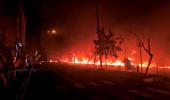
Oil tankers at sea, and oil refiners on land, are going up in flames.
The regime the war was meant to topple is intact -- US intelligence says so (external link).
A $50,000 drone is destroying what billions of dollars cannot protect.
Clausewitz wrote about the fog of war as an epistemic condition: The irreducible uncertainty of battle.
What we are watching is something different: A fog manufactured and maintained by the people who started the war, so that the question of why it was started never has to be answered.
Feature Presentation: Ashish Narsale/Rediff





 © 2026