
Rapper Badshah is facing legal scrutiny and a potential travel ban after his latest Haryanvi music video, Tateeree, sparked outrage over its lyrics and visuals, prompting police to investigate and issue a Look Out Circular.
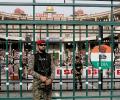
The intruder, who is in his early 20s, was taken into custody by Army troops soon after he entered into this side from across the LoC.
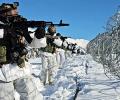
Pakistani troops violated the ceasefire along the Line of Control (LoC) in Poonch district of Jammu and Kashmir, prompting a strong response from the Indian Army. The incident, which occurred in the Krishna Ghati sector, comes a day after two Indian Army personnel were killed in an IED blast near the LoC. The ceasefire violation is the fourth cross-border incident in five days and the first this year.

In a post on X, the additional directorate general of public information posted: "Pakistan again violates the Ceasefire Agreement by firing artillery in Bhimber Gali in the Poonch-Rajouri area. Indian Army is responding appropriately in a calibrated manner."
An Army Junior Commissioned Officer (JCO) was killed in an encounter with terrorists along the Line of Control (LoC) in the Akhnoor sector of Jammu and Kashmir. The terrorists' infiltration attempt was thwarted, but the JCO succumbed to injuries sustained during the encounter. This incident comes after a recent brigade commander-level flag meeting between India and Pakistan to discuss border management, highlighting the ongoing security challenges in the region.
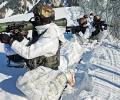
This was the third consecutive night that Pakistan resorted to unprovoked firing along the Line of Control.
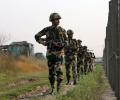
Army troops could not open fire on the terrorists due to the presence of Pakistani posts nearby, they said. Drone footage of the area showed a blood trail, indicating that the terrorists had suffered injuries due to the fall.
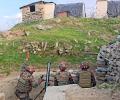
Army troops opened fire after noticing suspicious movement in a forward area near the Line of Control (LoC) in Rajouri district, while security forces conducted searches at more than a dozen places in Poonch, Samba, and Kathua districts of Jammu and Kashmir on Tuesday, officials said.

The landmine exploded when the troops were patrolling in a forward area in Digwar sector this afternoon, the officials said.
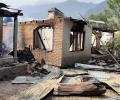
Hundreds of residents along the Line of Control (LoC) and the International Border (IB) in Jammu and Kashmir were evacuated to safer zones after Pakistani shelling following Indian airstrikes on terror targets in Pakistan. The shelling killed 12 people, including four children and two women, and injured over 50. The evacuations come amid heightened tensions between India and Pakistan following the April 22 terror attack in Pahalgam that left 26 civilians dead. The government has provided temporary shelter for those evacuated.

India and Pakistan on Friday held a flag meeting along the Line of Control (LoC) in Jammu and Kashmir's Poonch district in an effort to ease tension after several recent incidents of cross-border firing and an IED attack, official sources said.
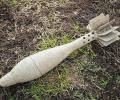
Two Indian Army personnel, including a captain, were killed and another was injured when suspected terrorists set off an improvised explosive device (IED) near the Line of Control (LoC) in the Akhnoor sector of Jammu on Tuesday. This was the third incident of cross-border action by terrorists in the Jammu region in four days, highlighting the ongoing security challenges in the area. The blast occurred while the troops were on patrolling duty near a forward post, underscoring the risks faced by security personnel in the region. Following the incident, the Army launched search operations in the area and expressed condolences for the loss of its personnel.

Markets regulator Sebi board on Wednesday approved a series of measures aimed at improving investor convenience, easing compliance norms, and deepening participation in the capital and debt markets.

Chennai-based photographer Ramya Sriram explains how she captured the fiery and hypnotic Theyyam image that won her the National Geographic India Contest

Uttar Pradesh authorities have registered 74 cases and arrested 75 people in connection with the illegal storage and sale of codeine-based cough syrup. A minister alleges links to the Samajwadi Party and an SIT is investigating.

The troops noticed suspicious movement along the LoC in Kupwara late on Monday night and challenged the intruders. There was a brief exchange of fire between the two sides, the officials said.

The Army's Srinagar-based Chinar Corps said an operation was launched on Friday based on specific intelligence inputs from agencies about an infiltration attempt in Keran sector of Kupwara.

Ajay Gupta, co-owner of Goa's 'Birch by Romeo Lane' nightclub, was questioned in Delhi regarding the fire that killed 25 people. He claimed to be 'only a partner' and was located at a hospital before being detained.
This comes as the neighbouring country strengthens defence ties with Gulf and Western European countries, and its long-standing ally Turkiye, the officials said.

The Pakistani military fired unprovoked shots across the Line of Control (LoC) in Kashmir for a second consecutive night, triggering retaliatory action from Indian troops. This escalation follows heightened tension between India and Pakistan after the Pahalgam terror attack that killed 26 civilians. Despite the exchange of fire, no casualties were reported. India has imposed a series of punitive measures in response to the attack, including the suspension of the Indus Waters Treaty and closing the Attari land-border crossing. Pakistan has responded in kind, closing its airspace to Indian airlines and suspending trade with India.

The Supreme Court has questioned the NIA regarding the detention of Kashmiri separatist leader Shabir Ahmed Shah in a terror funding case, asking the agency to justify his detention for over six years.

The owners of a Goa nightclub, where a fire claimed 25 lives, have been detained in Phuket, Thailand, after fleeing India. An Interpol Blue Corner Notice was issued at the request of the Indian government.

Glimpses of Indian Army personnel celebrating Diwali along the Line of Control in the Akhnoor sector, on the outskirts of Jammu.

The couple last month filed a petition in HC seeking suspension of the Look Out Circular (LOC) issued against them by police in the case, so that they can travel for their professional commitments and leisure trips abroad.

A suspect in the 'Birch by Romeo Lane' nightclub fire in Goa, which killed 25, has been brought to Goa for questioning. An Interpol Blue Corner Notice has been issued for the owners, who fled to Thailand.

A bench comprising Justices BR Gavai and KV Viswanathan warned the probe agency and remarked it had moved a "frivolous petition" only because one of the accused was a high-profile person.

A Delhi court on Wednesday refused to give any interim protection from arrest to Saurabh and Gaurav Luthra, owners of the ill-fated Goa nightclub who fled to Thailand, as their partner was held in connection with the fire incident that killed 25 people last weekend.

The Pakistan Army has accused India of attempting to manipulate history by creating fabricated narratives, following claims by the Indian Army regarding Pakistani casualties along the Line of Control.

A gun battle erupted between terrorists and security forces in the Kishtwar district of Jammu and Kashmir. The operation is ongoing, with reports of minor injuries to a security personnel. This is the latest in a series of encounters in the region as security forces hunt for terrorists.
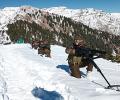
A brief exchange of fire took place along the Line of Control (LoC) in the Poonch district of Jammu and Kashmir on Sunday. Indian Army soldiers retaliated to fire from a forested area across the LoC, and the exchange lasted for a short period. No damage was reported on the Indian side. The incident comes after several cross-border incidents last week, including an IED explosion that killed two army personnel. The ceasefire violation along the borders in J&K has become infrequent since India and Pakistan renewed the ceasefire agreement on February 25, 2021.

India recorded its best-ever showing at the Badminton Asia U-17 & U-15 Championships as Shaina Manimuthu and Diksha Sudhakar clinched gold medals in their respective categories in Chengdu, China, on Sunday.

Interpol has issued a Blue Notice against the owners of a Goa nightclub who fled after a fire claimed 25 lives. Police are investigating violations and illegalities related to the nightclub's operation.

A Delhi court rejected the transit anticipatory bail pleas of Saurabh and Gaurav Luthra, owners of Birch by Romeo Lane nightclub in Goa, where a fire killed 25 people. The court cited their evasion of legal processes as a reason for the denial.

A woman doctor arrested in connection with an inter-state terror module was part of Jamaat-ul-Mominaat, an organization launched by Jaish-e-Mohammed, officials said.

Indian Army's Director General Military Operations Lt Gen Rajiv Ghai claims Pakistan lost over 100 military personnel along the Line of Control during Operation Sindoor and at least 12 aircraft during the conflict in May.

Naik Mukesh Singh Manhas, a 29-year-old soldier from Jammu and Kashmir's Samba, was killed in an IED blast carried out by terrorists near the Line of Control (LoC) in Jammu's Akhnoor sector. Manhas, who was supposed to get married in April, had returned to his Army unit on January 28 after his engagement and giving final touches to his new house. He was killed along with Captain Karamjit Singh Bakshi from Jharkhand's Ranchi. Manhas's family and friends mourned his death, remembering him as an enthusiastic cricketer and a kind-hearted individual.

Security forces foiled an infiltration bid along the Line of Control (LoC) in the Gurez sector of Jammu and Kashmir's Bandipora district, resulting in the death of two terrorists.

We look at the longest Hindi movies through the years, and interestingly, most of them have done well.
Shilpa Shetty, involved in a Rs 60-crore cheating case with Raj Kundra, withdrew her application to travel abroad as plans did not materialize. The court accepted the withdrawal and scheduled a hearing for their plea seeking suspension of the Look Out Circular on November 17.

They said troops foiled the infiltration bid in Churunda area of Uri in Baramulla district of north Kashmir.
