
'India may well be a religious country, but that is precisely why we need to avoid criminalising blasphemy,' argues Mihir S Sharma.
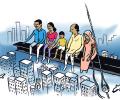
'The government has to stop trying to fix things for lenders, projects, homeowners and developers and think instead about how to fix the market for houses,' says Mihir S Sharma.

Mihir S Sharma gives us a rundown of what could happen, depending on the number.

'If such inflows materialise, what will be the effect on the rupee's value -- and therefore on exports growth, the only sustainable path to recovery?', asks Mihir S Sharma.

'The oddest thing about this general election campaign so far is that one might think that the BJP was fighting with its back to the wall, rather than as the favourite to win.' 'Perhaps there is something they know that we don't,' says Mihir S Sharma.

'Anyone on Indian Twitter, Facebook, or any of the other forms of social media that matter (except elite forums like Instagram) understands instantly that it is dominated by upper-caste North Indian men.' 'Other voices are silenced and attacked,' says Mihir S Sharma.

'The entire swathe of Internet trolls -- who now apparently serve as the ideological brains-trust of the BJP -- would have looked at each other in puzzlement, thinking: What kind of warning is that?' says Mihir S Sharma.
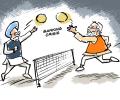
'As long as the government owns the banks, bankers will follow signals from politicians as to how to lend.' 'State-owned banks will remain State-owned banks as long as the current dispensation is in power -- and certainly there will be no change if the other chaps get in,' says Mihir S Sharma.

'Ask a beat journalist their opinion, and you will always be told that they are more worried about writing something that would upset a company than something that would anger a politician,' says Mihir S Sharma.

'When the clouds lift and the mists clear, when saner heads and minds sit down to parse the outcome, they will find that the Congress was not lacking in either fight or spirit,' notes Saisuresh Sivaswamy.

'It is clear that economic policy and reform under this administration will always be afterthoughts, something to be carried out only when no other political concern intervenes -- when, in other words, the government feels safe and comfortable enough to take a moderate risk,' argues Mihir S Sharma.

'Bureaucrats have transformed a project meant to empower the poorest Indians into one that empowers only babus and disempowers everyone else,' says Mihir S Sharma.

The expectation that Mr Modi would be a major reformer, capable of reinvigorating the Indian economy, were based on a complete misreading of both his actions and his performance as Gujarat chief minister, says Mihir S Sharma.

'The current BJP leadership believes the party's expansion across India, and thus their own survival at the top, depends on injecting communal tension into areas where it has so far been largely controlled,' argues Mihir S Sharma.

'Anything other than a complete, 2014-style victory will be far more devastating for him then it would be for anyone else.' 'Disciplining restive party members, and taming recalcitrant allies will then be far more difficult for him,' says Mihir S Sharma.

'Xi's assumption of absolute power is neither complete, nor irreversible.' 'Nor is it safe, for Xi, for his party, or for his country more generally.' 'And the government knows this,' says Mihir S Sharma.
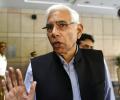
'And who sold this belief?' 'Public-spirited individuals' like Subramanian Swamy.' 'Independent public servants' like Vinod Rai. 'Anti-corruption activists' like Kiran Bedi. And 'outspoken television anchors' like Arnab Goswami,' says Mihir S Sharma.

The stock market, the Survey felt, had run away from underlying real economy indicators and asked if this indicated rational confidence or irrational exuberance.

'A one party-State, with only one kind of Indian,' argues Mihir S Sharma.

'This is obvious to everyone except those in denial; it is a national shame.' 'To that extent, blaming any particular government is an insufficient response,' argues Mihir S Sharma.

'The link between global warming and weird, extreme weather events is being better understood every year.' 'India is particularly at risk from such events.' 'Indian communities and urban centres don't have the resilience needed to survive such disasters,' says Mihir S Sharma.

'The mainstream media is alive with discussion of the rights and wrongs of the situation.' 'Mass immolation is being rediscovered as a worthy goal for young women, and we have also consoled ourselves at length with the reflection that Muslims Are Bad while Rajputs Are Good,' says Mihir S Sharma.

'He is wily and has everything that a political leader needs to succeed at that level.' 'He would be outstanding as a counter to Modi in the Lok Sabha, if he had the Opposition benches behind him,' says Aakar Patel.

'Should views such as Damore's be ignored, stigmatised, or corrected, point by point?' asks Mihir S Sharma.

'It goes without saying that Air India has now no imaginable reason to exist.'

'It is important whenever such accusations arise to provide whatever support we can to the accusers who, with inspiring bravery, have decided to take on men far more powerful than they are,' says Mihir S Sharma.

'The simple truth is this: That we had come to assume that a second term was Modi's for the asking. But the fact is that Modi will have to win one, just like everybody else.' 'And so much has he invested in his strongman persona that even a loss of just 50 seats from his extraordinary 282 in 2014 will look to his potential allies and to his party like a defeat,' says Mihir S Sharma.

Internal to Aadhaar itself, within the very design and usefulness of the project, lies the division between the clashing images of India.

'Hitchens asked which State Israel had most in common with -- and then answered his own question, saying "Pakistan".' 'They were both, he explained "confessional States": Founded to succour the followers of a particular faith,' remembers Mihir S Sharma.

'The bloodthirsty rhetoric of chicken-hawk TV anchors are the worst contributors to Kashmiri alienation.' 'If this implacable hatred is the authentic voice of India, Kashmiris argue, who can hope for peace?' asks Mihir S Sharma.

'The problems the rest of the world is struggling with -- the future of work, expectations from government and business in a world without jobs -- will be solved in India, by young Indians, before anyone else,' says Mihir S Sharma.

Apple products are built around the notion of picking up ideas that are already common, reducing them to brightly-coloured, child-like simplicity, imposing conformity, and then suggesting that buying into that conformity means you're a seriously cool adult, says Mihir S Sharma.

Advice to the new finance minister from former RBI governor Raghuram Rajan: 1. Clean up banks by reviving projects that can be revived after restructuring debt. 2. Improve governance and management at public sector banks. 3. De-risk banking by encouraging risk transfers to non-banks and the market. 4. Reduce the number and weight of government mandates for public sector banks, and for banks more generally.

The failure to reform has meant that there is no buzz about job opportunities, or about urban opportunities enticing young people off the farms. And it is this failure that has contributed to the widespread disappointment that threatens to make the next general elections closer than expected, says Mihir S Sharma.

Instead of failing young Indians, the government should now focus laser-like on education, skilling, healthcare, and the environment, says Mihir S Sharma.

What does Nobel Laureate Abhijit Banerjee thinks about India's education sector?

'If tempers all over the country are so fragile that they can be lost because a couple of film stars give their child the same name as a 14th-century warlord, exactly what sort of compromises can be palatable,' asks Mihir S Sharma.

The flawed response to the crisis has fed a us-vs-them mentality in which the banker, the expert, the coastal entrepreneur, the immigrant, the foreigner are all villains. The crisis was not that much of a problem; the response -- the over-reaction, the sovereign debt build-up and the lasting anger -- is the problem, says Mihir S Sharma.

Books like Sunil Khilnani's Incarnations: India in 50 Lives, simple and straightforward though they appear, are instead powerful arguments for complexity, for empathy, and for curiosity

Don't let people with repugnant ideas abrogate your rights by taking advantage of your commitment to free speech, observes Mihir S Sharma
 © 2026 Rediff.com - Advertise with us - Disclaimer - Privacy Policy - Sitemap - Feedback - About us - Terms of use - Grievances