
You have to really bungle to produce 5.7 per cent growth under the conditions this government is currently facing, says Mihir S Sharma.

The government must realise that it has very little time to recover itself, its reputation, its legacy - and India's fortunes,says Mihir S Sharma.

'For a party with a fuzzy ideology, one that lives only for power, having a leadership that thought vaguely about returning to power in the distant future was a distinct handicap,' points out Mihir S Sharma.

It is too late in the government's term for it to pull its usual trick of blaming the last guys.

The narrative in America after Donald Trump's victory sounds like the questions and debates that took place in India after May 2014. Were both electoral results all about jobs and economic anxiety? Mihir S Sharma doubts it.
There are two national political parties in India, but only one of them seems to be any good at politics, says Mihir S Sharma.

'There is no difference morally between politicians scoring points amid the rubble and non-politicians who assume that politics and corruption necessarily had something to do with it,' says Mihir S Sharma. 'Both are twisting a tragedy to their own ends.'

That US is losing one of its best-read presidents, and will gain one of the least likely to have ever read a book. Does that matter? Mihir S Sharma explains why it should.

Outside Diggi Palace's walls, things may be getting darker. Speech may be under threat; writers may be getting murdered for their writing. But, inside, it is possible to feel hope that ideas, nevertheless, may have their own power, says Mihir S Sharma.

'Who would want to be the man nominally in charge of driving the economy when your boss orders you to swerve it into a ditch of unknown depth?'
'Demonetisation demonstrates that this government is simply too amateurish in terms of economic policy-making to properly address India's deep, deep problems,' argues Mihir S Sharma.

Only the Indian elite would rather not breathe than be ordinary.
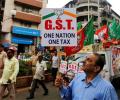
It is far from clear that this GST will have the silver bullet effect that the "pure" GST would have provided, says Mihir S Sharma.
One of the biggest ways in which recent government actions have been seen as investor-unfriendly is New Delhi's decision to unilaterally revisit almost every Bilateral Investment Treaty it has signed with other countries, says Mihir S Sharma.

India is failing to take advantage of its important ally, Japan as much as it should, notes Mihir S Sharma.

But Indian information technology workers might do better without the companies that held them back, says Mihir S Sharma.

Mihir S Sharma outlines why this year's Union Budget does not respond to the needs of India's economy, or attempt to frame the economy's future.

Structural changes to government finances could be focus of the Union Budget, says Mihir S Sharma.
Arvind Kejriwal's challenge is unlikely to even cause Narendra Modi to change his schedule. The only person it will embarrass, likely, is Kejriwal, says Mihir S Sharma

Rather than talking about Khajuraho and Shikhandi, the argument should be about a Constitution that promised rights to all, says Mihir S Sharma
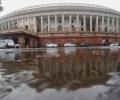
If the government does not allow the Opposition a few victories, then it is opening the door to paralysis and an entrenched culture of confrontation.
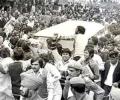
We need credible retellings of the times we have lived through, or the events in the immediate past that have shaped our today, says Mihir S Sharma

As West Bengal, Kerala, Assam, Tamil Nadu and Puducherry prepare for new administrations, one is reminded of the disparity that runs through the veins of the Indian states, notes Mihir S Sharma.

If Prime Minister Narendra Modi fails to live up to the expectations that he has raised, it will be entirely his fault. He should have started by ending the IAS

If this Budget was not packaged and sold as a Budget for the poor and for farmers, Narendra Modi would have lost the next election.

Private investment will respond only to sustainable reform.

Thanks to rupee depreciation, India has a chance to fundamentally rework its stifled manufacturing sector.

A government that confuses PowerPoints for policy is delaying structural change too much.

China's slowing means commodity markets are no longer overheated.

Compromise, constitutionality, pragmatism and self-respect. These were Mandela's leadership virtues. For countries such as India and South Africa, these are the qualities leaders must have, says Mihir S Sharma

Narendra Modi is no reformist, but here's how he could yet change the path India's economy.

Politicians are supposed to get into the business to change the world around them. But it seems Gandhi got into the business to help keep a party running, says Mihir S Sharma

Mr Modi must stop talking, and start writing
If this election is about Narendra Modi, then it is also about the RSS, notes Mihir S Sharma.
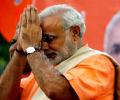
It is time to reset expectations as government will move with alacrity on social policy, not on economic reforms.
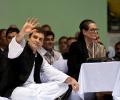
Government's reforms are too half-hearted. But Rahul Gandhi's Congress is too amateurish and inept to hold it to account.

It is time for Mr Modi to be a little more reasonable and rational.
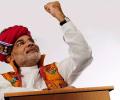
Mihir S Sharma on the false opposition being created between 'governance' and 'vote bank politics'.
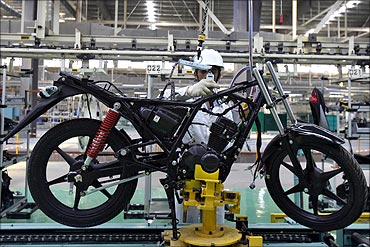
India can become a better place to do business only when exports begin to boom.

Instead of repealing Section 295A of the IPC, which criminalises speech that offends the religious, India intends to further criminalise offence against religion, says Mihir S Sharma
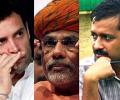
Rahul Gandhi thinks his imaginary Congress is the silver bullet; Narendra Modi thinks he himself is the silver bullet; Arvind Kejriwal seems to think that neighbourhood councils are a silver bullet. But none of them is right, says Mihir S Sharma.
 © 2026 Rediff.com - Advertise with us - Disclaimer - Privacy Policy - Sitemap - Feedback - About us - Terms of use - Grievances