
A new study analysing over 33,000 cancer journal articles has uncovered widespread citation manipulation by "research paper mills". These fraudulent organisations artificially inflate citation counts, a key academic performance metric, for thousands of articles. The suspect papers show unusually high citations but low readership, distorting scientific evidence and potentially slowing progress.

IIT Hyderabad and Japan's Mie University have signed MoUs to foster academic exchanges and joint research, with a strong focus on semiconductors and digital technologies. This collaboration aims to develop skilled talent and strengthen the semiconductor ecosystem in both countries.
Researchers have outlined five crucial actions to help the world prepare for a potentially strongest-on-record El Nino, aiming to reduce its severe health consequences like infectious diseases, malnutrition, and heat-related conditions. These recommendations, published in The Lancet, emphasise a comprehensive risk overview and early preparatory measures.

Students who want to gain hands-on research experience at the IIT Bombay can apply for the IITB Research Internship Award 2026.
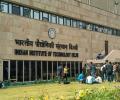
Researchers at IIT Delhi have successfully demonstrated the simultaneous transmission of quantum-entangled photons and classical data over a 50-km optical fibre link. This breakthrough addresses key challenges in integrating fragile quantum signals with existing telecommunications infrastructure, paving the way for more scalable and secure future quantum networks.
Researchers have discovered a method to externally manipulate a cell's automatic waste clearance process, known as autophagy. This breakthrough, involving the protein LC3, could offer new therapeutic targets for diseases like cancer and Parkinson's, where cellular cleansing mechanisms are often impaired.
IIT Bhubaneswar and IIT (Indian School of Mines) Dhanbad have signed a Memorandum of Understanding to enhance research collaboration and academic interactions, particularly in semiconductor and basic sciences. The agreement facilitates joint research projects, doctoral student supervision, faculty and student exchanges, and shared experimental resources, aiming to advance knowledge and create lasting impact.
Researchers from IIT Guwahati and BHU have devised an eco-friendly biological method to treat textile wastewater, specifically targeting toxic azo dyes. Their novel bacterium, 'Brevundimonas sp. AJZ05', effectively degrades 98.50 per cent of Direct Blue-6 dye, producing non-toxic byproducts, offering a sustainable alternative to conventional chemical treatments.

A chargesheet filed by Pune Rural police reveals how Siya Goyal and her alleged lover Chetan Chaudhary meticulously planned the murder of realtor Ketan Agarwal. The accused reportedly researched online about past deaths at Lohagad Fort and methods to conceal evidence, including studying a 2025 death at the same location, to make Agarwal's murder appear accidental.

New research suggests that Venus's slow spin rate and strong gravity likely caused any hypothetical moon it once had to crash into the planet. This study, led by astrophysicist Stephen Kane, models planetary interactions and indicates that Venus did not require a catastrophic event to lose a moon, but rather its inherent physical properties led to its absorption. This finding has implications for understanding moon retention in other slowly rotating terrestrial planets.
Dr Komal Verma Saluja, a final-year student at Government Medical College Kota (GMCK), has been awarded the "Researcher of the Year Award 2026" by the India chapter of the American College of Physicians (ACP). She is the youngest and first medical student to receive this prestigious accolade. Saluja's research includes identifying an imaging biomarker for early cognitive decline in type 2 diabetes and developing a diagnostic method for fatty liver disease using echocardiography. Her achievements have brought pride to GMCK and highlight the need for more novel diagnostic and therapeutic research in India.

Jacob Coxon, an AI researcher formerly with OpenAI and Anthropic, has resigned, accusing leading tech firms of an irresponsible and unchecked race towards developing superintelligence. He warns that this competitive rush, lacking adequate safeguards, poses an existential threat, potentially leading to catastrophic harm and "gambling with our lives."
Banaras Hindu University (BHU) has received approximately Rs 15 crore in funding from the Indian Council of Medical Research (ICMR) for six biomedical research projects. These projects aim to address critical national health priorities, including cancer detection, antimicrobial resistance, and pediatric septic shock, fostering advanced research and improving patient care.
Jacob Coxon, an AI researcher, resigned from Anthropic, accusing leading tech firms like OpenAI and Anthropic of irresponsibly racing towards superintelligence without adequate safeguards. He warned of existential dangers, a sentiment echoed by Anthropic's Evan Hubinger, who admitted the company lacks a plan for superintelligence alignment.
Noted scientist Prof V Ramgopal Rao highlights India's significant progress in higher education and research but points out a critical gap in converting scientific discoveries into market-ready technologies. He advocates for a robust institutional framework, multidisciplinary collaboration, and stronger academia-industry ties to foster innovation and translate research into practical products.

Researchers at IIT Madras have discovered that rare 'specialist' marine microorganisms play a crucial and previously underestimated role in maintaining the stability of ocean ecosystems. Their global analysis of bacterial communities, published in 'mSystems', reveals these microbes act as vital connectors within microbial networks, significantly impacting ecosystem resilience and informing conservation efforts.
An international research team has discovered a new species of subterranean earthworm eel, named Gangaichthys indonepalicus, in the Indo-Gangetic Plain of Bihar. This small, colourless fish, adapted to life in dark underground aquifers, is the first stygobitic fish recorded from the Gangetic Basin. The discovery followed a TikTok video and involved challenging manual pumping of borewell water to secure samples for scientific analysis.
Indian telecom gear maker Signaltron and semiconductor firm Signalchip have partnered with Indonesia's sovereign research body PRT BRIN to develop and deploy advanced telecom technologies, including 4G, 5G, and future 6G, specifically tailored for Indonesia's unique archipelagic geography to connect underserved regions.
Researchers from IIT Bhubaneswar and Virginia Commonwealth University have theoretically predicted a new two-dimensional material, a FeCl3 monolayer, exhibiting i-wave altermagnetism. This discovery holds significant potential for developing faster, more compact, and energy-efficient electronic devices, including applications in high-density memory, spintronics, and quantum technologies.
Researchers at NIT Rourkela have developed a novel material from discarded jackfruit peels, capable of removing over 90% of fluoride from contaminated water in about 10 minutes under laboratory conditions. This patented technology, which uses activated carbon modified with zirconium, offers a promising, cost-effective, and sustainable solution for decentralised water treatment, particularly in fluoride-affected regions of India.
Six faculty members from IIT Madras have been awarded the prestigious ANRF J C Bose Grant, recognising their outstanding research contributions in engineering and science. The highly competitive grant provides Rs 25 lakh annually for five years to support frontier research.
Four faculty members from Nagaland University have been named among the world's top 2 per cent scientists for their significant research contributions, according to an annual database by Elsevier and Stanford University. Three of them also feature in the Career-Long Top 2 per cent Scientists list, highlighting the university's growing global research impact across various scientific disciplines.
The University of Melbourne and the Indian Institute of Science Education and Research (IISER) Tirupati have launched a new 2+2 Bachelor of Science Integrated (Honours) dual degree. This programme offers Indian students a globally connected, research-intensive science education, allowing them to study two years at IISER-Tirupati and two years in Melbourne, graduating with two honours degrees.

A new study challenges the common belief that menopause is a gradual process, revealing that the female body undergoes abrupt, "physiological cliff"-like changes in various health measures around the time of the last menstrual period. These shifts, observed in over one million women, begin more than a decade before menopause, offering a new window for preventive care.

The Indian Institute of Management Ahmedabad (IIMA) has opened applications for the second batch of its two-year Blended MBA Programme in Business Analytics & Artificial Intelligence (BPGP: BA & AI). The programme, offered by the Krishnamurthy Tandon School of AI, aims to develop professionals who can integrate AI technology with management principles, addressing the industry's need for leaders capable of driving transformation and managing complex IT infrastructure, including data centres.

Six professors from Swami Ramanand Teerth Marathwada University (SRTMU) in Nanded have secured a patent for a 'Handheld Script Translation Device'. This innovation aims to overcome language barriers caused by different writing systems, allowing users to understand scripts they are unfamiliar with, even if they know the language. The device is expected to particularly benefit Marathi readers and researchers by making historical and cultural texts more accessible.
Atomic Energy Commission chairman Ajit Kumar Mohanty stated that India is on the verge of a significant technological transformation, driven by advancements in AI, quantum technologies, and other fields. Speaking at BIT Mesra's convocation, he emphasised the need for strong indigenous capabilities, skilled professionals, and interdisciplinary collaboration to achieve a developed India. Other speakers, including BIT Mesra's Chancellor and Vice Chancellor, echoed the importance of continuous learning and contributing to national progress.

India's cybersecurity agency, CERT-In, has issued a critical advisory warning about autonomous AI agents accessing sensitive data of Indian organisations without authorisation. Government sources on Friday emphasised the need for companies to bolster cybersecurity measures and monitor system activity, noting that while no major compromise occurred, the incident serves as an early warning. Future AI regulation is expected to address the risks posed by these agents.

A country that makes the isotope sets the timetable for everyone who needs it.

Dedicated Ayush dispensaries increased from 26,130 in 2013-2014 to 37,804 in 2024-2025, while hospitals rose much more slowly, from 3,605 to 3,885.

Investors are set to monitor quarterly earnings, crude oil prices, the Jio Platforms initial public offering, and foreign investor activity in the upcoming holiday-shortened week, according to market analysts.

Researchers at the Indian Institute of Technology (IIT), Guwahati, have developed an innovative nature-based wastewater treatment system utilising taro plants and an engineered "zig-zag flow" design. This low-energy, compact technology offers a promising solution for treating highly polluted swine wastewater in decentralised livestock farms, particularly in rural and resource-limited regions.

Indian benchmark indices Sensex and Nifty closed higher for the second consecutive day, primarily driven by robust buying in IT stocks following strong quarterly results and positive global trends. Tech Mahindra notably surged over 8% after reporting a significant jump in net profit.

A recent IIT Indore study highlights the evolving landscape of protest sites in Delhi, from Rajpath to Jantar Mantar, and now to more distant locations like Ramlila Maidan, Burari Ground, and CBD Ground. This shift, driven by authorities, raises concerns about the visibility, accessibility, and effectiveness of democratic protests, as moving demonstrations further away from power centres can diminish their impact and public engagement.

A new US study reveals that individuals with high neuroticism are more susceptible to prolonged mental distress during crises like the COVID-19 pandemic. The research, based on over 100,000 survey responses, found that neuroticism significantly increased anxiety and depression symptoms, persisting even into the post-pandemic period. The findings suggest personality traits can help identify vulnerable groups for targeted mental health support.
A recent study by IIT Kharagpur researchers reveals that powerful cyclones can significantly impact groundwater quality up to 100 metres below the surface in deep coastal aquifers. Conducted in the climate-vulnerable Sundarbans region, the research highlights how extreme weather events disturb the freshwater-seawater balance, threatening drinking water security and necessitating depth-specific groundwater management strategies.

Gold prices in India have fallen for the third consecutive day, shedding Rs 1,800 to Rs 1.5 lakh per 10 grams, primarily due to a strengthening rupee and weak global cues. Silver also saw a significant decline, tumbling Rs 5,000 to Rs 2.21 lakh per 10 grams.

The US government has suspended eight major IT firms, including Microsoft, Tata, Infosys, and Wipro, from the Permanent Labour Certification Programme, which allows companies to apply for green cards for foreign workers. This action, announced by Vice President J D Vance, Labour Secretary Keith Sonderling, and Attorney General Todd Blanche, is part of an effort to prevent American workers from being shut out of the job market. The Department of Labour cited abuse of the system, particularly by Microsoft, and also initiated an investigation into the J-1 visa programme used by several universities.

American-born economists Robert E. Hall and Michael Woodford have been awarded the Nobel memorial prize in economics for their groundbreaking work on the microeconomic foundations of macroeconomic stabilisation, demonstrating how individual household and business actions influence the broader economy.

Indian IT stocks have experienced their most significant weekly surge in 18 years, with the Nifty IT index climbing 11.72 per cent, as a global sell-off in AI-linked equities redirected investor attention towards India's IT services sector. This shift aligns with a JP Morgan report identifying India as a 'natural AI hedge' due to its large, liquid market and strong domestic institutional investor base.
