
US Secretary of State Marco Rubio on Friday (local time) announced a US-mediated framework agreement between Israel and Lebanon aimed at achieving "lasting peace and security".

US Vice President J D Vance is currently in Switzerland, leading critical technical talks with Iran to advance diplomatic efforts on Iran's nuclear programme and secure a lasting ceasefire in Lebanon, following a recently signed memorandum of understanding aimed at de-escalating West Asian hostilities.
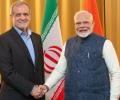
Prime Minister Narendra Modi held a telephonic conversation with Iranian President Masoud Pezeshkian, discussing recent developments in West Asia and reiterating India's emphasis on the importance of freedom of navigation in the Strait of Hormuz. Modi welcomed the recent peace understanding between the US and Iran, stressing dialogue and diplomacy for regional stability. India will also send representatives to the burial ceremonies of Iran's late Supreme Leader.

Iranian Foreign Minister Abbas Araghchi has urged Pakistan to use its diplomatic influence to help de-escalate the current regional situation and support efforts to maintain the ceasefire.

Indian benchmark stock indices, Sensex and Nifty, extended their winning streak for a third consecutive day, driven by positive global market trends and a significant softening of crude oil prices following a peace deal between the US and Iran.

The United States and Iran are scheduled to hold their initial round of talks in Switzerland on Friday, following a ceasefire agreement virtually signed by US President Donald Trump and Iranian President Masoud Pezeshkian.
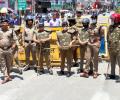
Six people, including five members of a family, were killed in a clash in Vijayapura district, Karnataka, stemming from a long-standing property dispute.
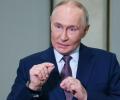
President Vladimir Putin has declared Russia's willingness to finalise a peace agreement with Ukraine based on US President Donald Trump's Anchorage proposals, provided Kyiv accepts necessary compromises.

Indian stock market benchmark indices Sensex and Nifty rebounded in early trade, driven by a decline in crude oil prices, supportive global cues, fresh foreign fund inflows, and buying in blue-chips like Reliance Industries and HDFC Bank. Track Sensex, Nifty movement on June 22, 2026.

Top leaders from the US, Iran, and Pakistan, along with other nations, have gathered in Switzerland for high-level talks aimed at restoring peace in West Asia. These negotiations follow a recently signed Memorandum of Understanding between the US and Iran, initiating a 60-day window for a deal. Discussions focus on Iran's nuclear programme and the fragile interim peace deal, amidst renewed tensions and the fluctuating status of the Strait of Hormuz.

Sonia Gandhi criticised PM Modi's Israel visit, calling it a "bewildering strategic decision" amid the regional conflict.
Indian stock markets, including the Sensex and Nifty, rebounded significantly, driven by a decline in crude oil prices and positive global cues stemming from hopes of diplomatic progress in US-Iran negotiations.
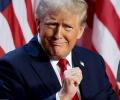
US President Donald Trump announced that a deal to end the war with Iran would be signed on Sunday, with the strategic Strait of Hormuz immediately becoming 'open to all'. This follows indications from Pakistan that negotiations were in their final stages, though Iran has yet to comment on the timeline.
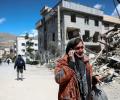
Fleur Hassan-Nahoum, special envoy, foreign ministry of Israel, has asserted that the situation has effectively been a "multi-front regional conflict" since its inception, while claiming significant military and strategic gains against adversarial forces.

As Tehran and Washington continue with their engagements following the signing of the MoU earlier this month, sources have told Al Arabiya that the two are set to hold the next round of negotiations in Switzerland on June 28 and 29.

India has expressed firm opposition to attacks on merchant shipping amidst the ongoing Iran conflict, revealing that several Indian nationals have died or are missing due to these incidents. The nation also called for restraint, de-escalation, and prioritising civilian safety in the region.

The Gulf countries on Monday welcomed a peace deal reached between the US and Iran to end their conflict and called for protection of maritime routes and freedom of international navigation, including the uninterrupted flow of traffic through the Strait of Hormuz.

The Nepalese foreign minister was speaking to the media a day after holding wide-ranging talks with his Indian counterpart S Jaishankar that focused on ways to further expand ties in diverse sectors, including trade, critical technology, connectivity and energy.

The Tamil Nadu government has approached the Supreme Court to challenge a Madras High Court order that permitted the lighting of a ceremonial lamp on the Thirupparankundram hill. The state government cited concerns over public order and potential communal tensions, while the High Court had dismissed these fears as "imaginary" and affirmed the land belongs to the Sri Subramania Swamy Temple, not the Waqf Board.

Much will depend on how the protagonists use the current interlude to work proactively for the beginning of a durable settlement or, on the contrary, prepare for a new round of escalation, points out Ambassador M K Bhadrakumar.
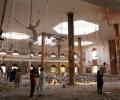
Pakistan has backed China's claim that Beijing played a role in defusing tension with India during Operation Sindoor, calling it 'diplomacy for peace' that was part of international efforts.
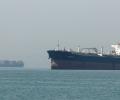
A high-stakes memorandum for a 60-day ceasefire between the United States and Iran is in its final stages, with negotiators working to close remaining gaps and avert further escalation in the region, including reopening of the Strait of Hormuz and the resumption of Iranian oil sales, according to an Axios report citing US officials.
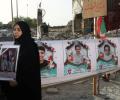
The United States and Iran are engaged in indirect talks aimed at developing a framework for a possible agreement, according to Iran's ISNA News Agency. Intensive mediation efforts are underway, but it remains uncertain whether a final agreement is within reach.

Ebrahim Azizi, Head of the Iranian Parliament's National Security Committee, warned the US against interfering with the Strait of Hormuz, asserting Iran's sovereignty after former President Donald Trump threatened to 'take over' the strategic waterway. Despite the heated rhetoric, Iran and the US have established a direct communication line to prevent incidents during a 60-day negotiation period.

Lok Sabha Speaker Om Birla has invited Trinamool Congress leader Abhishek Banerjee for a meeting on June 19 to discuss the party's internal split. This comes after 20 rebel TMC MPs sought recognition as a separate group following their merger with the Nationalist Citizens Party of India. Birla plans to hear both factions before making a decision, while Banerjee has argued against recognising any separate group within the AITC, citing anti-defection laws and a recent Supreme Court judgment.
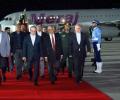
A new report alleges Pakistan shielded Iranian military aircraft from potential US airstrikes, raising questions about its role as a neutral mediator in the ongoing US-Iran tensions.
Indian benchmark indices Sensex and Nifty rallied in early trade, driven by a positive trend in global markets, cooling crude oil prices following a US-Iran peace deal, and fresh foreign fund inflows.

Pakistan Prime Minister Shehbaz Sharif expressed 'forever grateful' to US President Donald Trump for his 'timely' intervention in securing a ceasefire with India following a military conflict last year, a claim India has consistently rejected.

Pakistan Prime Minister Shehbaz Sharif announced that a US-Iran peace deal is on the verge of finalisation, potentially within the next 24 hours, marking a significant diplomatic breakthrough after months of intense negotiations.

A nearly 72-hour standoff at the Nagarasu gurdwara in Uttarakhand's Rudraprayag ended on Tuesday evening as a group of Nihangs holed up at the shrine vacated the premises after talks with a delegation from Punjab, officials said.

'Actual implementation of the 14-point agreement is proving hard to achieve let alone striking and sustaining a long-term treaty or deal.'

Pakistan Prime Minister Shehbaz Sharif on Friday said that the US and Iran have agreed on the text of a peace deal, kindling hope of a diplomatic breakthrough in the region.
Pakistan's Foreign Minister Ishaq Dar has been actively involved in mediating between Saudi Arabia and Iran following the outbreak of war, ensuring the safety of Pakistani citizens in affected regions.

Donald Trump issued a fresh warning to Iran as negotiations remained deadlocked over uranium stockpiles, sanctions relief and war compensation. The US President's sharp remarks came just hours after Iranian media revealed Washington's core conditions for resuming negotiations.

The Congress on Wednesday termed Chinese claims of mediation between India and Pakistan concerning and said the people of India need clarity on the issue.

US President Donald Trump and Israeli Prime Minister Benjamin Netanyahu had a tense phone call over the future course of the war on Iran, with Washington favouring a deal instead of resuming strikes, according to US media reports.

A man in Moradabad was arrested for allegedly concealing his religious identity, sexually exploiting a woman for four years, and then pressuring her to convert for marriage. The woman claims he defrauded her of Rs 12 lakh and that his family also pressured her to convert, leading to an appeal to the Chief Minister.

Iran's Deputy Foreign Minister Kazem Gharibabadi confirmed a peace deal with the United States, stating that Tehran will enter a 60-day negotiation period only after verifying Washington's commitments to ending hostilities, lifting the blockade, and releasing Iranian assets.

US President Donald Trump and Pakistan Prime Minister Shehbaz Sharif have announced a landmark peace deal between the US and Iran, which includes the crucial reopening of the strategically important Strait of Hormuz and the immediate cessation of military operations in Lebanon.

Four individuals, including a nurse, have been arrested in Telangana for allegedly selling a newborn baby after falsely informing the mother that the child died after birth.
