
A recent study by scientists indicates that the Hindu Kush-Himalaya region is experiencing increased frequency and intensity of extreme weather events due to climate change, including rapid glacial melting and changing rainfall patterns. However, the research also cautions against solely blaming climate change, highlighting that human factors like population growth, commercial activities, and non-enforcement of regulations contribute significantly to the vulnerability and impact of these disasters. The study points out that many devastating floods originate from small glaciers and rain-fed streams, exacerbated by encroachment on unstable slopes and floodplains.

The RusBeam 2800 is now India's largest electron-beam wire deposition 3D printer operating under vacuum. The machine was custom-built for India and is operated with software developed by Rosatom.

The NASA-ISRO NISAR satellite has provided crucial data revealing the extent of ground displacement caused by recent twin earthquakes in Venezuela. Researchers used the satellite's InSAR technique to map surface changes, showing a significant 60-centimetre shift in areas like Caracas and La Guaira, explaining the severe damage. This marks the first use of NISAR's urgent response system for earthquake surface displacement mapping.

Professor Annapurni Subramaniam, Director of the Indian Institute of Astrophysics (IIA), has been awarded the prestigious COSPAR Vikram Sarabhai Medal for 2026. She is the fourth Indian and first woman scientist from the country to receive this honour, recognised for her outstanding contributions to space research.

Russian cosmonauts aboard the International Space Station have conveyed special greetings to the people of India as the nation prepares to mark its 80th Independence Day, holding the Indian tricolour and underscoring the enduring partnership between the two countries in space exploration.

Skyroot Aerospace successfully launched India's first privately developed orbital rocket, Vikram-1, placing multiple technology demonstration payloads and commemorative items, including a postcard from Prime Minister Narendra Modi, into low Earth orbit, marking a significant entry into the global orbital launch market.

Prime Minister Narendra Modi has announced the formation of a high-powered task force, led by Infosys co-founder Nandan Nilekani, to recommend reforms for examinations conducted by the National Testing Agency (NTA). The task force aims to leverage technology for a robust and transparent examination system, following recent public agitation and the resignation of the Education Minister.

'From day one, our vision has been to build a company that develops and owns the technologies defining the future of space.'

The Supreme Court has stated it will consider the recommendations of the Nandan Nilekani-led task force regarding the online conduct of the NEET examination, emphasising the need for additional safeguards in cybersecurity and database protection. This follows the cancellation of the NEET-UG exam due to an alleged paper leak and subsequent re-test.

The appointment comes as Agnikul prepares for Mission 02, a flight that will attempt, for the first time on Indian soil, the recovery of an orbital-class rocket booster and the extension of a rocket's upper stage into an on-orbit platform.

The Congress party, through Deputy Leader Gaurav Gogoi, has criticised the proposed amendments to India's anti-paper leaks law, arguing that previous legislation has failed to prevent examination leaks. Gogoi highlighted the ongoing student protests and questioned the government's sincerity, particularly regarding the handling of the NEET fiasco and the welcome given to former Education Minister Dharmendra Pradhan. He also raised concerns about the National Testing Agency's accountability.

These upcoming launches carry added significance in light of setbacks suffered in recent years.

The EoI comes at a time when ISRO is working to enhance LVM3's payload capacity to five tonnes in GTO and is also evaluating the procurement of a Russian semi-cryogenic engine for the vehicle's second stage.

The Bharatiya Antariksh Station represents the next phase of India's human spaceflight ambitions, enabling long-duration presence in space, advanced microgravity research and technology development, and supporting future human exploration missions.

ISRO's PSLV-C62 successfully launched an earth observation satellite along with 14 other commercial payloads from Sriharikota, marking the first launch of the year.

While recovery efforts are ongoing, the likelihood of recovery currently appears low.

GDN has a fascinating genius at its centre, but Madhavan's terrific performance is let down by a repetitive, overly familiar biopic treatment.

The Congress party has criticised the Modi government's announcement of a new committee on exam reforms, alleging it is a tactic to divert public attention. The opposition highlighted that recommendations from a previous committee formed in 2024 remain largely unimplemented, while Prime Minister Modi has now constituted another high-powered task force led by Nandan Nilekani to reform NTA examinations.

From a surge in startups to crewed mission preparations, 2025 marks a transformative year as India eyes $44 billion space economy by 2033.
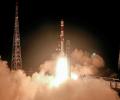
ISRO is preparing for the PSLV-C62 mission launch on January 12 from Sriharikota, carrying the EOS-N1 satellite and multiple other payloads.

A Spanish startup, Orbital Paradigm, claims its payload, KID, survived the failed PSLV-C62 mission and transmitted data, despite ISRO's silence on the matter. The mission, carrying 16 satellites, failed due to issues in the rocket's third stage.

India's move to privatise PSLV rocket production through IN-SPACe has triggered debate over national security, ageing technology and the agency's role.

Weighing 6,100 kg, the communication satellite would be the heaviest payload to be placed into the Low Earth Orbit (LEO) in LVM3 launch history from Indian soil.
Based on the broadcast visuals, a rocket expert said the failure appeared similar to the anomaly seen during the PSLV-C61 mission.
BIT Mesra has launched 'HimClimX', an AI-powered platform designed for Himalayan climate intelligence and visualisation. It integrates over a century of climate data to offer trend analysis, anomaly detection, spatial visualisation, impact assessment, and AI-driven forecasting for the Himalayan region.

India's government has implemented stringent new regulations under the Telecommunications Act 2023, mandating that all communication infrastructure providers, including those utilising cloud-based networks, must store telecommunication data exclusively within the country, a move expected to significantly impact domestic data centre demand.

The Supreme Court has informed the Centre that it will closely monitor the steps taken to curb NEET examination paper leaks, emphasising that 'ad hocism has caused trouble for years' and demanding a comprehensive overhaul of the examination process.
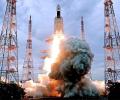
ISRO is developing a third launch pad at Shriharikota to accommodate heavier satellites and next-generation launch vehicles. The new facility will support both crewed and uncrewed missions.

After the alleged attack on his wife, Sandya Sri, Nageshwar Rao reportedly remained at the spot.

'We can integrate AI and tech into education, but that is just a means and not an end.' 'Ultimately, we need to control what happens in a classroom and we need to let teachers innovate their teaching style to suit the needs of Gen Z and beyond.'

The satellite, weighing about 4,410 kg will be the heaviest to be launched from the Indian soil and into a Geosynchronous Transfer Orbit (GTO), the space agency said. The satellite will travel onboard a LVM3-M5 rocket, dubbed as 'Bahubali' for its heavylift capability.
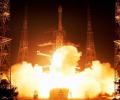
Indian Space Research Organisation is gearing up for one of its busiest times with seven more launches planned this financial year, even as India's first human spaceflight remains scheduled for 2027, its chairman V Narayanan said.
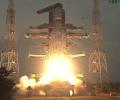
The heaviest communication satellite to be launched from the Indian soil onboard a new generation, homegrown 'Bahubali' rocket was successfully placed into the intended orbit on Sunday, the Indian Space Research Organisation said.

'ISRO is planning to build a Bharatiya Antariksh Station by 2030. So, our goal is to create a vehicle that can supply modules to the Bharatiya Antariksh Station and bring the products back.'

When dialogue fails, protest becomes inevitable.
In a democracy, protest is often the only language left once institutions stop listening, explains Ramesh Menon.

'With Vikram-1, we take our biggest step yet towards a reliable, high-cadence launch programme built in India, for India and the world.'

ISRO has announced plans for seven launch missions by March, including the first uncrewed mission for the Gaganyaan project and demonstrations of new satellite technologies.

ISRO is set to launch its communication satellite CMS-03 from Sriharikota. The satellite, weighing 4,410 kg, will be the heaviest launched from Indian soil into a Geosynchronous Transfer Orbit (GTO).

A man in Haryana's Ambala district shot and killed three family members, including his grandmother, over a dispute regarding ancestral property and money.

From Dr A P J Abdul Kalam to Sourav Ganguly, these coming biopics are bringing some of India's most fascinating lives to the big screen.
