

From a surge in startups to crewed mission preparations, 2025 marks a transformative year as India eyes $44 billion space economy by 2033.

For India's space sector, 2025 will be remembered as a year defined by milestones.
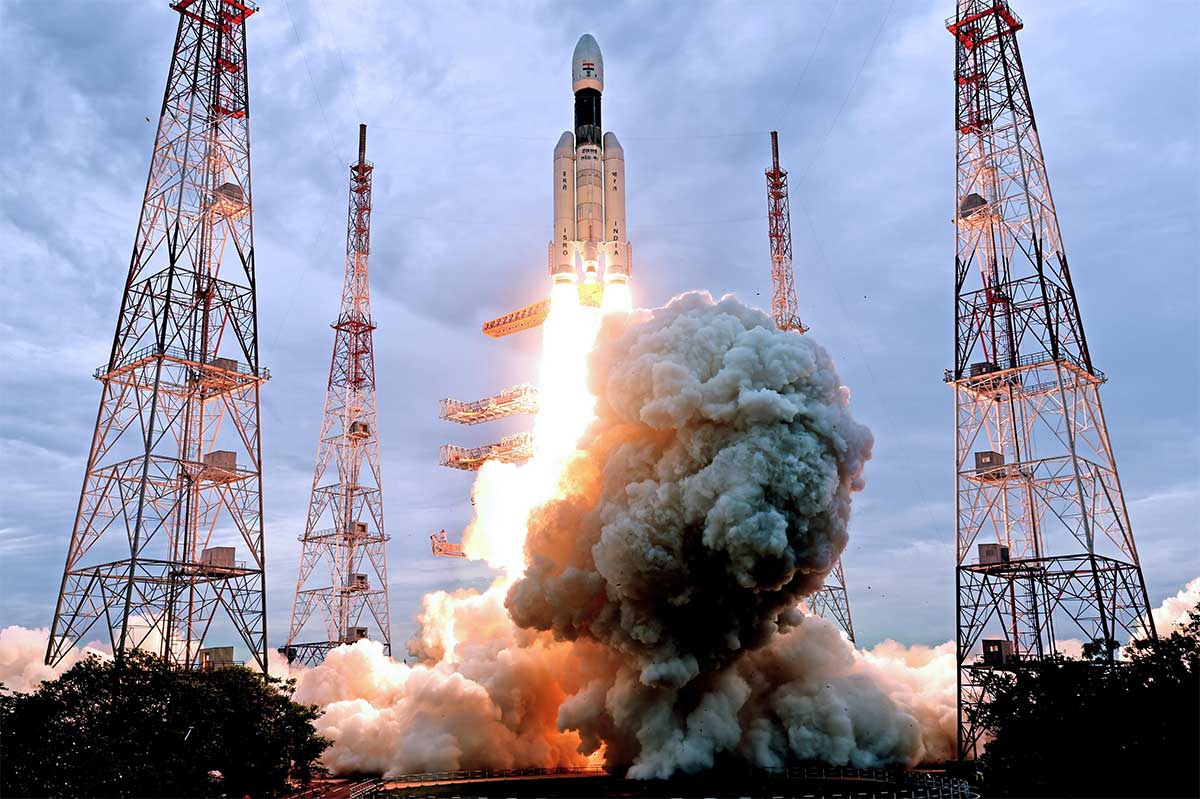
According to the Indian Space Research Organisation, the year saw nearly 200 significant achievements, ranging from the 100th rocket launch from the Satish Dhawan Space Centre to Shubhanshu Shukla joining the elite ranks of Indian human spaceflight travellers, following Rakesh Sharma in 1984, and India becoming only the fourth country to master space-docking technology.
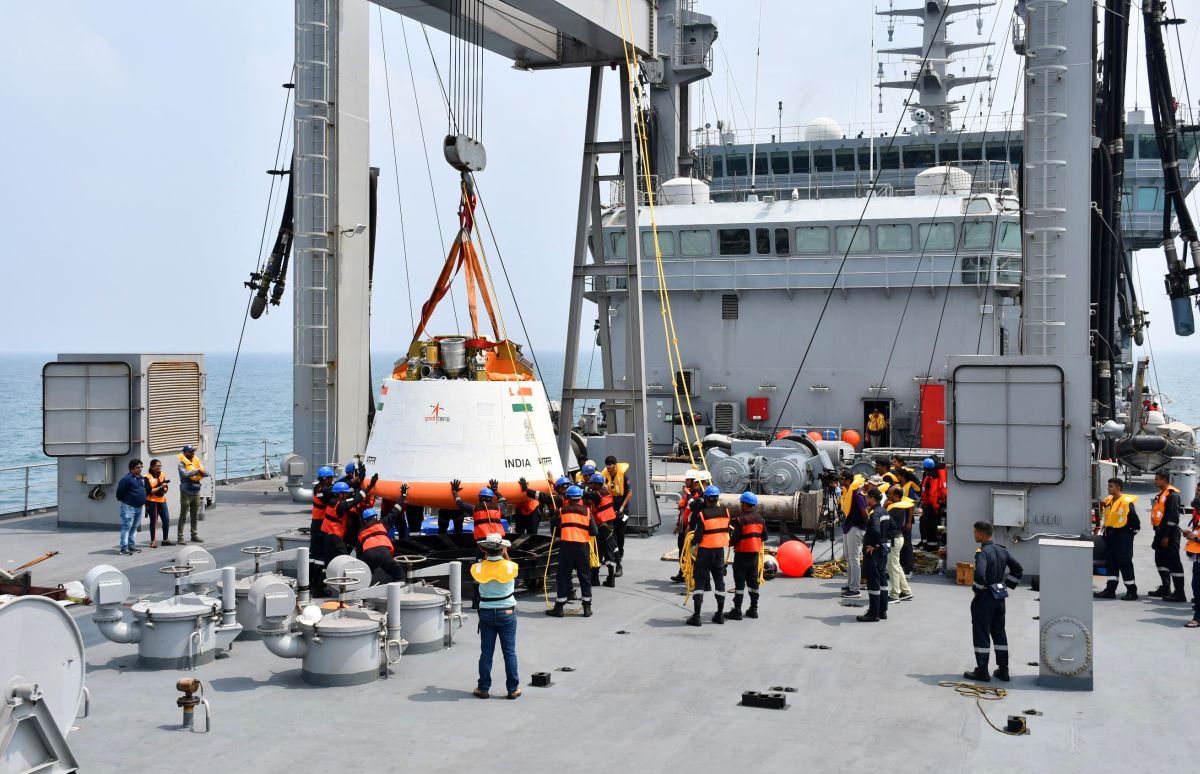
The country is now poised for yet another defining moment: The first of three uncrewed test launches under Gaganyaan, marking the final countdown to India's crewed space mission scheduled for 2027.
ISRO Chairman V Narayanan told the media in Tirunelveli that the first unmanned rocket test launches as part of Gaganyaan could take place in December.
But industry sources said that the dates are yet to be finalised and could well slip into the first half of 2026.
Gaganyaan is ISRO's ambitious programme to place a three-member crew of Indian astronauts into a 400-kilometre orbit around the Earth for a three-day mission. Reports suggest that around Rs 20,000 crore has so far been allocated to the programme.
Whether or not Gaganyaan proceeds exactly as planned, 2025 is likely to mark a take-off year for a series of milestones ahead.
The broader space economy is gaining momentum, with the number of start-ups approaching 400 in 2025; a landmark Rs 1,000 crore venture capital fund under IN-SPACe aimed at fuelling innovation and private-sector participation; and a road map for the National Geospatial Mission that is expected to create a Rs 1 trillion geospatial market in India by 2030, according to industry experts.
A report by HR solutions provider Adecco India says that India's space economy is on track to expand more than fivefold to $44 billion by 2033, generating more than 200,000 new jobs in the process.
This will open up a new frontier of opportunities for engineers, researchers, data scientists, and business professionals alike.
New-age roles such as space policy analysts, robotics engineers, avionics specialists, and guidance, navigation, and control (GNC) experts are emerging as critical to India's space ambitions.
'Upcoming milestones, including the Gaganyaan crewed mission scheduled next week, India's participation in the Axiom-4 ISS programme, and the development of the country's own space station, are expected to accelerate talent demand across the ecosystem, from ISRO to emerging space-tech start-ups,' the report said.
'Today, the Indian space economy contributes about 2 per cent to the global market. The government has set an ambitious target of scaling this to $44 billion by 2033, including $11 billion in exports, positioning India to command 7-8 per cent of the global space economy.'
The Indian Space Association (ISpA) believes this rapid advance will be driven primarily by bold government reforms, a surge in private-sector participation, and international collaboration.
"This transformative growth is being powered by a dynamic ecosystem where policy meets practice. A vibrant industry is taking shape, with established giants and disruptive start-ups creating solutions for a global market. This convergence of progressive policy, large-scale adoption, and a thriving public-private partnership is helping the country chart its course towards becoming a self-reliant force in the space economy," said Lieutenant General (retd) A K Bhatt, director general, ISpA.
"This is particularly visible in the geospatial segment, with the market expected to reach the $1 trillion mark in the next few years," General Bhatt added.
The geospatial industry has seen robust growth in recent years, with a compound annual growth rate of around 13-14 per cent.
"The ecosystem spans everything from data collection and processing to software development and application deployment. Out of roughly 3,000 companies, many specialise in ground surveys, collecting data such as latitude and longitude, and sometimes photographs -- for instance, when mapping markets or shops," said Agendra Kumar, managing director of Esri India.
"Others focus on LiDAR surveys for 3D mapping, drone surveys, or digitising collected data. Hundreds of companies are involved in processing and preparing this data for use," Kumar added.
Krishanu Acharya, chief executive officer and co-founder of Suhora Technologies, believes that the lion's share of the expansion, from $8.4 billion today to $44 billion, will come from the private sector.
"Government will remain an enabler of technology, a technical enabler for people like us, so that we can build commerce around it. I think the lion's share will be delivered by industry alone," he added.
Feature Presentation: Aslam Hunani/Rediff





 © 2026