
When everyone has footage and no one can verify it, the loudest voice wins, notes Prem Panicker who begins a daily blog on the War in the Middle East.

Several states in north India, including Rajasthan and Himachal Pradesh, experienced varied weather conditions, including light to moderate rainfall, fog, and temperature fluctuations.

Har Ki Pauri was engulfed in dense fog as the temperature dropped to 8 degrees Celsius in Haridwar on Sunday.

Delhi experienced a foggy morning with a dip in temperature and improved air quality following recent rainfall. The air quality index (AQI) reached 'satisfactory' levels for the first time in five months.

At least 148 flights were cancelled and over 150 flights were delayed at the Delhi airport on Wednesday due to dense fog and low visibility conditions.
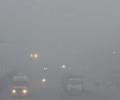
The Airports Authority of India (AAI) on Sunday issued an advisory warning that fog conditions in parts of northern India are affecting visibility and may lead to delays or changes in flight operations at select airports.

Dense winter fog and smog have gripped several Indian cities, from Agra's Taj Mahal to the streets of New Delhi, Srinagar, Lucknow, and beyond. These chilling visuals capture how residents, commuters, and tourists are coping with poor visibility and biting cold. From washermen on the Gomti riverbank to Shikara rides in Dal Lake, the photographs highlight the impact of extreme weather on daily life across northern India.

The Airports Authority of India (AAI) on Monday issued a travel advisory as dense fog gripped Northern India, urging passengers to check their flight status before leaving for the airport to avoid prolonged waiting periods at the airport in case of flight cancellations or delays.
Three people were killed and two others critically injured in a head-on collision between a car and a bus in Shahjahanpur, Uttar Pradesh, due to dense fog.

Dense fog disrupted operations at Delhi airport, leading to cancellations and delays of hundreds of flights. Airlines are offering refunds and rescheduling options.

A pile-up involving multiple buses and smaller vehicles on the Yamuna Expressway due to dense fog resulted in at least 13 fatalities. Rescue efforts were hampered by poor visibility, and identification of the deceased is proving difficult.

The national capital was in the grip of a cold wave, with the sun largely obscured by clouds and pollutants lingering in the atmosphere, leading to reduced visibility. At least 129 flights were cancelled at the Delhi airport on Saturday due to dense fog, according to an official.

The death of a man known as 'Farsa Wale Baba' in Mathura under suspicious circumstances led to protests and a traffic blockade during President Murmu's visit. Supporters allege he was killed by cattle smugglers, while authorities claim a truck accident was the cause.

A major pile-up on the Yamuna Expressway in Mathura, India, resulted in four fatalities and numerous injuries due to dense fog and low visibility.
Dense fog disrupted flight operations at Delhi Airport, leading to numerous cancellations and diversions. Airlines are working to manage the situation and minimize inconvenience to passengers.

For weeks, the war skirted the edge of catastrophe without tipping over. Missiles flew, there was much destruction, commanders were assassinated, cities across the Gulf and even in Israel struggled to absorb the shock. But one line held: Energy infrastructure, the arteries of the global economy, remained largely untouched. That is no longer true. Prem Panicker continues his must read daily blog on the Gulf War.

A cow vigilante, known as 'Farsa wale Baba', died after being hit by a truck near the Haryana border, leading to protests and a traffic blockade in Mathura during President Murmu's visit.

Alliances fight wars effectively only when they share an endgame. If Israel acted without US knowledge, then the military alliance is operating without real coordination at the level of strategic targeting. Neither picture is reassuring in a war that is no longer regional in its consequences. Prem Panicker continues his must read daily blog on the Gulf War.

Eid al-Fitr was celebrated across India with prayers for peace and brotherhood, alongside protests condemning US-Israel actions in West Asia.
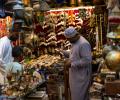
Citizens and residents across the Gulf region are preparing for Eid amidst regional conflict, impacting festivities and daily life.

Taking Kharg would give the US control over virtually all of Iran's oil exports and thus provide significant leverage, notes Prem Panicker in his must read daily blog on the Gulf War. It would also put American troops within range of Iran's remaining missiles, drones, and artillery on a piece of real estate that is just eight square miles in size, and just 15 miles from the Iranian mainland.

Iran is fighting a different war: Older, slower, and in some ways more dangerous. Iran doesn't need to shoot down an F/A-18. It only needs to make the Strait of Hormuz feel dangerous long enough for insurance markets, shipping companies, and oil futures traders to do the rest. Prem Panicker continues his must-read daily blog on the war in the Middle East.

What we are watching is something different: A fog manufactured and maintained by the people who started the war, so that the question of why it was started never has to be answered, observes Prem Panicker in his must read blog on the war in the Middle East.

'Was the five-day pause ever meant to hold, or was it simply another instrument of signaling, of positioning, of buying time in a war where even the pauses are tactical?' asks Prem Panicker in his must read daily blog on the Gulf War.

'I suspect that Bangladesh being given permission stuck in India's official craw, and this story was an attempt to balance the scales by giving the impression that a similar waiver had been given to India as well.'

Israel has for more than two decades and several US presidencies worked to draw the United States into a full-scale war with Iran. Having finally achieved that, the last thing it wants is Trump declaring victory and going home, as he is prone to do. Ali Larijani was the figure most capable of handing Trump a negotiated exit with something to show for it. Without Larijani, the road to an exit gets considerably narrower. Prem Panicker continues his must read daily blog on the Gulf War.

The pause gives the US time to breathe, to regroup, to move its expeditionary force into position without risk of interception along the way. It gives Iran nothing -- on the ground, attacks against its infrastructure continue apace. Prem Panicker in his must read daily blog on the Gulf War.

Fight on toward goals that keep receding, or exit with most objectives unmet. Trump is agitated, his poll numbers falling below the Plimsoll line, his base fractured between those who back the war and those who remember that he campaigned on ending them.

The question is no longer whether the war will expand. It has. The next few days will tell us whether the war stabilises around Hormuz or whether the Strait itself becomes the trigger for a far larger rupture. What to watch for over the next 48 hours is simple: Any move by the US toward direct naval control of the Strait; any credible Iranian attempt to disrupt or mine shipping lanes and, critically, whether energy infrastructure in the Gulf continues to be targeted.If those lines are crossed in tandem, the war will no longer be containable within the region.

Google has unveiled the Pixel 10a in India and worldwide, expanding its Pixel series. The device can be pre-ordered through the brand's online store and an e-commerce platform, with sales starting next month.

As days turn into weeks and America loses more planes, as the destruction of trillions of dollars worth military assets piles up, and dead bodies of soldiers return in ever greater numbers in coffins, Trump will have to answer some very difficult questions to save his presidency, notes Ambassador M K Bhadrakumar.

Opposition parties are demanding a full Parliament discussion on the West Asia conflict, criticising the government's silence and calling for a contingency plan to protect India's energy security and citizens.
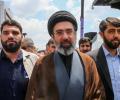
'Mojtaba Khamenei supervised the most recent repression in December 2025 and January 2026 which remains ongoing.'

Israel and the United States had a plan. Iran punched back. And now the Gulf is reeling, the world is beginning to feel the pain and, as on date, no one in Washington or Tel Aviv appears willing to admit that the punch has landed, notes Prem Panicker, continuing his must-read blog on the war in the Middle East.

When missiles fly in this region, they are never just aimed at military targets.

A severe cold wave has gripped North India, with temperatures plummeting to near-freezing levels in several areas. The cold wave has disrupted daily life, with dense fog affecting visibility and forcing people to stay indoors.

A salute to the brave military dogs who have faced enemy fire and made the supreme sacrifice in the service to the nation.

'Strikes into the Gulf countries are proof that the security guarantees offered by the US are ineffective and that the Gulf countries cannot rely on American security assurances for their safety.'

A severe cold wave has intensified across North India, with Delhi recording its lowest temperature of the season. Rajasthan experienced sub-zero temperatures, and several states have issued alerts and closed schools due to the extreme conditions.
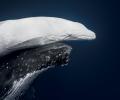
The World Nature Photography Awards 2026 celebrated breathtaking images of wildlife and nature, with Australian photographer Jono Allen winning the top prize of $1000 for his rare shot of a white humpback whale and her mother.
 © 2026 Rediff.com - Advertise with us - Disclaimer - Privacy Policy - Sitemap - Feedback - About us - Terms of use - Grievances