

When missiles fly in this region, they are never just aimed at military targets, explains Prem Panicker, continuing his must read blog.

A narrow stretch of water, barely thirty kilometres wide at its widest, has always assumed inordinate importance when wars break out in the Gulf.
Why Strait of Hormuz Matters
The Strait of Hormuz (external link), the maritime gateway between the Persian Gulf and the open ocean, carries roughly a fifth of the world's oil exports, plus a fifth of global LNG, and links producers like Saudi Arabia, Iraq, UAE, Kuwait, Qatar and Iran to markets in Asia and beyond.
This 167 km chokepoint, just 21 km wide at its narrowest, has been the epicenter of conflict (external link) for decades, from ancient trade routes to modern conflicts.
Key Points
- The Strait of Hormuz carries about one-fifth of global oil and LNG exports, making it the world's most critical energy chokepoint.
- Iran has mined approaches to the strait amid escalating conflict, damaging tankers and disrupting Iraqi oil output and global shipping routes.
- Tankers rerouting around Africa and rising insurance costs are increasing shipping expenses and destabilising global energy markets.
- The conflict is already affecting economies worldwide, tightening diesel supplies, raising inflation risks and increasing commodity price volatility.
- In India, LPG shortages, rising energy prices and surging aluminium costs are beginning to ripple across restaurants, industries and consumers.

When missiles fly in this region, they are never just aimed at military targets. The real target is the global economy.
The Tanker War of the 1980s Iran-Iraq conflict set the template: Iraq struck Iranian oil terminals first in 1981, then both sides hit over 450 neutral and enemy tankers by 1988 with Iraq outdoing Iran in the number of attacks.
Both sides used mines, missiles, and speedboats, though neither side fully closed the Strait for fear of widening the war.
The US stepped in with Operation Earnest Will, changing the flags of Kuwaiti tankers and their escorting convoys, the whole culminating in 1988's Operation Praying Mantis that gutted half of Iran's navy after a mine hit the USS Samuel B Roberts.
Iran War Hits Global Oil Routes
The widening Iran war is now colliding with that chokepoint.
Since February 28, when the US and Israel launched its war, Iran has mined the approaches to the Strait, stranding 150-plus ships, damaging five tankers, halting Iraqi oil output by 70%, and prompting US forces (external link) (NYT, paywalled) to destroy 16 Iranian minelayers (external link) on March 10.

Tankers Reroute as Insurance Surges
Tankers are rerouting around Africa, significantly adding to costs; insurers are hiking premiums to unaffordable levels, and energy markets are factoring in prolonged blackouts, echoing the 1980s but with the stakes considerably higher in orders of magnitude.
A bizarre incident underlines the importance of Hormuz and, equally, the US dilemma of not knowing quite what to do about it.
President Donald Trump first promised that ships sailing the Strait would be protected by US warships; he then backtracked on that and said ships should 'show guts' and sail through the Strait anyway.
And on Tuesday, US Energy Secretary Chris Wright posted on social media that a tanker, escorted by the US navy, had successfully run the gauntlet through the Strait.
The claim was false -- the White House had to confirm that no such incident had occurred. Wright then deleted his post, and the administration blamed a low-level staffer for the false information.
If that wasn't bad enough, the Iran parliament's Speaker posted a screenshot of the original post, with a snarky comment that is now going viral (external link): 'An oil tanker crossed Strait of Hormuz escorted by US Navy ships? Maybe on PlayStation!'
Bottomline is, all parties to the conflict are now painfully aware that while the battlefield may lie in the Gulf, the consequences are already travelling far beyond it -- and no one seems to know what to do about it.

War Disrupts Global Energy Markets
Essential reads:
A sharp Reuters analysis (external link) shows how the war is already rippling through the global economy.
Diesel supplies are tightening as shipping through the Gulf slows, pushing up prices for transport, agriculture and manufacturing worldwide.
Analysts warn that prolonged disruption could trigger a fresh wave of inflation.
Associated Press reports (external link) that the US says it has destroyed multiple Iranian mine-laying vessels amid fears Tehran could block oil exports from the Gulf.
Iranian missile and drone strikes have also hit targets across several countries hosting US forces, underscoring how quickly the war is becoming regional. (I had referred to the news about the US destroying mine-laying vessels earlier in this post -- what is noteworthy here is that AP does not confirm the news, it merely says "The US says...")
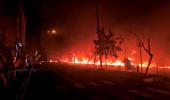
Reuters reports (external link) that airstrikes on Iranian oil facilities have triggered large fires and toxic plumes over Tehran, raising fears of severe environmental damage and public-health risks.
The episode illustrates how attacks on energy infrastructure carry consequences far beyond the battlefield.
And related, a Guardian report (external link) highlights the long-term environmental risks from attacks on Iranian oil infrastructure, including toxic pollution and contamination of soil and water.
A paywalled piece (external link) in The New York Times looks at the collateral damage: A large proportion of civilians killed in the Gulf States are migrant workers.
Strategy Watch:
A recent War on the Rocks analysis (external link) argues that military strikes alone are unlikely to resolve the core strategic problem of Iran's nuclear ambitions.
Even after sustained pressure, the Islamic Republic has historically proven resilient and capable of adapting rather than collapsing.
In this connection, it is worth recalling that in June 2025, the US bombed (external link) three nuclear sites in Iran -- Fordow, Natanz and Isfahan -- in an operation code-named Operation Midnight Hammer.
'Monumental damage was done... Obliteration is an accurate term', President Trump said at the time (external link).
And yet, less than a year later, here we are again, in the midst of a ruinous war whose stated objectives include 'destroying Iran's nuclear capabilities'.
This echoes a recurring theme in modern warfare: Airpower can disrupt an adversary, but it rarely determines outcomes by itself.
Analysts cited by Al-Monitor (external link) say Iran's strikes on Gulf states appear designed to pressure countries hosting US forces, to force them to push Washington toward ending the war.
The strategy aims to raise the political and economic cost of the conflict rather than win a direct military contest.
That logic closely resembles the 'horizontal escalation' concept described earlier by political scientist Robert Pape, and which I had outlined to in yesterday's blog.
Saudi Arabia's national oil company Aramco has warned (external link) that prolonged disruption to shipping through the Strait of Hormuz could have 'catastrophic consequences' for global energy markets, highlighting how central the chokepoint is to world supply.
Markets have already responded with sharp volatility in oil prices and energy equities.

India Faces LPG and Inflation Shock
India Watch
Across the country, the shortage of LPG is ramifying rapidly.
Reports in Indian media indicate that at least 20% of hotels in Mumbai have been shut, and the industry body warns of wider closures.
From Bangalore comes news that in some eateries, only tea and coffee is now being served.
The LPG crunch has also hit Mysore, with hoteliers saying there are no cylinders available for love or money.
Across the country, restaurants are trimming menus and shortening working hours even as they prepare for possible shutdowns, reports The Hindu (external link).
Food delivery services such as Swiggy and Zomato will now begin to feel the pinch -- with less restaurants functioning, there are less orders to service, and this escalates as more restaurants shut down or reduce operations.
Meanwhile, a spike in energy price will feed into inflation, rising transport costs, and declining industrial inputs.
The Economic Times points to another relatively unnoticed consequence: aluminum prices are surging (external link). This matters, because aluminum is one of the world's most widely used industrial metals, found in cars and aircraft, building materials, power cables, consumer electronics, beverage cans and packaging.
When its price rises sharply, manufacturers across these sectors face higher input costs which then get passed down the supply chain -- which is to say, more expensive vehicles, higher construction costs, pricier appliances and packaging, and the inevitable pressure on consumer prices.
The ripple effect spreads even further because aluminum production is extremely energy-intensive.
Smelters consume enormous amounts of electricity, and so disruptions in oil and gas markets quickly translate into higher metal prices.
Shipping disruptions amplify the effect: If trade routes through chokepoints like the Strait of Hormuz become risky, freight costs and insurance premiums rise, and this tightens supply and pushes prices higher still.
In short, a spike in aluminum prices quickly becomes an inflation story.
Construction projects become costlier, automakers face higher manufacturing costs, airlines and aerospace companies see production expenses climb, and infrastructure ranging from power lines to renewable energy projects get more expensive.
Thus, what the Economic Times report points to -- a movement in commodity markets -- can quickly ripple outward into the broader economy.
A report in The Hindu (external link) cites unnamed government officials as saying that with the price of oil spiking, imports from sources such as Norway and the US have become economically viable.
The officials add that such shipments take longer to arrive, and therefore shortages in the interim cannot be ruled out.
It strikes me that this optimism is based on very flimsy grounds -- thus far, there are no reports of actual purchase deals being struck with these, or indeed any other, countries.
In other words, even though the battlefield lies thousands of kilometres away, the war is unfolding along one of the arteries of India's economic lifelines.
In passing, the last oil refinery built in the US was 50 years ago. President Trump has announced (external link) the opening of a new one in Texas, and thanked Mukesh Ambani's Reliance for its 'tremendous contribution'.
A typical Trump post (external link) on the platform Truth Social, with the usual smattering of all-caps, calls it a $300 billion dollar deal, though it is not clear what part of that sum is Reliance's contribution.

The Russia Connection
News reports in the US and international media suggest that President Trump has reached out to Russian President Vladimir Putin, asking him to broker a ceasefire.
But before asking what a Russian-brokered ceasefire might look like, it is worth asking why Russia would broker one at all.
Putin has, thus far, had little reason to intervene.
The war is doing useful work for him: American attention and resources are stretched, oil revenues are elevated and, bonus, Trump has lifted sanctions on Russian oil exports, and the spectacle of US credibility fraying plays well in Moscow.
He has offered Iran rhetorical backing, and that has been enough. Mediation is a different matter: it requires him to spend political capital, make enforceable guarantees, and potentially disappoint Tehran, which is an exercise that comes with various costs attached.
That Trump is asking Putin to intercede plays well into other news reports which say that the US has been attempting to contact top Iranian leadership, with little success -- the Iranians are just not taking calls. (And that alone should tell you something about where Iran is right now, in its assessment of the war.)
Here is the Iranian calculation, as best as it can be read from outside: Both Israel and the US are burning through armaments at a rate that is becoming visible, and both governments are beginning to feel domestic pressure from populations absorbing economic costs. (In Israel's case, a more immediate issue is that missiles from Teheran are landing in Tel Aviv and other Israeli cities, often with devastating consequences; for the first time in a long time, Israelis are now facing at home the devastation they have hitherto watched their armies wreck on others).
From Tehran's perspective, therefore, a ceasefire now would freeze a situation that is, from their point of view, slowly improving.
Why accept terms today that will be worse than the terms available in six weeks? (In this connection, here is a paywalled piece (external link) in The New Yorker that elaborates on Iran's thinking. The money quote comes right at the end: 'I think that Iran's calculation is that Trump is not patient, that Trump is going to move on.')
That strategic patience is the real obstacle to any Russian mediation, and not the architecture of a deal, which is actually imaginable.
A JCPOA-style framework (external link) with Russia as guarantor, an IAEA-monitored enrichment freeze, and some sanctions relief in exchange for restraining proxies like Hezbollah and the Houthis, would give Trump the off-ramp he needs and Putin a starring role in a major diplomatic settlement.
Gulf States normalising trade with Iran in exchange for joint Hormuz patrols is the kind of regional bargain that writes itself on paper. The pieces exist.
But a ceasefire requires both parties to want one.
Right now, the country with the least incentive to stop is Iran.
Until that changes, either through military reversals or economic pain severe enough to shift the internal Iranian conversation, Russia's role is more likely to remain that of a watchful observer than a serious mediator.

Longreads worth your time
Essential to understanding an ongoing war is knowing the nature of those who are driving it.
Two paywalled pieces in The Atlantic are worth reading from this angle: 'The Most Dangerous Man In The World (external link)', a Graeme Wood profile of Iran's new Supreme Leader Mojtaba Khamenei, and The Pete Hegseth Exception (external link), a Jeffrey Goldberg longread on America's hugely controversial 'Secretary of War'.
The New Yorker also has a long paywalled piece (external link) by Robin Wright that looks at the elevation of Mojtaba Khamenei and what his elevation means for the war.
In conclusion...
No man is an island, John Donne wrote. In today's tightly interconnected world, that is equally true of countries.
Wars often begin with military calculations, but pretty soon economic consequences materialise and, thanks to that inter-connectedness, the effects ramify across the globe.
The conflict with Iran is now in that second phase, with tankers, refineries and shipping lanes becoming as important, perhaps even more so, to the war as missiles and air defenses.
And when the battlefield overlaps with the world's most important energy chokepoint, the line between regional conflict and global crisis becomes dangerously thin.
Photographs curated by Manisha Kotian/Rediff
Feature Presentation: Ashish Narsale/Rediff





 © 2026