
A 43-year-old man in Delhi's Dwarka has been convicted by a court for harassing a Census enumerator during her official duty, following a swift investigation and trial.

Over 93,000 individuals in Delhi have participated in the self-enumeration exercise for Census 2027, with North East, South West, and North West Delhi districts leading in registrations. The initiative, part of a broader census effort, allows residents to submit household details online, contributing to the overall data collection process.

Authorities in Delhi have implemented a QR code-based verification system for census enumerators and supervisors to combat rising cyber fraud cases involving impersonation and fake government officials during the Census 2027.

The Election Commission of India clarified to the Bombay High Court that the absence of a voter's name from a draft Special Intensive Revision (SIR) roll does not equate to deletion, as SIR is a fresh preparation of the electoral roll. This clarification came during a hearing on a writ petition filed by a Goa resident whose family's names were missing from the SIR roll. The court has reserved its verdict.

The Chief Electoral Officer of Uttar Pradesh has strongly denied media reports alleging irregularities in the addition of 16.18 lakh voters during the Special Intensive Revision (SIR). The CEO asserted that the process was conducted with "utmost transparency" and in strict adherence to electoral laws and ECI instructions, clarifying the collection and processing of Form-6 applications.

The Election Commission of India (ECI) has announced a revised schedule for the Special Intensive Revision of Maharashtra's electoral roll, pushing the final publication date to November 16, 2026. The period for filing claims and objections has also been extended.

The Delhi poll body has issued notices to several prominent voters, including Chief Minister Rekha Gupta and AAP supremo Arvind Kejriwal, for discrepancies in their enumeration forms during the ongoing Special Intensive Revision (SIR) exercise. While Gupta's entry has been validated, millions of other voters, including other political figures, have received notices for issues like age-related mismatches or being unmapped with previous SIR records, requiring them to submit documents by October 29.

More than 2.06 crore electors, representing 21.14 per cent of Maharashtra's previous voter base, have been excluded from the draft electoral roll following a Special Intensive Revision (SIR) due to reasons like being untraceable, deceased, or having shifted residences.

The Delhi High Court has ruled that Booth Level Agents (BLAs) of political parties are not liable for false details in electoral enumeration forms that cannot be personally verified. The court clarified that BLAs are only responsible for verifiable information, such as an elector's photograph, and struck down the Election Commission of India's mandate requiring BLAs to provide personal undertakings for all details.

Maharashtra's Chief Electoral Officer has allowed voter documents via WhatsApp for the Special Intensive Revision (SIR) exercise, with Block Level Officers (BLOs) conducting home verifications. This development comes amidst controversy surrounding the Election Commission and its Chief, Gyanesh Kumar, over alleged unilateral decisions regarding the SIR, which opposition parties claim dilute the powers of Electoral Registration Officers. The deadline for claims and objections has been extended to October 12.
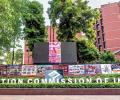
The Bombay High Court's Goa bench has criticised the Election Commission of India (ECI) for rejecting voter registration forms (Form 8s) during a Special Intensive Revision (SIR) process. The court emphasised that the ECI's primary objective is to ensure citizens can cast votes and that rejecting forms, even if incorrectly submitted, goes against this principle. The case arose from a petition by a family whose names were deleted from the voters' list after their Form 8s for address change were rejected.
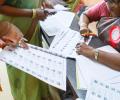
The Election Commission has launched a special drive to include eligible citizens who were omitted or deleted during the recent Special Investigative Review (SIR) exercise, as well as to register new and young voters. This initiative follows accusations from opposition parties regarding disenfranchisement and aims to ensure no eligible citizen is left out of the electoral process.

Opposition leaders have questioned how caste responses will be recorded without state-wise pre-prepared lists.

The Centre has notified 40 questions for the upcoming Census 2027, including caste and place of Covid vaccination, marking the first time caste details will be collected as part of the decadal exercise. The population enumeration will be a fully digital process, with an option for self-enumeration.
Uttarakhand's final electoral roll, released after the Special Intensive Revision, shows a significant reduction of approximately 8 lakh voters compared to the start of the process, with the total now standing at 71.58 lakh. The opposition Congress, however, claims the decline is much steeper, citing a 14 lakh reduction from an earlier figure. The Chief Electoral Officer's office detailed the revision process, including additions and removals, and outlined ongoing efforts to ensure all eligible citizens are included.

The Delhi Chief Electoral Officer's office has issued notices to over 33 lakh voters, including former deputy prime minister LK Advani, External Affairs Minister S Jaishankar, and former vice-president Jagdeep Dhankhar, over discrepancies in their electoral roll details. These notices are part of the Special Intensive Revision (SIR) exercise, primarily due to details not matching with the 2002 SIR. Despite concerns raised by some politicians, officials assure that no names will be deleted without due verification and an opportunity for voters to respond.

In addition to caste details, the Census will, for the first time, collect personal information such as the total number of bank accounts held by individuals, along with their mobile number, Aadhaar number, voter ID number, passport number and driving licence status, according to the 40 questions notified by the Registrar General of India on Friday.

'I was just thinking about me, because my rights have been affected. That's it.' 'I am an ordinary citizen of this country, and I am expecting my rights (as a voter) to be restored.'

Maharashtra's Chief Electoral Officer has formally requested the Election Commission to modify the ECINet software, seeking greater discretion for Electoral Registration Officers in addressing over 2 crore voter discrepancies.

The Supreme Court has expressed concern to the Election Commission regarding the "almost mechanical" issuance of notices under the Special Intensive Revision (SIR) exercise in Delhi, urging additional safeguards and clarification on "logical discrepancy" criteria. The court is hearing a petition challenging the EC's process, which has seen millions of voters receive notices, raising practical difficulties and concerns about potential disenfranchisement.
Delhi's draft electoral roll has been published, showing 47.7 lakh voters excluded. Those omitted can file claims until September 30, with the final roll due on November 4. The exclusion follows a Special Intensive Revision exercise where many electors were categorised as "uncollectable."

FIRs have been registered against BJP leader Ravi Patil and others in Karnataka for allegedly attempting to delete the names of minority community voters from electoral rolls using fraudulent Form-7 applications. Similar cases of alleged voter deletion have also emerged in Bidar and Mysuru, leading to political protests by the Chief Minister.

The Special Intensive Revision of Maharashtra's electoral rolls has identified over 76 lakh voters classified as permanently shifted across the state. Mumbai Suburban, Thane, and Pune districts reported the highest numbers, highlighting significant discrepancies in voter lists and the ongoing challenge of maintaining accurate electoral data.
Former RBI Governor Bimal Jalan, ex-IAF Chief NAK Browne, and other prominent figures in Delhi have received notices regarding discrepancies in their voter details during the ongoing Special Summary Revision (SIR) of the electoral rolls. Over 33 lakh electors have been identified for such notices, with a deadline of September 30 for responses.
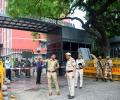
The Election Commission has informed the Supreme Court that over 37 lakh appeals concerning deletions or inclusions in West Bengal's electoral rolls remain pending under the Special Intensive Revision. The apex court-appointed tribunals have disposed of only a fraction of the 38.20 lakh appeals filed, prompting the Supreme Court to seek data and a plan for streamlining the adjudication process.

The Election Commission has revised the schedule for the Special Intensive Revision (SIR) of electoral rolls in Maharashtra, extending the deadline for filing claims and objections and pushing the publication of the final electoral roll to November 4.

The Greater Bengaluru Authority (GBA) clarified that no notice was issued to Bharat Ratna awardee Prof C N R Rao regarding an electoral roll discrepancy. Instead, the Booth Level Officer recommended including his name despite a variation in how it was recorded over the years, ensuring his inclusion in the final electoral roll.

'Now the institutions which have the might of law invested in them think that whatever they do is right.'

Kerala's Chief Electoral Officer announces that over 2.4 million voters are untraced after the enumeration stage of electoral roll revision, raising concerns among political parties.

Prime Minister Narendra Modi has cautioned the nation about "intellectual Naxals" who he claims are embedded in the system, manipulating policies and posing a threat to society. Speaking on Independence Day, Modi urged citizens to identify and isolate these ideological supporters of Naxalism, highlighting their historical influence in power corridors and their role in promoting violence and anarchy.

The question for the next 20 years is not whether India can become a $5 trillion or $10 trillion economy. Those are attractive targets, but the real question is whether India can create enough productive jobs, educate its children properly, make its cities liveable, and give hundreds of millions of people a substantially better life, asserts Ramesh Menon.

Former CDS Anil Chauhan stated that China poses a long-term and comprehensive challenge to India, with the boundary issue remaining unresolved due to differing perceptions of the Line of Actual Control. However, he emphasised that India's ties with Beijing cannot be solely defined by border disputes, advocating for engagement through platforms like SCO and BRICS. He also highlighted the broader global geopolitical flux and instability in India's neighbourhood as significant security concerns, stressing the need for self-reliance.

Delhi's draft electoral rolls show a high percentage of voter exclusions, particularly in minority-dominated and SC-reserved constituencies. Overall, 33% of voters were deleted, with some areas like Okhla seeing up to 45% exclusions. The CEO office attributes most deletions to absent or shifted voters, who can re-register by September 30.

'They want to sabotage the caste census and bury Muslim backward classes, Hindu backward classes, Sikh backward classes and Buddhist backward classes.'
'The final electoral roll will be published on October 7, 2026.' 'If someone who is otherwise eligible does not find his/her name in that electoral roll, they can fill Form 6 along with other necessary documents to enrol his/her name in the electoral roll after the final publication of the electoral roll also.'

Delhi's draft electoral rolls show a significant reduction in voters, with affluent constituencies experiencing a higher percentage drop (37.4%) compared to areas with unauthorised colonies and Jhuggi-Jhopdi clusters (35.7%). Overall, 47.5 lakh voters have been excluded, with officials noting Delhi's exclusion rate is the highest among states undertaking Special Intensive Revision. Citizens have until September 30 to file claims and objections before the final roll is published on November 4.

A delegation of NDA leaders in Karnataka has formally complained to the Chief Electoral Officer, alleging "massive irregularities" in the ongoing Special Intensive Revision (SIR) of electoral rolls and demanding an immediate inquiry and door-to-door re-verification.

The Election Commission has extended the Special Intensive Revision of electoral rolls in Maharashtra by 10 days, moving the deadline to August 8. This extension also shifts the draft electoral roll publication to August 18, as part of ongoing efforts to update and verify voter information through house-to-house checks and document submissions.

'It is for the first time in Independent India that collection of information on caste is being done.'

West Bengal Chief Minister Suvendu Adhikari announced that census operations in the state would commence on August 1 and continue until the end of February next year. He criticised the previous government for delaying the process and highlighted the importance of the census for the state.
