
On Wednesday, April 9, 2025, the Indian Army's Chinar Warriors and the Jammu and Kashmir police recovered and destroyed an IED on the Wadder-Haphruda road at Haphruda village in Kupwara, north Kashmir.

The landmine exploded when the troops were patrolling in a forward area in Digwar sector this afternoon, the officials said.

Bomb threat at Arun Jaitley Stadium declared hoax; security stepped up

Authorities in Jammu and Kashmir on Sunday asked border villages residents, who were evacuated to safer places in view of cross border shelling by Pakistan, not to rush back to homes as they are yet to sanitise and clear these areas of any unexplored shells.

An official said that multiple schools in the national capital received these bomb threats. This is the fourth such day this week when schools in the capital received bomb threats.
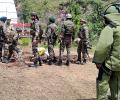
The officials said dozens of unexploded explosives were destroyed by the experts along the Line of Control in Rajouri and Poonch districts and along the International Border in Jammu and Samba which witnessed intense cross-border shelling and drone attacks from May 7 to May 10.

Heavy security has been deployed at vital installations in Delhi, including government buildings and areas with high footfalls, following Pakistan's drone attacks on Indian military sites. Police have strengthened vigil in areas with high footfalls and have canceled leaves for all Delhi Police personnel. The developments come after India swiftly thwarted Pakistan's attempts to strike military sites with drones and missiles.
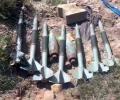
There was no explosive in the shells, Punjab Police's Deputy Inspector General (Patiala range) Mandeep Singh Sidhu said.

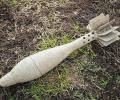
People along the Line of Control and International Border in the Jammu region continue to live under the shadow of death, with unexploded mortar shells fired by Pakistani troops still embedded in farmlands and residential areas even though hostilities have stopped for nearly a week. IMAGE: Kindly note that this image has been posted for representational purposes only. Photograph: / Rediff.com Despite the May 10 understanding between India and Pakistan, locals describe the border areas as a 'death trap'. Sixty-two-year-old Balvinder Singh, who returned to his home in Pargwal sector on May 14, recounted a narrow escape. "Two shells exploded in our compound, damaging our house. Three more landed on our farmland. We were terrified and told our family to stay away from the fields until the Army could help," Singh told PTI. Army engineers later came to the village and safely defused the unexploded shells, bringing a temporary sense of relief. "Fear is writ large on the faces of people to these death traps in border hamlets", he said. Scenes of destruction are evident rooftops torn apart, broken houses, windows punctured by shrapnel, and carcasses of cattle lying in pools of blood. The acrid smell of gunpowder still lingers in the air. Sardar Gurmeet Singh faced a similar ordeal. His family could not re-enter their home as a live mortar shell had sunk into the compound in a village close to the International Border. "The army's bomb disposal squad removed it after four days, allowing us to finally enter, back home," he said. Indian Army engineers have launched a sweeping clearance operation across border districts, defusing over 80 unexploded shells in the past five days -- including 6 in Pargwal, 19 in Rajouri, 42 in Poonch, and 12 along the IB. "These shells, mostly 120 mm calibre, have a range of 15 to 30 km and pose a serious threat to both civilian and military targets," an Army officer said. "Many of them were fired by Pakistan during recent hostilities." On May 7, the Indian Army launched Operation Sindoor, conducting precision strikes on nine terror hubs in Pakistan and Pakistan-occupied Jammu and Kashmir (PoJK) in response to the April 22 terror attack in Pahalgam that killed 26 people, most of them tourists. The subsequent retaliation by Pakistan pushed the region to the brink of war. From 7 to 10 of May, 27 civilians were killed and over 70 injured in Pakistani shelling in the Jammu region. Farid Din Gujjar, a resident near the border, expressed fear about returning to his fields. "Several shells created deep craters in our paddy land. We cannot resume work until all unexploded ordnance is cleared. It's a death trap," he said. Army units, in coordination with Jammu and Kashmir Police, have evacuated high-risk zones and issued stern warnings to residents not to touch any suspicious objects or unexploded shells. In one major operation, 42 live shells were safely destroyed in the Poonch villages of Jhullas, Salotri, Dharati and Salani. "All safety protocols were followed. The shells posed a serious danger to local lives," an Army spokesperson said, calling the effort a 'continued commitment to protect civilians and restore normalcy'. Poonch saw the vast majority of deaths due to shelling. Security officials said that Pakistan used a mix of mortar shells, armed drones, and missiles during the shelling spree, specifically targeting civilian habitations and border towns in Jammu, Samba, Kathua, Rajouri, and Poonch. As clearance operations continue, the border residents are slowly returning to their homes, but with caution, fear, and lingering uncertainty about shelling that may yet happen in the future.

Bomb disposal squad teams cordoned off the hospitals to check the hospital premises but found nothing suspicious.

A Pakistani gangster, Shahzad Bhatti, has claimed responsibility for an attack on the residence of Jalandhar-based YouTuber Rozer Sandhu, alleging the YouTuber used derogatory language against the Muslim community. A "grenade-like object" was hurled at Sandhu's residence on Sunday, but it did not explode. Police are investigating the incident and have taken a suspicious metallic object into custody. The attack follows a recent trend of violence targeting police posts and religious places in Punjab, with authorities expressing concern about attempts to disrupt the ongoing campaign against drugs in the state.

A senior police officer said bomb disposal squads have been rushed to all the places mentioned by ULFA-I but there is no report of recovery of any bomb or explosive.
Two Indian Army personnel, including a captain, were killed and another was injured when suspected terrorists set off an improvised explosive device (IED) near the Line of Control (LoC) in the Akhnoor sector of Jammu on Tuesday. This was the third incident of cross-border action by terrorists in the Jammu region in four days, highlighting the ongoing security challenges in the area. The blast occurred while the troops were on patrolling duty near a forward post, underscoring the risks faced by security personnel in the region. Following the incident, the Army launched search operations in the area and expressed condolences for the loss of its personnel.

All passengers were evacuated at Kasu Begu railway station, they said.

Four hospitals in Delhi received a bomb threat via email on Tuesday morning, officials of the Delhi Fire Services said.
A private school in Delhi's Rohini received a bomb threat via email on Friday, but it was later declared a hoax after a thorough search of the premises. The threat came just a day after a low-intensity blast took place in Prashant Vihar, near the school. Police are investigating the incident.
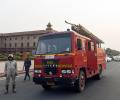
The local police, a bomb disposal squad, a bomb detection team arrived at the LSR College along with a dog squad and conducted searches but nothing suspicious was found, the official said.
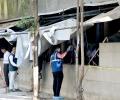
A cloth merchant from Kaul Bazaar in Ballari has been detained by the National Investigation Agency and Central Crime Branch in their joint investigation of the March 1 blast at the Rameshwaram Cafe in Bengaluru, sources said on Friday.

A multi-layer security grid has been enforced in and around Srinagar, aerial surveillance, bomb disposal squads, drones and sharpshooters guarding the Bakshi Stadium are in place for Prime Minister Narendra Modi's Srinagar visit on Thursday, March 7, 2024.

He said the investigators are verifying the suspect's identity and are 'getting closer to him.'

The intention of the bomb hoax emails received by nearly 200 Delhi schools was to 'create mass panic and disturb public order', the Delhi Police says in a first information report (FIR) registered by its Special Cell.

Two malls in Gurugram and Noida were evacuated on Saturday after they received bomb threat emails with police later saying that nothing suspicious was found following anti-sabotage checks.

Ramdev said one does not need to hide their name, but do one's work with truth and honesty.
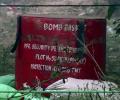
A bomb disposal squad was rushed to the spot after an unexploded bomb was found a few hundred metres away from the helipad used by Punjab and Haryana chief ministers in Chandigarh on Monday, officials said.

Over 150 people were injured, including eight seriously, in a fireworks accident during a temple festival near Neeleswaram in Kasaragod late Monday, police said.

According to Delhi Fire Services officials, they received a call about the blast at 5:45 pm and it was transferred from the Delhi Police PCR (police control room).

A bomb disposal squad will sanitise the Islamabad Sports Complex every morning, and two escort vehicles will shadow the Indian Davis Cup team during its travel as part of multi-layer security arrangement, which is usually accorded to the Head of State, to ensure the visiting tennis players' safety and security.
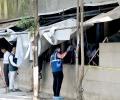
Eight days after it was shattered by a blast that left 10 persons injured, The Rameshwaram Cafe in Bengaluru started serving its loyal customers once again on Saturday, throwing open the eatery to the public with heightened security measures.

"The emails were sent from 'mail.ru' domain, in which a man impersonating himself as Tauheed Liaquat sent them to all the schools with the aim of spreading fear among voters and Indian citizens," the Ahmedabad crime branch said in a press statement.

The party also doubted "there is no way of knowing with certainty as to whether these weapons were indeed recovered during the search or whether they were surreptitiously planted by the CBI or NSG".

'The struggle of insurgents and pro-independence political activists is fuelled by a deep conviction that not only is a free Balochistan possible, but they also believe that Pakistan will inevitably break apart, leading to Balochistan's independence.'
A routine phone call from his mother saved a 24-year-old software engineer from the low intensity blast at the Rameshwaram Cafe in Bengaluru on Friday afternoon where he had gone to have lunch.

According to sources, the bodies of the victims were still inside the premises, where the blast took place at 9 am.

The Israeli National Security Council has issued a travel advisory for its citizens in India, suspecting that an explosion near the Israeli embassy in New Delhi on Tuesday was "a possible terror attack".

The flight, which was scheduled to depart at 8.20 pm, had to be grounded following the hoax threat, they said.
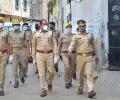
The miscreants behind these hoax threats, which even prompted evacuations in hospitals and shopping malls, are yet to be identified. FIRs have been lodged in connection with some of the incidents, according to officials.

The Delhi Police said it has conducted a thorough check of all schools that received the bomb threat but found nothing.

After tracking the movement at about 1.30 am, the spokesperson said an Army ambush, on challenging them, was fired upon and in the retaliatory firefight some terrorists have been hit.

Parents rushed to the school after receiving a message on the school WhatsApp group to receive their children as soon as possible.
Chief Minister Ashok Gehlot said the government will file a special leave petition in this matter in the top court.
 © 2026 Rediff.com - Advertise with us - Disclaimer - Privacy Policy - Sitemap - Feedback - About us - Terms of use - Grievances