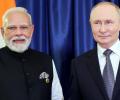
The Russian cabinet has cleared the signing of a memorandum of understanding (MoU) to deepen bilateral cooperation with India in civil nuclear energy during President Vladimir Putin's visit to the country.

Pakistan has strongly condemned the drone attack on the Barakah Nuclear Energy Plant in the United Arab Emirates, emphasising the grave violation of international law and the potential for catastrophic consequences.
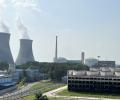
Government sources said amendments were being considered to the Atomic Energy Act to allow private sector participation and the Civil Liability for Nuclear Damage Act to limit the liability on suppliers of equipment to build atomic energy plants.
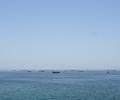
China has called on Iran to reopen the Strait of Hormuz and expressed appreciation for Tehran's commitment not to develop nuclear weapons, a key demand of the US to end the conflict.

'The Atomic Energy Commission has approved the FDI policy and it is going in for ministerial consultations.'
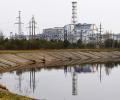
The Supreme Court is reviewing a plea challenging the 2025 SHANTI Act, which caps liability at Rs 3,000 crore for nuclear plant incidents, raising concerns about victim compensation and operator accountability.

Researchers at IIT Guwahati have developed a method to enhance cement mortar, making it stronger, more durable, and capable of blocking harmful radiation, with the goal of improving the safety of nuclear facilities.

China is significantly expanding its nuclear power sector, aiming to become a global leader by 2030. The country has the capacity to construct up to 50 nuclear reactors simultaneously, reducing reliance on fossil fuels.

India and Canada solidify their partnership with a landmark uranium supply agreement and discussions to finalise a comprehensive economic partnership, signaling stronger ties and cooperation on key global issues.

India's nuclear energy share in total installed capacity remains limited, fluctuating between 1.9 per cent and 2.9 per cent from FY10 to FY24.

The US military carried out 'self-defence strikes' targeting Iranian missile launch sites and boats near the Strait of Hormuz, even as President Trump announced progress in ceasefire negotiations, stating Iran's enriched uranium will be 'turned over' or destroyed.

The operator's liability in the case of an incident is limited to 3,000 crore for reactors with thermal power above 3,600 Megawatt; 1,500 crore for reactors with thermal power between 1,500 Mw and 3,600 Mw; 750 crore for reactors with thermal power between 750 Mw and 1,500 Mw; 300 crore for reactors with thermal power between 150 Mw and 750 Mw; and 100 crore for reactors having thermal power up to 150 Mw, fuel cycle facilities other than spent fuel reprocessing plants and transportation of nuclear materials.

US President Donald Trump's call to Prime Minister Narendra Modi signals a concerted effort to reset strained Washington-New Delhi ties, with a focus on 'big-ticket' energy and trade deals, including increased Indian imports of US LNG and LPG, and potential cooperation on small modular reactors.

Trump's comment marks a shift in his repeated statements that Iran hand over its enriched uranium to the US as a sticking point of any potential deal.
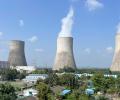
The Bill is likely to pave the way for amending two existing legislations -- the Atomic Energy Act 1962, and the Civil Liability for Nuclear Damage Act 2010.
Even as the Indo-US nuclear deal is gathering dust on the backburner because of stiff opposition from the Left parties, Congress president and chairperson of United Progressive Alliance Sonia Gandhi on Friday underlined the importance of nuclear energy for the country at this juncture.

In many ways, this is only the beginning -- of a new chapter in India's nuclear story, and of a future where its vast thorium reserves could finally power its ambitions.

The Natanz nuclear facility is one of Iran's key nuclear installations and has previously been at the centre of international concerns over Tehran's nuclear programme.

A projectile struck near Iran's Bushehr Nuclear Power Plant, resulting in one security personnel casualty and damage to an auxiliary building. The incident has raised concerns about nuclear safety and potential regional consequences, drawing criticism from Iranian officials and prompting calls for restraint from the IAEA.

The Indian government has introduced a bill to overhaul the civil nuclear sector, allowing private participation and establishing a new liability regime. The SHANTI Bill, 2025, aims to repeal existing acts and address industry concerns.

Construction major L&T is gearing up to expand its footprint in the global nuclear supply chain, a senior company official has said, while calling for amendments to key legislations on the domestic front to pave the way for the entry of private players and foreign capital necessary for capacity enhancement.

India's 500 MWe Prototype Fast Breeder Reactor (PFBR) at Kalpakkam in Chennai has achieved first criticality, marking a significant advancement in the country's nuclear energy capabilities and long-term energy security.

India and Russia are expected to unveil a major nuclear energy partnership during Vladimir Putin's visit, potentially involving Russian small modular reactors and expanded cooperation as India pushes toward its 100-GW nuclear goal by 2047.
In spite of increasing opposition from the Left Front to the India-United States nuclear agreement, Prime Minister Manmohan Singh on Monday said that his government is committed to developing nuclear energy as a clean source of electricity."Our government is committed to developing nuclear energy as a clean source of electricity," Singh said after laying the foundation stone of the 1500 MW Pragati Phase three-gas power project at Bawana.

The statement comes even as Tehran links the issue to ongoing efforts to bring a complete end to hostilities in West Asia involving the United States and Israel.

The Congress party has launched a scathing attack on Prime Minister Narendra Modi, calling him a 'millstone' around India's neck and accusing him of presiding over the 'murder of democracy', even as he achieved the milestone of becoming India's longest continuously serving elected prime minister.

US President Donald Trump on Monday doubled down on his hardline stance against Tehran while dismissing mainstream media narratives regarding his foreign policy motivations.

Amidst global energy market volatility driven by the West Asia crisis, Russia has proposed increasing its crude oil and natural gas supplies to India, strengthening bilateral energy ties and aiming for USD 100 billion in annual trade by 2030.

India has commissioned its new indigenously-built nuclear-powered ballistic missile submarine INS Aridaman into service, further strengthening the naval component of its nuclear triad. Defence Minister Rajnath Singh also highlighted the Indian Navy's role in securing maritime trade routes.

Iran has put forward a comprehensive 10-point framework that it says forms the basis of a complete resolution.
Russia has offered India cooperation in localising large and small nuclear power plants as part of a civil nuclear energy collaboration between the two countries. The offer was made during a meeting at the IAEA General Conference in Vienna.

'We were in a heavily nuclearised environment. China had tested for Pakistan in the 1980s and helped their missile programme stay just one step behind us.'

US President Donald Trump indicated that a peace deal with Iran is possible, but stressed that military action remains an option if talks fail. He emphasised the need for guarantees against nuclear weapons in any agreement.

In a development that could reshape West Asia's security landscape, US President Donald Trump announced Friday that he will convene an emergency meeting in the White House Situation Room to make a final decision on a broad, multi-part peace deal with Iran.

Iran has presented a multi-layered proposal to the US in an attempt to break the deadlock in peace talks, focusing on de-escalation and nuclear programme discussions.

A US military Apache attack helicopter crashed near the Strait of Hormuz, with its crew successfully rescued, as US President Donald Trump confidently declared an imminent 'total victory' over Iran within two weeks and a new nuclear deal, despite ongoing regional volatility and a recent de-escalation between Iran and Israel.

US Secretary of State Marco Rubio says relations between India and the US have not lost momentum and are set to strengthen, with hopes for a trade deal soon.

Russian President Vladimir Putin is set to visit China for talks with Chinese leader Xi Jinping, shortly after US President Donald Trump's visit to Beijing. The visit underscores the close strategic ties between China and Russia amid global tensions.

Chinese Foreign Minister Wang Yi has urged Iran to guarantee freedom and safe passage through the Strait of Hormuz, a critical waterway for global oil trade, amid ongoing tensions with the US.

US Secretary of State Marco Rubio stated that significant progress has been made in negotiations with Iran to reopen the Strait of Hormuz, a critical global shipping lane. However, President Donald Trump remains cautious, vowing not to accept a 'bad deal' regarding Iran's nuclear programme and regional stability.
 © 2026 Rediff.com - Advertise with us - Disclaimer - Privacy Policy - Sitemap - Feedback - About us - Terms of use - Grievances