
The Israel Defence Forces (IDF) have conducted a massive military operation targeting more than 200 infrastructure sites within Iran and an additional 140 Hezbollah assets across Lebanon.

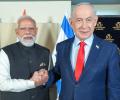
Israeli Prime Minister Benjamin Netanyahu says the foundation of India-US relationship is "very solid" and both sides should find common ground to resolve the tariff issue. He also highlighted the strong defense cooperation between India and Israel.

Prime Minister Narendra Modi visited the Yad Vashem memorial in Jerusalem and paid tribute to the victims of the Holocaust, accompanied by Israeli Prime Minister Benjamin Netanyahu.

Trump claimed on social media that recent US-Iran discussions were 'very good and productive' and aimed at a 'complete and total resolution' of the conflict.

Reports are emerging that Ali Larijani, a key Iranian security official, was allegedly targetted in an Israeli airstrike, escalating tensions in the region.

Prime Minister Narendra Modi visited the Yad Vashem memorial in Jerusalem, accompanied by Israeli Prime Minister Benjamin Netanyahu, to pay tribute to the victims of the Holocaust and reaffirm the commitment to peace and human dignity.

World leaders have expressed relief and condemnation following a shooting incident outside the White House Correspondents' Dinner, where US President Donald Trump and other top officials were present. Leaders from various countries reiterated that political violence has no place in a democracy.

IDF chief stressed the urgent need for legislative measures, including a conscription law, a reserve duty law, and an extension of mandatory military service.

Prime Minister Narendra Modi will visit Israel to enhance defence and trade cooperation amid Middle East tensions. Discussions will include defence, security, and the situation in Gaza.
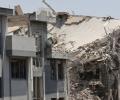
An inconclusive end to this war will pose high risk for Netanyahu of a cascading demand for a regime change in Israel, predicts Ambassador M K Bhadrakumar.

India and Israel have strongly condemned terrorism in all its forms, including cross-border terrorism, and reaffirmed their commitment to combating the threat.
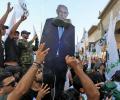
As the Iran-Israel conflict takes dangerous dimensions, support for Tehran comes from next door as Iraqi Shi'ite Muslims protest Jerusalem's attacks in Baghdad.

'The entire US ecosystem built over decades at the bases in the Gulf region, especially the UAE, costing trillions of dollars have been decimated, dealing a mortal blow to the US Central Command's war capability,' points out Ambassador M K Bhadrakumar.

Ranbir Kapoor, Google CEO Sundar Pichai, and acclaimed chef Vikas Khanna have been named among TIME magazine's 100 most influential people for 2026.

Palestinian soccer federation President Jibril Rajoub refused to stand alongside Israel FA Vice-President Basim Sheikh Suliman in a heated moment at the FIFA Congress on Thursday.

Israel extends nationwide restrictions and warns citizens of potential attacks from Iran and Hezbollah, with the Home Front Command maintaining current guidelines until further assessment.

'Neither do the Israelis. The two attacking parties have very little economic interest in Hormuz.'

The peace plan included that Gaza will be a deradicalised, terror-free zone that does not pose a threat to its neighbours and will be redeveloped for the benefit of the people of Gaza. The peace plan stated that if both sides agree to this proposal, the war will immediately end. Israeli forces will withdraw to the agreed upon line to prepare for hostage release.

As days turn into weeks and America loses more planes, as the destruction of trillions of dollars worth military assets piles up, and dead bodies of soldiers return in ever greater numbers in coffins, Trump will have to answer some very difficult questions to save his presidency, notes Ambassador M K Bhadrakumar.

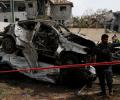
The Iranian embassy also posted a video purportedly showing the aftermath of the strike, with plumes of smoke visible.

Asked about the whereabouts of Iran's 400 kilograms of 60-per-cent enriched uranium, Netanyahu claimed that Israel has "interesting intel" related to the issue.
Two key advisers to Prime Minister Benjamin Netanyahu, Yonatan Urich and Eli Feldstein, were arrested on Monday as part of an ongoing investigation into potential connections between Israeli officials and Qatar.

'Iran cannot trust the USA because it considers the USA to be Israel-controlled. And no, the IRGC is not going to accept anything else but major US concessions.'

The fragile ceasefire in West Asia between the US and Iran to halt the hostilities in the region for two weeks faces renewed uncertainty as Tehran reportedly moved to block the strategic Strait of Hormuz once again due to Israel's intensified offensive against Hezbollah in Lebanon, according to Iranian state media Islamic Republic News Agency (IRNA), which US President Trump says was "not included" as part of the ceasefire deal.

Addressing the Israeli Parliament, the Knesset, Modi offered his deepest condolences to the people of Israel for every life lost in the terrorist attack by Hamas on October 7, 2023.

Israel initiated military action against Iran shortly after Prime Minister Narendra Modi's visit, capitalising on a fleeting opportunity and years of strategic preparation, according to Israel's ambassador to India.

Despite disagreements over nuclear ambitions, recent US-Iran peace talks led by Vice President JD Vance have fostered crucial goodwill and a deeper understanding between the two nations, potentially paving the way for future negotiations.

India's handling of the Iran crisis reflects a growing strain between strategic autonomy and geopolitical alignment, observes Ambassador M K Bhadrakumar.
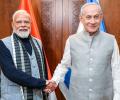
India and Israel share a deep historical bond, and Prime Minister Modi's visit to the Knesset marked a bold shift from past diplomatic hesitation to open strategic partnership.
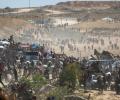
India has joined over 100 countries and global organizations in condemning Israel's "unilateral" decisions and measures aimed at expanding its "unlawful presence" in the West Bank.
World leaders have expressed their relief and condemnation following a shooting incident at the White House Correspondents' Dinner, emphasising that political violence has no place in a democracy.

World leaders have expressed their relief and condemnation following a shooting incident near the White House Correspondents' Dinner, emphasising that political violence has no place in a democracy. Leaders including Narendra Modi, Mark Carney, and others have voiced their support and concern for President Trump and all attendees.
The Congress party has criticised the Indian government's diplomatic strategy, claiming a 'severe setback' if reports of Pakistan mediating between the US-Israel and Iran are accurate. The party alleges Pakistan's diplomatic engagement has surpassed India's, despite military successes.
Applauding United States President Donald Trump's 'bold decision' to hit Iran's nuclear facilities, Israeli Prime Minister Benjamin Netanyahu on Sunday said that it demonstrated 'peace through strength' and will lead to a future of peace and prosperity in the region and beyond.

The ceasefire is still technically holding, to the extent that no overt hostilities have been reported yet, but the rhetoric has hardened dangerously. The week ahead will also clarify whether the Islamabad failure was a negotiating tactic or whether Washington has genuinely locked itself into a position from which the only exits are climb-down, escalation, or the slow bleed of a new status quo that nobody chose and nobody controls. Prem Panicker continues his must read blog on the Iran War.

US President Donald Trump and other top officials were evacuated unharmed from the annual dinner of the White House Correspondents' Association after a man armed with multiple weapons fired shots outside the hotel ballroom.

Prime Minister Narendra Modi's upcoming visit to Israel is facing political complications as opposition leader Yair Lapid threatens to boycott his parliamentary address unless the Supreme Court chief is invited, adhering to standard protocol.

'Our diplomacy should have been focused on preventing war and avoiding the inevitable disruptions it would cause, posing a real risk to India's growth story,' asserts former foreign secretary Shyam Saran.

Israel's aerial assault on Iran is widely viewed as an act of naked aggression with no basis in international law, carried out unilaterally despite US opposition and aimed at derailing ongoing US-Iran nuclear negotiations, observes Ambassador M K Bhadrakumar.

The question is whether the clocks allow enough time for two deeply mistrustful sides to get there, and whether the surface calm holds long enough for the paddling to produce something before the ceasefire ends on April 22, notes Prem Panicker in his must read blog on the Iran War.
