
Prime Minister Narendra Modi is scheduled to visit Israel for two days to discuss bilateral and regional issues, marking his second visit to the Jewish state and highlighting the growing strategic partnership between India and Israel.

Earlier, Israeli Prime Minister Benjamin Netanyahu also declared that Iran would never be allowed to acquire nuclear weapons, regardless of any agreement.
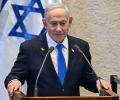
Prime Minister Narendra Modi and Israeli Prime Minister Benjamin Netanyahu discussed ways to strengthen the strategic partnership between India and Israel, focusing on peace efforts in West Asia and condemning terrorism.

Indian benchmark indices Sensex and Nifty experienced a significant slump in early trade, mirroring a sharp decline in global equities and a fresh spike in crude oil prices, exacerbated by simmering tensions in West Asia and a global unwinding of the AI-led rally. Track how sensex, Nifty fared on June 8.

Iranian Foreign Minister Seyed Abbas Araghchi announced the official end of the war and warned that any Israeli attack on Lebanon would violate an agreement between Iran and the United States. He also stated that negotiations on nuclear issues and sanctions lifting would begin on Saturday, led by Iran's Parliamentary Speaker M B Ghalibaf and US Vice President J D Vance.

Indian equity benchmark indices Sensex and Nifty declined in early trade, driven by persistent concerns over the unresolved US-Iran situation and continued outflows from foreign institutional investors.

US President Donald Trump and Pakistan Prime Minister Shehbaz Sharif have announced a landmark peace deal between the US and Iran, which includes the crucial reopening of the strategically important Strait of Hormuz and the immediate cessation of military operations in Lebanon.

Mamdani has repeatedly said that he would honour the ICC warrant and arrest Netanyahu at the airport itself, if he ever visits the city.

Israel has strongly condemned Pakistan Defence Minister Khawaja Asif's "outrageous" remarks calling for Israel's annihilation and labelling it "evil" and a "curse for humanity", raising doubts about Pakistan's role as a "neutral arbiter" for peace.

Sonia Gandhi criticised PM Modi's Israel visit, calling it a "bewildering strategic decision" amid the regional conflict.
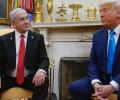
United States President Donald Trump has denied that he recently told Israeli Prime Minister Benjamin Netanyahu to stop being so 'f***ing negative' and 'take the win' after Hamas accepted parts of Washington, DC's proposal for ending the Gaza war, while saying that it would have to hold talks regarding other portions of the plan, The Times of Israel reported.

India is navigating a complex diplomatic landscape, attempting to balance its 'forever honeymoon' with the Israel-UAE-Bahrain axis against its historical ties with Iran, as evidenced by recent high-level visits and evolving geopolitical realignments in the Middle East, observes Ambassador M K Bhadrakumar.

US President Donald Trump described Prime Minister Narendra Modi as 'a Great One', while Russia hailed him as the 'doyen of all Indian prime ministers' as world leaders congratulated him on becoming India's longest continuously serving elected representative at the top post.

It is an unusual choice to depute a retired general for the funeral of a revered religious figure but a thoughtful one in an attempt to inject verve into the bilateral relationship and restore the equilibrium in India's West Asian policies, notes Ambassador M K Bhadrakumar.

Donald Trump claims a peace deal with Iran is 'largely negotiated' after calls with Israel and other allies, but Iran rejects Trump's claim on Strait of Hormuz.

A US military Apache attack helicopter crashed near the Strait of Hormuz, with its crew successfully rescued, as US President Donald Trump confidently declared an imminent 'total victory' over Iran within two weeks and a new nuclear deal, despite ongoing regional volatility and a recent de-escalation between Iran and Israel.

In a statement issued following the announcement of the US-mediated deal, Qassem characterised the agreement as a 'humiliating' and 'shameful' surrender of Lebanese sovereignty that prioritises Israeli and American dictates over the nation's independence.

Israel's Defence Minister Israel Katz declared that the Israeli military will not withdraw from its security zones in Lebanon, Syria, and Gaza, directly opposing the newly announced American-led diplomatic framework with Tehran. National Security Minister Itamar Ben-Gvir further asserted Israel's sovereignty, stating, "Trump's agreement does not bind us. Israel is not subject to the United States, and we are an independent and sovereign nation!"

Prime Minister Benjamin Netanyahu on Monday nominated United States President Donald Trump for the Israel Prize, the country's highest civilian honour, hailing him as 'the greatest friend that Israel has ever had in the White House'.

Tensions in West Asia have dramatically escalated as Israel launched targeted military operations against Iran, triggering widespread blasts across strategic cities, following earlier Iranian projectile attacks on Israel.
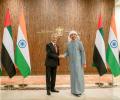
Frankly, was it really necessary in the middle of a fratricidal war for External Affairs Minister S Jaishankar to travel to Abu Dhabi for a one-on-one with the sheikh on April 12?Or, for National Security Advisor Ajit Doval to follow up on April 26? Or, for PM Narendra Modi to follow through today? There are no easy answers, notes Ambassador M K Bhadrakumar.

US President Donald Trump on Thursday announced that Israel and Lebanon have reached an agreement to initiate a 10-day ceasefire, following intensified diplomatic efforts to reduce hostilities in the region.

US President Donald Trump has rejected Iran's proposal to end the ongoing war, deeming it 'totally unacceptable'. This decision comes amid efforts to negotiate an end to hostilities that began on February 28 and have disrupted global oil supplies.

Donald Trump has issued a stern warning to Iran regarding alleged fees imposed on tankers passing through the Strait of Hormuz, further escalating tensions amid fragile ceasefire agreements and ongoing disputes with Israel over Lebanon.

Israel Defence Forces carried out air strikes, killing nine people in Gaza, following an alleged violation of the United States-brokered ceasefire deal by Hamas, CNN reported.
A media report suggests the US and Israel considered installing Mahmoud Ahmadinejad as Iran's president as part of regime change plans.

Amid ongoing ceasefire negotiations, Israel is on high alert, fearing a potential surprise missile and drone attack from Iran targeting Gulf countries and Israel, according to intelligence officials.

US President Donald Trump stated that the decision regarding the conclusion of the conflict with Iran will be a 'mutual' decision made in coordination with Israeli Prime Minister Benjamin Netanyahu.

Trump has said he would be present at the signing ceremony in Islamabad. Don't be surprised if the Pakistani hosts make it a grand event in the geopolitics of the region. Trump would love that, notes Ambassador M K Bhadrakumar.

The ongoing conflict involving the United States, Israel, and Iran intensified sharply with attacks on critical energy infrastructure across the Gulf, even as US President Donald Trump said he had cautioned Israeli Prime Minister Benjamin Netanyahu against targeting Iran's key South Pars Gas Field.

In a lengthy post on Truth Social, Trump said negotiations with Iran were 'proceeding nicely' and argued that several Muslim and Arab nations should formally recognise Israel and join the Abraham Accords once a deal is reached.

US President Donald Trump is reportedly considering launching fresh strikes against Iran if ongoing negotiations fail to produce a peace deal, according to US media outlet Axios. This development comes as diplomatic efforts continue, with Pakistan and Qatar attempting to broker an agreement.
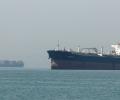
A high-stakes memorandum for a 60-day ceasefire between the United States and Iran is in its final stages, with negotiators working to close remaining gaps and avert further escalation in the region, including reopening of the Strait of Hormuz and the resumption of Iranian oil sales, according to an Axios report citing US officials.

Chaffing under public ridicule in the US as well as internationally for having 'lost' the war, Trump is under immense pressure to do something, cautions Ambassador M K Bhadrakumar.

Iranian President Masoud Pezeshkian described Israel's incursions into Lebanon as a blatant breach of the ceasefire and said the continued attacks reflect deception and a lack of commitment to potential agreements.

US President Donald Trump on Wednesday backed Israel's ongoing military operation in Lebanon, stating that Hezbollah "was not included" in the recent ceasefire deal between Washington and Tehran, which halted the conflict in West Asia for two weeks.

Israel will continue its offensive in South Lebanon aimed at neutralising the threat from Hezbollah, which is backed by Iran.

The delegations from the US and Iran head to Islamabad on Friday, carrying a ceasefire that is already fraying, a Strait that is technically open and practically closed, and a negotiating agenda that would challenge even parties actually negotiating in good faith, which these groups are not. Prem Panicker continues his must read blog on the Iran War.

The core issues to be settled -- access to Hormuz, Israel's aggression in Lebanon, the question of Iran's nuclear programme, sanctions relief and compensation -- are thorny enough to require weeks of patient negotiation. The most likely outcome of the opening sessions is that both sides take the measure of each other, establish what is and is not negotiable, and return home without having broken anything. That would count as progress.

The Islamic Revolutionary Guard Corps (IRGC) has announced a series of military operations against US and Israeli targets in retaliation for earlier airstrikes. The IRGC claims to have launched multiple missile and drone strikes, and has warned against any potential ground operations within Iranian territory.
