
Mojtaba Khamenei, son of Iran's Supreme Leader, is reportedly recovering from injuries sustained in an attack. Reports indicate he is participating in meetings and decision-making despite his condition.

Iranian state media reports that Ayatollah Ali Khamenei's son, Mojtaba Ali Khamenei, has been appointed as Iran's new Supreme Leader by the Assembly of Experts, a move criticised by US President Donald Trump.

On Monday, March 9, Mojtaba Khamenei was appointed Iran's new supreme leader, succeeding his father Ayatollah Ali Khamenei.

Mojtaba Khamenei, 56, has been chosen to assume control of the country.
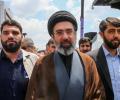
'Mojtaba Khamenei supervised the most recent repression in December 2025 and January 2026 which remains ongoing.'

Following the death of Ayatollah Ali Khamenei, his son and successor, Mojtaba Khamenei, issued a "revenge list" featuring 13 world leaders, including Donald Trump and Benjamin Netanyahu, with a graphic depicting them as targets, amidst escalating regional hostilities and US reports of an Iranian assassination plot against Trump.

Glimpses of Iran's farewell to Ayatollah Ali Khamenei as mourners gathered in huge numbers for his funeral procession in Tehran.

US President Donald Trump has claimed that Washington has the capability to liquidate the surviving Iranian leadership with "one shot" if it desired, pointing to the congregation of top Iranian officials attending the week-long state funeral for the late Iranian Supreme Leader Ayatollah Ali Khamenei, who lost his life in joint US-Israeli air strikes on February 28.

Iran's Supreme Leader Mojtaba Khamenei will not attend his father, former Supreme Leader Ali Khamenei's, funeral due to security concerns stemming from Israeli threats. This decision follows a sharp warning from Iran's Foreign Minister to the United States, urging it to control Israel after its Defence Minister reportedly marked Khamenei for death. The incident highlights escalating tensions and ongoing diplomatic efforts to de-escalate hostilities in West Asia.
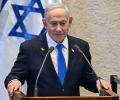
Israeli Prime Minister Benjamin Netanyahu asserts that the joint US-Israel campaign against Iran is progressing successfully, highlighting Israel's strengthened position and hinting at new regional alliances.

Thousands of mourners and international delegates gathered as Iran paid its final respects to its late supreme leader Ayatollah Ali Khamenei, who was killed in an Israeli strike on February 28, in Tehran.

Khamenei urged the pilgrims for unity and called on them to pray for "the liberation of Palestine and Al-Aqsa Mosque, the alleviation of the great hardships afflicting Muslims, and the attainment of ultimate victory against global arrogance."

Pakistan Prime Minister Shehbaz Sharif on Thursday signed the historic peace deal between the United States and Iran as a guarantor; the agreement will see the immediate reopening of the Strait of Hormuz and the lifting of the US naval blockade.

US President Donald Trump and Pakistan Prime Minister Shehbaz Sharif have announced a landmark peace deal between the US and Iran, which includes the crucial reopening of the strategically important Strait of Hormuz and the immediate cessation of military operations in Lebanon.

Reports indicate that Mojtaba Khamenei, the son of Iran's Supreme Leader and a potential successor, is reportedly unconscious and receiving medical treatment in Qom, according to intelligence assessments.

Explore the resilient daily life in Tehran, where residents navigate geopolitical tensions and economic challenges with routine activities, showcasing a striking contrast between normalcy and underlying uncertainty.
Iran's supreme leader Mojtaba Khamenei on Wednesday extolled the sacrifice and martyrdom of senior Iranian armed forces leaders as the conflict in West Asia enters into its second month.

Iran's Supreme Leader Ayatollah Ali Khamenei claims a new chapter is emerging in the Persian Gulf due to the 'shameful failure' of the United States in the region, citing shifting regional dynamics and weakening foreign influence.

Much will depend on how the protagonists use the current interlude to work proactively for the beginning of a durable settlement or, on the contrary, prepare for a new round of escalation, points out Ambassador M K Bhadrakumar.

The United States military has intercepted and destroyed two Iranian attack drones that posed an immediate hazard to commercial shipping lanes in the Strait of Hormuz, according to an official statement by the US Central Command late Saturday.

As days turn into weeks and America loses more planes, as the destruction of trillions of dollars worth military assets piles up, and dead bodies of soldiers return in ever greater numbers in coffins, Trump will have to answer some very difficult questions to save his presidency, notes Ambassador M K Bhadrakumar.

A source familiar with US Treasury Secretary Scott Bessent's thinking revealed on Saturday that the department "intends to utilise all available authorities to make Iranian assets accessible for rebuilding and repair efforts related to any future damage inflicted by Iran."
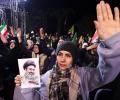
In the video, the Supreme Leader can be seen teaching religious studies to a group of pupils who are listening attentively. The IRIB said that the video of Ayatollah Mojtaba Khamenei was published for the first time.

Tensions in West Asia have dramatically escalated as Israel launched targeted military operations against Iran, triggering widespread blasts across strategic cities, following earlier Iranian projectile attacks on Israel.

Zolqadr's appointment comes through a presidential decree, endorsed by Supreme Leader Mojtaba Khamenei.

Yousef Pezeshkian, the son of the Iranian President, has confirmed that Iran's Supreme Leader Mojtaba Khamenei is 'safe and sound'. This comes after certain reports claimed that he had been injured during the ongoing strikes by the United States and Israel, according to Al Jazeera.

Amid rising tensions, Israel's Defence Minister has issued a stark warning that any leader succeeding Iran's Supreme Leader Ali Khamenei will be considered a target, as reports suggest his son Mojtaba may be next in line.

As Iran heads into crucial peace talks with the United States of America, here are the six men who decide the Islamic Republic's course.
US Secretary of War Pete Hegseth on Friday claimed that Iran's new supreme leader, Ayatollah Seyyed Mojtaba Hosseini Khamenei, is "wounded and likely disfigured" in strikes by the US on the country.

As many as 35 vessels, including cargo carriers and oil tankers, successfully navigated through the strategic maritime chokepoint of the Strait of Hormuz over the last 24 hours, according to Iran's state media reports citing a formal declaration by the Islamic Revolutionary Guard Corps (IRGC) Navy.

United States President Donald Trump on Friday declared that there would be 'no deal with Iran except unconditional surrender' amid the escalating West Asia conflict, asserting that Tehran must capitulate before any diplomatic negotiations can proceed.

Trump said that the strait will be "open very soon" if ongoing negotiations with Tehran continue successfully.

Russian President Vladimir Putin has offered his support to help bring peace to West Asia, praising the Iranian people for their resilience. This comes as Iran seeks to resolve the conflict with the US, following discussions with Pakistani and Omani leadership.
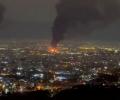
To be sure, Trump is furious, as the trajectory of the war is in a state of Zugzwang, as chess players call it. Trump and Netanyahu stare at two choices -- retreat in humiliation and concede Tehran's demands -- recognition of its rights, reparations, and binding security guarantees -- or perish in a quagmire, points out Ambassador M K Bhadrakumar.

He also criticised the possible succession of the son of the late supreme leader of the Islamic Republic, Mojtaba Khamenei, who is widely viewed as a leading contender for the position.

Quoting assembly of experts member Mirbaqeri, the report stated that while a "majority consensus over Khamenei's successor has been reached," the transition process is not yet fully complete as "some obstacles regarding the process need to be resolved."

Despite a ceasefire extension, Iran has rejected the United States' conditions for negotiations, creating uncertainty in ongoing diplomatic efforts.

Iran has reimposed restrictions on the Strait of Hormuz, with its forces opening fire on a passing tanker and forcing at least two Indian vessels to reverse course, escalating tensions in the region and raising concerns over energy supplies.

Pakistan's Defence Minister Khawaja Asif has indicated that further Iran-US negotiations are anticipated soon, following talks in Pakistan. Despite initial optimism, the previous round of negotiations did not result in a lasting peace agreement.

Iranian President Masoud Pezeshkian has confirmed Tehran's participation in Pakistan-facilitated peace talks with the US in Islamabad, according to Prime Minister Shehbaz Sharif. This development follows a conditional ceasefire agreement and aims to address regional tensions.
