

To be sure, Trump is furious, as the trajectory of the war is in a state of Zugzwang, as chess players call it.
Trump and Netanyahu stare at two choices -- retreat in humiliation and concede Tehran's demands -- recognition of its rights, reparations, and binding security guarantees -- or perish in a quagmire, points out Ambassador M K Bhadrakumar.

Key Points
- Intensified military actions and parallel diplomatic activity suggest the conflict between United States-Israel and Iran could be approaching a decisive stage.
- Donald Trump reportedly called Vladimir Putin seeking Moscow’s assistance in brokering a ceasefire, while signalling openness to talks with Tehran.
- Reports suggest Washington has used intermediaries in Oman to relay messages to Tehran aimed at reviving negotiations.
There is an English proverb, 'The darkest hours are just before the dawn.' Maybe, hope should linger on that the cruel, senseless bombing of Iran by the US and Israel is leading to what strategists call the 'endgame'.
War and peace are often two sides of the same coin in such complex situations. History is replete with the phenomenon of an acceleration of the war just when one side realises that the war cannot be won. Some sequencing of the strange happenings this past week may be in order.
It all began last Monday late in the evening when US President Donald Trump called Russian President Vladimir Putin with the intent to seek the latter's help to bring about a ceasefire (external link) in the Gulf war.
Separately, Trump told the media that he'd be 'willing to talk with Iran, but that depends on the terms'. Trump claimed the war was going to 'end soon'.
As he put it, 'We took a little excursion because we felt we had to do that to get rid of some people. And I think you'll see it's going to be a short-term excursion. I think the war is very complete, pretty much... We've already won in many ways, but we haven't won enough. We go forward more determined than ever to achieve ultimate victory.'
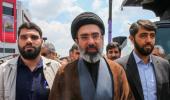
Trump was effectively reacting to the formal announcement in Tehran that the Assembly of Experts elected Ayatollah Mojtaba Khomeini as Iran's new leader.
Several hours before Trump called him, Putin had already congratulated Mojtaba on his appointment as the Leader. Interestingly, Putin was the first foreign leader to congratulate Mojtaba. Moscow must have had a 'premonition', thanks to the dense security exchanges with Tehran.
Putin's congratulatory message was exceptionally warm and friendly and had a rare personal touch (external link). In all probability, Putin had occasion to meet Mojtaba during his visits to Tehran. Importantly, Putin went out of the way to state, 'On my part, I want to confirm our unwavering support of Tehran and our solidarity with our Iranian friends. Russia has been and will remain the Islamic Republic's reliable partner.'
All in all, Monday's developments raised expectations that there could be light at the end of the tunnel. (Please see my op-ed column A calm shift of power in tense times (external link) in the New Indian Express)
Quite possibly, by the time Trump's call came through, Kremlin would have been aware that Washington was also in touch with Muscat to relay a message to be transmitted to Tehran for resumption of talks.

Larijani's Gulf Outreach Fuels Speculation of Backchannel Talks
In fact, last Tuesday, Ali Larijani, Iran's national security official, travelled to Doha. Omani Foreign Minister Badr al-Busaidi wrote on X that 'we discussed recent developments, especially the Iran-U.S. talks. Regional peace and security is our priority, and we urge restraint and wise compromise.'
After receiving the letter from Washington, Larijani also met with Oman's Sultan Haitham bin Tariq for nearly three hours. Neither Iran nor Oman offered any details on what had been discussed in Larijani's meetings, which were obviously very substantive and profound. The intriguing part is whether Larijani had any mandate to negotiate. He possibly didn't have such a mandate -- although he's favourable regarded by Americans as a 'westernist'.
Larijani has political ambitions but lacks popular support. Basically, the US strategy aim will be to create dissensions within the Iranian power structure taking advantage of any power vacuum.
This column was written before Ali Larijani was killed by the Israelis on Tuesday.
At any rate, Mojtaba's defiant statement on Thursday needs to be understood. Mojtaba, who has the solid backing of the IRGC, does not visualise a normalisation with the US. The core of Mojtaba's message to Washington (external link) was 'Bring it on!'
Tehran has since added to its demands war reparations and international security guarantee against any more US-Israeli adventurism.
To be sure, Trump is furious, as the trajectory of the war is in a state of Zugzwang (being forced to make a move), as chess players call it. Trump and Netanyahu stare at two choices -- retreat in humiliation and concede Tehran's demands -- recognition of its rights, reparations, and binding security guarantees -- or perish in a quagmire.
- Also Read: Why Strait Of Hormuz Is Iran's Trump Card
It may seem the high bar hopelessly complicates diplomacy but this is where the old English proverb gives hope that these darkest hours could presage that dawn is approaching. Iran's Foreign Minister Abbas Araghchi has since stated that the Strait of Hormuz is open to everyone except the United States and its allies. Araghchi also signalled that there are currently no concrete initiatives aimed at ending the conflict with the US and Israel.
Meanwhile, Araghchi separately also urged BRICS to wet its toes in the running stream; he held phone conversations four times in the past ten days with his Indian counterpart S. Jaishankar, who also spoke later with his Saudi and Emirati counterparts.
Jaishankar since disclosed that Delhi is holding consultations with other BRICS members (read Russia and China) at the level of the 'sherpas' who are preparing the BRICS Summit to be hosted by Prime Minister Narendra Modi later this year.
Without doubt, Russia has taken an active role in support of Iran. Foreign Minister Sergey Lavrov's conversation ('substantive exchange of views') with Oman Foreign Minister Badr bin Hamad Al Busaidi, who mediated the US-Iran talks in Geneva, must be noted, especially their 'emphasis on finding ways to bring about the swiftest possible end to the military confrontation' draws attention.

Russia Warns Against Wider Regional War
In particular, the Russian readout underscored, 'They reiterated their position in favour of preventing escalation and immediately returning to a political and diplomatic settlement (external link). The parties specifically emphasised the unacceptability of involving third countries, first and foremost the Gulf States, in the conflict which is fraught with the risk of wider military operations.'
Importantly, 'Lavrov highlighted Russia's willingness to assist in identifying compromise-based peaceful solutions founded on respect for the principle of sovereignty and equality of all states, as well as other foundational norms of international law.'
Presumably, back channels are at work between Moscow and Washington. There have been media reports also that Mojtaba is in Moscow presumably to receive medical treatment. Clearly, it stands to reason that there are no takers for Trump's call to send warships to help reopen the Strait of Hormuz.

Aside Trump's mood swings, the last serious word from the White House is also that the US administration expects the war to be over in up to six weeks. Kevin Hassett, director of the National Economic Council at the White House told Fox News, 'It's not going to last for months. President Trump's team has briefed us that it's going to be four to six weeks, beginning two weeks ago, and that we're ahead of schedule.'
Meanwhile, trust Iranian operations to single-mindedly hammer Israel and teach it a hard lesson by inflicting as much destruction on it as possible while Tel Aviv's capacity to interdict incoming Iranian missiles (external link) is reportedly getting depleted.
Amidst all this, Pope Leo XIV, in his Sunday noon blessing, has demanded a ceasefire in his strongest comments to date, directly addressing the US and Israel. The Pope said, 'On behalf of the Christians of the Middle East and all women and men of good will, I appeal to those responsible for this conflict, cease fire so that avenues for dialogue may be reopened. Violence can never lead to the justice, stability and peace that the people are waiting for.'
The Pope's appeal will resonate in the MAGA camp. Trump cannot ignore it.
Ambassador M K Bhadrakumar served the Indian Foreign Service for 29 years.
Feature Presentation: Aslam Hunani/Rediff








 © 2026