
India has expressed strong concerns over attacks on commercial ships in the Strait of Hormuz, citing its importance to India's energy and economic security. Ambassador Yojna Patel highlighted the need to respect international law and ensure the safety of seafarers, while also addressing broader Middle East issues including the situation in Gaza and Lebanon.
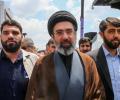
'Mojtaba Khamenei supervised the most recent repression in December 2025 and January 2026 which remains ongoing.'

One of the most uncivilised characteristics of this war has been the total disregard for international law and the laws of armed conflict, asserts Vice Admiral Biswajit Dasgupta (retd).

Indian billionaire Gautam Adani-led group's Haifa port in Israel was unharmed by the Iranian ballistic missile attack, with cargo operations progressing unhampered, sources said. Late on Saturday night, Iran targeted Israel's Haifa port and a nearby oil refinery in response to Tel Avi's attack on Iranian nuclear and other targets earlier this week.

The Cabinet Committee on Security (CCS) has reviewed the evolving situation in West Asia, directing departments to assist Indian nationals affected by recent developments and emphasizing the need for dialogue and diplomacy.

Iranian representatives have conveyed to the Trump administration that they are unwilling to resume talks with Steve Witkoff and Jared Kushner, preferring instead to engage with Vice President J D Vance.

Yousef Pezeshkian, the son of the Iranian President, has confirmed that Iran's Supreme Leader Mojtaba Khamenei is 'safe and sound'. This comes after certain reports claimed that he had been injured during the ongoing strikes by the United States and Israel, according to Al Jazeera.

As Iran heads into crucial peace talks with the United States of America, here are the six men who decide the Islamic Republic's course.

Russian President Vladimir Putin is actively working to de-escalate the escalating crisis in the Gulf, engaging with regional leaders following Iran's retaliatory strikes on US facilities after joint US-Israeli strikes against Iran.

For that to happen America does not have to lose. It only has to do the right thing, asserts Aakar Patel.

US President Donald Trump has shared an article suggesting that the option of enforcing a naval blockade was available in the context of Iran, as peace talks ended in a stalemate in Islamabad after differences of opinion arose between the two parties on the Strait of Hormuz and Iran's nuclear capacities.

Iran's foreign ministry spokesperson Esmaeil Baqaei on Sunday said that the recent meeting with US officials was the longest round of negotiations they have had in the past year.

Quoting assembly of experts member Mirbaqeri, the report stated that while a "majority consensus over Khamenei's successor has been reached," the transition process is not yet fully complete as "some obstacles regarding the process need to be resolved."

Donald Trump has issued a stern warning to Iran, threatening massive retaliation if it attacks Qatar again, following reports of an Israeli strike on Iran's South Pars gas field and an attack on Qatar's LNG facilities.

China has denied reports of finalising a deal with Iran to sell CM-302 supersonic anti-ship missiles, amidst rising tensions in the Middle East and joint US-Israeli airstrikes.

The IRGC also warned residents to evacuate areas near military bases, security centres and government facilities.

Amid the ongoing conflict in West Asia, Israeli Ambassador to India, Reuven Azar, stated that Israel is willing to cease hostilities if Iran changes its course, emphasising that Tel Aviv has consulted diplomatic channels, including the US and regional partners.

Pakistani Prime Minister Shehbaz Sharif is actively engaged in diplomatic efforts to de-escalate tensions in West Asia, offering to host talks between the US and Iran and engaging with regional leaders to promote peace and stability.

Referring to local sources, IRNA shared a video clip that it claims shows the downing of the American F-15 fighter jet in Kuwait.

'On behalf of the Islamic Republic of Iran, I express gratitude and appreciation for my dear brothers HE Prime Minister of Pakistan Sharif and HE Field Marshal Munir for their tireless efforts to end the war in the region.'

Taking Kharg would give the US control over virtually all of Iran's oil exports and thus provide significant leverage, notes Prem Panicker in his must read daily blog on the Gulf War. It would also put American troops within range of Iran's remaining missiles, drones, and artillery on a piece of real estate that is just eight square miles in size, and just 15 miles from the Iranian mainland.

The pause gives the US time to breathe, to regroup, to move its expeditionary force into position without risk of interception along the way. It gives Iran nothing -- on the ground, attacks against its infrastructure continue apace. Prem Panicker in his must read daily blog on the Gulf War.

The tanker reportedly switched off its Automatic Identification System (AIS) transponder while navigating the high-risk stretch of the strait and reappeared on tracking systems on March 9.

In a further escalation of the assault on the heavily fortified site, a missile strike also reportedly targeted the "helipad" at the embassy, as documented by Al Jazeera.

Donald Trump claims a senior defence official urged military action against Iran, revealing escalating tensions and ongoing negotiations in the Middle East.

...reopen for up to six months. Until then, the Strait stays nearly closed. The world pays. And no one, including the man who started this, can say when it ends, notes Prem Panicker in his must read blog on the Iran War.

Crude oil prices experienced a sharp decline after US President Donald Trump announced a temporary halt to military strikes on Iran's energy infrastructure, easing geopolitical tensions and supply disruption fears.

Iranian Foreign Minister Seyed Abbas Araghchi has warned the United States that Iran is ready to confront American troops if the US launches a ground invasion, calling such a move a potential 'big disaster' for Washington.

...is a way out, notes Prem Panicker in his must read blog on the Iran War. What the indefinite extension produces is a prolonged condition of not-war-not-peace, in which oil markets cannot stabilise, Asian refineries cannot plan, European governments cannot stop subsidising consumption they cannot afford, and the next flashpoint -- a seized tanker, a miscalculated drone strike, a Truth Social post that claims too much -- is one news cycle away.

The escalating conflict in West Asia widened on Monday as Israel launched airstrikes on Hezbollah targets in Beirut and other parts of Lebanon, following projectile fire from Lebanese territory into northern Israel. The Israeli Air Force (IAF) said in a series of posts on X that it carried out targeted strikes against senior members of Hezbollah in the Beirut area in response to the projectile fire launched toward Israel, particularly toward the north of the country.

Tensions between Washington, DC and Tehran have reached a boiling point, as a heavy barrage of aerial strikes was reported across multiple locations in Iran on Tuesday.

Millions of soccer fans in the world's two most populous nations may not be able to watch the World Cup that starts next month, due to a deadlock over broadcast rights in India and no official decision in China.

The core issues to be settled -- access to Hormuz, Israel's aggression in Lebanon, the question of Iran's nuclear programme, sanctions relief and compensation -- are thorny enough to require weeks of patient negotiation. The most likely outcome of the opening sessions is that both sides take the measure of each other, establish what is and is not negotiable, and return home without having broken anything. That would count as progress.

Donald Trump has issued a stern warning to Iran, stating that the US will take a tougher stance if a diplomatic resolution regarding its nuclear programme is not reached soon.

It is time for India to step up and get Russia, China and Europe to agree to a joint appeal to all combatants. Time is of essence, tomorrow may be too late, asserts Colonel Anil A Athale, former head of the history division, ministry of defence.

'Our diplomacy should have been focused on preventing war and avoiding the inevitable disruptions it would cause, posing a real risk to India's growth story,' asserts former foreign secretary Shyam Saran.

Donald Trump has warned Iran to open the Strait of Hormuz within 48 hours or face military action, escalating tensions amid regional conflict and impacting global oil supplies.

The question is whether the clocks allow enough time for two deeply mistrustful sides to get there, and whether the surface calm holds long enough for the paddling to produce something before the ceasefire ends on April 22, notes Prem Panicker in his must read blog on the Iran War.

Despite heightened tensions and Iran's rejection of a US-backed ceasefire, President Trump claims Iran is now 'begging' for a deal.

An Indian and a Pakistani national were killed in Abu Dhabi after debris from intercepted missiles fell on a street. The incident has raised concerns about regional security.
