
The US Central Command (CENTCOM) confirmed striking the Guinea-Bissau-flagged oil tanker MT Jalveer, carrying 20 Indian seafarers, in the Gulf of Oman for allegedly violating the US blockade against Iran. This incident marks the third commercial vessel attacked by US forces in the region this week, with three Indian seafarers previously losing their lives in an attack on the MT Settebello.

The strike came amid the peace deal talks between two countries and a fragile ceasefire.

The United States Central Command (CENTCOM) has launched self-defence strikes against multiple targets in Iran, citing ongoing Iranian aggression. This action has led to Iran's Red Crescent placing emergency centres on high alert amidst reports of explosions in several Iranian cities. Concurrently, Iraqi media claims Iran retaliated with a missile strike on a US air base in Erbil.

Iran's Islamic Revolutionary Guard Corps (IRGC) has claimed to have targeted and destroyed hangars of F-35 fighter jets and struck 21 American air and naval bases across West Asia and the Gulf region, including the US Army's command and control centre at the Al-Azraq base in Jordan and the US Fifth Fleet headquarters in Bahrain.

The US military carried out 'self-defence strikes' targeting Iranian missile launch sites and boats near the Strait of Hormuz, even as President Trump announced progress in ceasefire negotiations, stating Iran's enriched uranium will be 'turned over' or destroyed.

The United States military and Kuwaiti air defence forces successfully intercepted multiple Iranian ballistic missile and drone attacks targeting Kuwait and Bahrain, with Iran's state broadcaster claiming American military installations in Kuwait were deliberately targeted.

US Marines boarded and searched a commercial ship, M/V Blue Star III, in the Arabian Sea on suspicion of violating the US blockade of Iranian ports, later releasing it after confirming it was not headed to Iran.

The United States Central Command (CENTCOM) has confirmed the implementation of a naval blockade on Iranian ports, enforcing strict measures on vessels entering or departing, significantly escalating tensions between the two nations.

Tensions escalate between Iran and the US over control of the Strait of Hormuz, a crucial shipping lane for global oil supplies, as both sides discuss extending a fragile ceasefire.

Conflicting reports emerge regarding the effectiveness of the US blockade on Iranian ports, with Iran claiming successful transit of vessels and the US asserting complete maritime dominance.

The US Central Command (CENTCOM) announced the start of operations to clear mines in the Strait of Hormuz, a claim swiftly denied by Iran, leading to increased tensions in the region amidst stalled negotiations between the two countries.

Trump further alleged that Iran was behind the attacks on three vessels carrying Indian seafarers near the Hormuz Strait, which resulted in the deaths of three, despite the US Central Command having confirmed that the strikes were carried out by American naval forces, calling the incident "totally unacceptable."

India has strongly protested to the United States after three merchant ships with Indian crew members were attacked by the American military off the coast of Oman, resulting in the deaths of three Indian nationals.

The US has threatened to prosecute those buying or selling sanctioned Iranian oil and has announced a blockade of the Strait of Hormuz after peace talks failed.

A US military Apache attack helicopter crashed near the Strait of Hormuz, with its crew successfully rescued, as US President Donald Trump confidently declared an imminent 'total victory' over Iran within two weeks and a new nuclear deal, despite ongoing regional volatility and a recent de-escalation between Iran and Israel.

The American warship stopped the tanker "after it attempted to sail to an Iranian port," according to a statement released by CENTCOM.

The United States military has intercepted and destroyed two Iranian attack drones that posed an immediate hazard to commercial shipping lanes in the Strait of Hormuz, according to an official statement by the US Central Command late Saturday.

US Central Command (CENTCOM) released footage of a maritime operation where Marines boarded an Iranian-flagged vessel, the Touska, in the Gulf of Oman, leading to heightened tensions and threats of retaliation from Iran.

'The US was well aware of the nationality of the seafarers on board the vessels. It was not hidden. The nationality of those aboard a merchant ship is known to all the ports.' 'So, why did US shoot a missile that resulted in the deaths of the Indian mariners?'

Dozens of US planes carrying ammunition landed in Tel Aviv, raising concerns about potential strikes on Iran. Negotiations between the US and Iran remain deadlocked over key issues, with both sides issuing fresh demands and warnings.
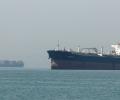
In a significant diplomatic development, US and Iranian negotiators have reportedly reached a tentative 60-day memorandum of understanding (MoU) aimed at extending a fragile ceasefire and paving the way for formal talks regarding Iran's nuclear programme.

Admiral Alireza Tangsiri was accused of leading efforts to disrupt maritime trade, including actions affecting the Strait of Hormuz.

The United States Central Command (CENTCOM) has announced that American forces are maintaining a strict maritime restrictive operation in the region, continuing to enforce a blockade against Iranian ports.
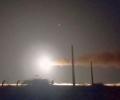
US President Donald Trump maintains that the ceasefire with Iran is still in effect despite recent military engagements near the Strait of Hormuz. He also commented on a recent clash where US forces responded to Iranian attacks on US Navy destroyers.

The USS Tripoli, carrying around 3,500 US Marines, has entered the United States Central Command (CENTCOM) area of responsibility, marking the deployment of one of America's largest amphibious assault ships into an active combat theatre in West Asia amid the ongoing conflict.

If Iran and Oman choose to charge a fee for rendering services to vessels using their territorial waters, so be it. The US is indulging in an irrationally self-destructive act, notes Ambassador M K Bhadrakumar.

The US military is considering a new wave of military operations in Iran, including potential strikes on infrastructure and securing Iran's stockpile of enriched uranium, amid a fragile ceasefire and stalled nuclear talks.

Tensions escalate between Iran and the US following an attack on an Iranian commercial vessel in the Sea of Oman, with both sides trading accusations over maritime security and ceasefire violations.

The US Navy seized an Iranian-flagged cargo ship in the Gulf of Oman, escalating tensions as ceasefire talks face uncertainty. The incident raises concerns about the fragile ceasefire and the ongoing blockade of the Strait of Hormuz.

Rescue operations are currently underway, and the circumstances surrounding the incident are under investigation, the command said.
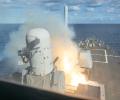
In a coordinated military operation, the United States and Israel launched airstrikes against Iran, escalating tensions amid stalled nuclear talks and claims of resumed nuclear activities, resulting in the death of Iran's supreme leader.

Iran's state media cited the spokesperson for the Central Headquarters of Iran's military to claim that a United States military refuelling plane was shot down by a missile fired by resistance groups in western Iraq. The spokesperson further told Press TV that all six service members on board had been killed.

French President Emmanuel Macron on Monday announced that France and the United Kingdom will jointly lead a multinational initiative to restore free and secure navigation in the Strait of Hormuz amid uncertainty over the virtual control of the strategic waterway between the US and Iran.

Iran has strongly criticised US plans to impose a blockade on its ports, warning that maritime security across the Persian Gulf region would be jeopardised if its own security is threatened.

The United States has redirected 48 vessels in the Persian Gulf, particularly in the Strait of Hormuz, over the past 20 days amid ongoing enforcement actions related to restrictions on Iranian maritime assets by the US Navy.

In a sharp escalation of regional tensions, US President Donald Trump issued a fresh warning to Tehran on Monday, asserting that the American military is prepared to sink any Iranian vessels that approach the newly established naval blockade in the Strait of Hormuz.
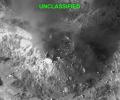
Iranian officials allege a US airstrike on Mashhad airport damaged a Mahan Air plane set to collect vital medical aid from India.

US President Donald Trump stated that military strikes against Iran could resume if they 'misbehave,' even as he reviews a new proposal from Tehran aimed at ending the paused conflict.

US President Donald Trump said the United States faces a stark choice in its approach to Iran, either to pursue a negotiated settlement or escalate militarily, as tensions continue to rise in the West Asia region.

US President Donald Trump in an exclusive interview to Axios on Wednesday, said that he would continue to keep the naval blockade until Iran agrees to deal with the United States by addressing America's concerns about the nuclear programme.
