
Iran on Monday formally rejected a US-proposed ceasefire deal amid the escalating conflict in West Asia, instead unveiling its own 10-point plan aimed at permanently ending the ongoing war, as reported by the Iranian state news agency Islamic Republic News Agency (IRNA).

US President Donald Trump has accused Iran of bringing down an American military helicopter near the strategically vital Strait of Hormuz, prompting a strong declaration that the United States 'must' respond to this significant incident.

The US Senate passed a resolution directing then-President Donald Trump to withdraw American forces from the conflict with Iran. This bipartisan vote, though largely symbolic as a concurrent resolution, highlighted congressional concerns over potential escalation and a desire to limit presidential military authority without legislative approval.

Iran has presented a multi-layered proposal to the US in an attempt to break the deadlock in peace talks, focusing on de-escalation and nuclear programme discussions.
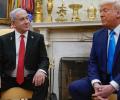
A media report suggests the US and Israel considered installing Mahmoud Ahmadinejad as Iran's president as part of regime change plans.
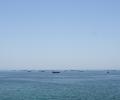
China has called on Iran to reopen the Strait of Hormuz and expressed appreciation for Tehran's commitment not to develop nuclear weapons, a key demand of the US to end the conflict.

The United States and Iran could resume negotiations as early as next week in Islamabad, according to a report by The Wall Street Journal citing people familiar with the matter.

Analysts predict that developments in US-Iran negotiations, fluctuations in crude oil prices, and key global economic data will be the primary drivers of gold and silver prices in the coming week, with a strong focus on talks in Switzerland.

In a significant diplomatic manoeuvre aimed at de-escalating regional tensions, Iran has reportedly submitted a "new proposal" to the United States through Pakistani intermediaries.

The Iranian Foreign Ministry has stated that Tehran currently has no plans for a subsequent round of negotiations with the United States, according to the state media Tasnim news agency. This announcement comes as international mediators had hoped for a follow-up to the Islamabad talks before the looming ceasefire deadline.

The Kuwaiti Army reported intercepting hostile missile and drone attacks, while tensions escalate between the US and Iran with reported strikes and confrontations near the Strait of Hormuz.

Iranian President Masoud Pezeshkian is on a state visit to Pakistan to discuss the full implementation of an agreement signed between Iran and the US, alongside regional and international developments. The visit also aims to strengthen bilateral cooperation across various sectors, following recent high-level talks between the US and Iran in Switzerland regarding regional security.

Indian benchmark equity indices, the BSE Sensex and NSE Nifty, experienced a significant drop in early trade due to elevated oil prices, weak global market trends, and renewed fears of military operations in the Middle East following US President Donald Trump's statements regarding Iran. Track Sensex, Nifty on May 20.

Pakistan's Chief of Defence Forces Field Marshal Asim Munir held talks with Iranian leaders in Tehran to help resolve the conflict between the US and Iran, following a recent ceasefire agreement.
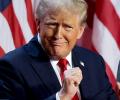
US President Donald Trump announced that a deal to end the war with Iran would be signed on Sunday, with the strategic Strait of Hormuz immediately becoming 'open to all'. This follows indications from Pakistan that negotiations were in their final stages, though Iran has yet to comment on the timeline.

Pakistan Prime Minister Shehbaz Sharif announced that a US-Iran peace deal is on the verge of finalisation, potentially within the next 24 hours, marking a significant diplomatic breakthrough after months of intense negotiations.

Iran has announced the reinstatement of strict military control over the Strait of Hormuz, citing US violations of previous agreements regarding maritime passage. This decision follows claims of continued American blockade of Iranian ports and a statement from former US President Trump regarding the persistence of the naval blockade until a comprehensive peace agreement is reached.

An Iranian tanker successfully bypassed the US Navy to deliver crude oil to the Asia-Pacific region, despite ongoing tensions and a US blockade.

This sharp Iranian response came after a series of uncompromising remarks from the US president.

Trump has said he would be present at the signing ceremony in Islamabad. Don't be surprised if the Pakistani hosts make it a grand event in the geopolitics of the region. Trump would love that, notes Ambassador M K Bhadrakumar.

US Vice President JD Vance on Sunday generated significant online traction after making a light-hearted reference to two "very, very important" Indian and Pakistani people in his life - his wife Usha Vance and Pakistani Army chief Asim Munir, on the sidelines of the US-Iran diplomatic deliberations in Switzerland.

Iran has submitted a fresh proposal to regional intermediaries offering to cease its military operations in the Strait of Hormuz, contingent upon a complete cessation of hostilities and the removal of the US blockade on Iranian maritime hubs.

Three Indian-flagged crude oil tankers, Desh Vaibhav, Desh Vibhor, and Sanmar Herald, successfully transited the Strait of Hormuz and are en route to India, even as Iran announced the closure of the critical waterway following Israeli strikes in Lebanon.

Iranian authorities have announced the arrest of 35 individuals on charges ranging from espionage to illegal trafficking, including alleged Mossad-linked suspects and affiliates of separatist organisations.

US Vice President J D Vance stated that while progress was made during peace talks in Islamabad, it is now up to Iran to further the discussions and address US concerns regarding its nuclear ambitions.

Israel's Defence Minister Israel Katz declared that the Israeli military will not withdraw from its security zones in Lebanon, Syria, and Gaza, directly opposing the newly announced American-led diplomatic framework with Tehran. National Security Minister Itamar Ben-Gvir further asserted Israel's sovereignty, stating, "Trump's agreement does not bind us. Israel is not subject to the United States, and we are an independent and sovereign nation!"
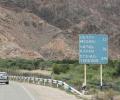
After a perilous 500-km road journey out of conflict-torn Tehran, stranded Indian tourist Falguni Dey reached Iran's Astara border with Azerbaijan on Tuesday evening, but his ordeal is far from over.

Ebrahim Azizi, Head of the Iranian Parliament's National Security Committee, warned the US against interfering with the Strait of Hormuz, asserting Iran's sovereignty after former President Donald Trump threatened to 'take over' the strategic waterway. Despite the heated rhetoric, Iran and the US have established a direct communication line to prevent incidents during a 60-day negotiation period.

The statement comes even as Tehran links the issue to ongoing efforts to bring a complete end to hostilities in West Asia involving the United States and Israel.

Following the signing of a 14-point Memorandum of Understanding (MoU) with Iran, US President Donald Trump reiterated the terms for a 60-day negotiation period, vowing that Tehran will receive "not ten cents" in financial relief.

Iran on Monday described the 15-point proposal from the United States to end the conflict in West Asia and reopen the strategic Strait of Hormuz as 'excessively demanding', stating that it has prepared its own set of demands to end hostilities, which have now entered their second month.

Iran footballers faces cheers and jeers in their come-from-behind 2-2 draw against New Zealand in their FIFA World Cup final opener in Los Angeles on Monday.

Iran has announced the closure of the Strait of Hormuz, citing Israel's continued strikes in Lebanon and alleged violations of a ceasefire agreement. This move comes as both Israel and Hezbollah accuse each other of breaching the truce, with casualties rising in southern Lebanon.
India's foreign policy establishment is adjusting with alacrity in real time -- an extraordinary spectacle in itself, considering the manifest reluctance to indulge in public diplomacy critical of American moves, observes Ambassador M K Bhadrakumar.
As tensions in the Middle East approach a critical juncture, reports have surfaced regarding a draft memorandum of understanding between the United States and Iran aimed at de-escalating the ongoing conflict, Iranian state media reported on Wednesday.

Ebrahim Azizi, head of Iran's National Security Committee, stated that diplomatic talks with the US are governed by national interest and security, viewing negotiations as an extension of military efforts.

FIFA Secretary-General Mattias Grafstrom expressed confidence in Iran's participation in the upcoming World Cup after a meeting with Iran's FA President Mehdi Taj, despite concerns over visa issues and political tensions.

The strike came amid the peace deal talks between two countries and a fragile ceasefire.
Crude oil prices reached a new record high in futures trade, both domestically and internationally, as escalating military tensions between the US and Iran in West Asia continue to fuel market volatility. Diplomatic efforts concerning the Strait of Hormuz are being closely watched for potential price stabilisation.

Global oil prices fell on Thursday to their lowest levels since before the outbreak of the Iran conflict, offering a significant economic tailwind for India, the world's third-largest crude importer, by easing inflation risks, reducing the import bill and improving the government's fiscal position.
