
The Canadian government is seeking to revoke the citizenship of Tahawwur Rana Hussain, a Pakistan-born businessman accused of involvement in the 2008 Mumbai terror attacks, due to misrepresentation on his citizenship application.

Indian authorities have requested additional information from the United States based on the interrogation of Tahawwur Rana, an accused in the 2008 Mumbai terror attacks. The request was made through the Mutual Legal Assistance Treaty (MLAT).

Tahawwur Rana has the answers to festering questions on the 26/11 terror attacks and the NIA must pry it out of him, even if they have to feed him biryani, advocates Athimuthu Ganesh Nadar.

Glimpses of when US marshals in the central district of California transferred custody of 26/11 accused Tahawwur Rana to representatives from India's ministry of external affairs on Tuesday, April 8, 2025.

Pakistan has denied any connection to Tahawwur Rana, a key accused in the 2008 Mumbai terror attacks. Rana, a Canadian national, has not renewed his Pakistani documents for over two decades, according to the Foreign Office spokesperson.

Maharashtra Chief Minister Devendra Fadnavis said on Friday that the National Investigation Agency (NIA) and the Union Home Ministry will decide where 26/11 terror attack conspirator Tahawwur Rana will be taken for probe. Rana was extradited from the US.
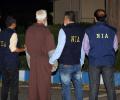
'It is ensured that no adversaries or people who oppose Tahawwur Rana's philosophy are housed in the same ward or jail.' 'Additionally, it is ensured that he does not have any prior contacts within that jail.' 'So, the lodgment of such a high-profile prisoner is done very carefully.'

A Delhi court on Monday extended by 12 more days the NIA custody of 26/11 Mumbai attack accused Tahawwur Hussain Rana.
Tahawwur Hussain Rana, a Pakistani-born Canadian national accused of playing a role in the 2008 Mumbai terror attacks, has been extradited from the United States to India. Rana was arrested in the US in 2009 and convicted in 2011 for providing material support to the Lashkar-e-Taiba terror group, which carried out the Mumbai attacks. He had been fighting extradition since 2012, but the US Supreme Court ultimately denied his review petition, paving the way for his transfer to India. Rana will now face trial in India for his alleged role in the attacks, which killed 166 people.

A multi-agency team has gone to the US and all paperwork and legal issues are being completed with US authorities to bring him to India, they said.
In a long battle, this is Rana's last legal chance not to be extradited to India.
The hugely significant development comes just days after Rana's last-resort attempt to evade extradition to India failed after the US Supreme Court justices denied his application, moving him closer to being handed over to Indian authorities to face justice in the dastardly attacks.

Tahawwur Hussain Rana, a key figure in the 2008 Mumbai terror attacks, has been extradited from the US to India and produced before a Delhi court. Rana, a close associate of David Coleman Headley, was brought to India after the US Supreme Court dismissed his review plea against extradition. The National Investigation Agency (NIA) has sought 20 days of custody to interrogate Rana, citing clinching evidence, including emails. The agency believes that Rana's interrogation is critical to understanding the larger conspiracy behind the attacks and his role in planning them.

The BJP has lauded the extradition of Tahawwur Rana, a key accused in the 26/11 Mumbai terror attack, as a testament to "New India's" zero-tolerance stance against terrorism under Prime Minister Narendra Modi. However, the Congress has countered the claim, stating that the extradition was the result of diplomatic efforts initiated during the UPA government's tenure. The BJP highlighted Rana's return as a tribute to security personnel who lost their lives fighting Pakistan-sponsored terrorism and a step towards justice for victims of the attack. The Congress, however, asserted that the Modi government did not initiate the extradition process but benefited from the UPA's groundwork. The exchange of accusations has added a political dimension to Rana's extradition, with both parties vying for credit for the development.

Tahawwur Rana, accused in the 2008 Mumbai terror attacks, has renewed his plea for a stay on his extradition to India, citing health concerns and alleging potential torture. He argues that his extradition would violate US law and the UN Convention Against Torture. Rana's lawyers claim he is at risk of being subjected to torture in Indian detention facilities due to his Pakistani origin, Muslim religion, and medical conditions. The US Supreme Court had previously denied his emergency bid for a stay, but he has now appealed to Chief Justice John Roberts. The US government has declined to provide information on any commitment from India regarding Rana's treatment, further fueling his concerns.
Mumbai terror attack accused Tahawwur Rana has moved an 'emergency application' with the United States Supreme Court against his extradition to India, claiming that he will be tortured there since he is a Muslim of Pakistani origin.
This was Rana's last legal chance not to be extradited to India. Earlier, he lost a legal battle in several federal courts, including the US Court of Appeals for the North Circuit in San Francisco.
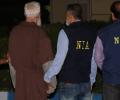
A Delhi court extended the judicial custody of Tahawwur Hussain Rana, accused in the 26/11 Mumbai terror attack, until August 13. The order was passed after Rana was produced via video conference. Rana is associated with David Coleman Headley. NIA has filed a supplementary chargesheet against Rana.
Tahawwur Hussain Rana, a key accused in the 26/11 Mumbai terror attacks, was brought to India on Thursday after being "successfully extradited " from the US, the National Investigation Agency (NIA) said. The 64-year-old Canadian citizen of Pakistani origin landed in Delhi in a special plane on Thursday evening, ending days of speculation of when and how he will be extradited, officials said. The NIA said in a statement that it had secured the successful extradition after years of sustained and concerted efforts to bring to justice the key conspirator behind the 2008 mayhem that claimed 166 lives. Rana is accused of conspiring with David Coleman Headley alias Daood Gilani, and operatives of designated terrorist organisations Lashkar-e-Taiba (LeT) and Harkat-ul-Jihadi Islami (HUJI) along with other Pakistan-based co-conspirators, to carry out the the three-day terror siege of India's financial capital.
The 64-year-old Pakistani-origin Canadian businessman would also be questioned on his suspected links with the officials of Pakistan spy agency Inter-Services Intelligence (ISI) and his association with terror group Lashkar-e-Taiba (LeT), which had orchestrated the attacks.
The US Supreme Court has denied the application of Tahawwur Rana, a Canadian national of Pakistani origin accused in the 2008 Mumbai terror attacks, seeking a stay on his extradition to India. Rana, currently detained in Los Angeles, had submitted the application after Associate Justice Elena Kagan initially denied it. Despite a renewed appeal, the Supreme Court ultimately rejected the request.
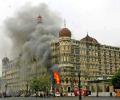
Tahawwur Rana, accused of involvement in the 2008 Mumbai terror attacks, is expected to be extradited to India from the United States soon. The US Supreme Court denied his last-ditch effort to stop his extradition, moving him closer to being handed over to Indian authorities. Rana's extradition is expected to help probe agencies expose the role of Pakistani state actors behind the attacks and shed new light on the investigation. He is associated with Pakistani-American terrorist David Coleman Headley, one of the main conspirators of the 26/11 attacks.
Tahawwur Rana, accused in the 2008 Mumbai terror attacks, has renewed his application to the US Supreme Court seeking a stay of his extradition to India. The Supreme Court will hear the application next month. Rana, currently detained in Los Angeles, claims his extradition would violate US law and expose him to torture in India due to his health and Muslim background. The US government has denied these claims and authorized his surrender to India, citing the Extradition Treaty between the two countries. The Supreme Court's decision will determine if Rana will face justice in India or remain in the United States.
Tahawwur Hussain Rana, a Pakistani-born Canadian national accused in the 2008 Mumbai terror attacks, is likely to be lodged in a high-security ward in Tihar jail upon his extradition from the US. Rana, a close associate of David Coleman Headley, a US citizen who was also involved in the attacks, will be brought to India after his last-ditch attempt to evade extradition was rejected by the US Supreme Court. The attacks, which lasted nearly 60 hours, resulted in the deaths of 166 people and sent shockwaves across the country.
In a huge setback to Tahawwur Hussain Rana, a United States court has ruled that the Pakistani-origin Canadian businessman could be extradited to India where is wanted for his involvement in the 2008 Mumbai terror attack carried out by Pakistan-based Lashkar-e-Taiba terrorists.
'India has established probable cause to prosecute him for his role in terrorist attacks that resulted in 166 deaths and 239 injuries'

'As Rana is not an Indian citizen, our leverage on the US system -- whether it's their judiciary or the executive -- is very limited in that sense.'
Tahawwur Hussain Rana, a Pakistan-born Canadian national and close associate of David Coleman Headley, is set to be extradited to India from the US. Rana was involved in the planning and execution of the 2008 Mumbai terror attacks, which killed 166 people, including six Americans. He assisted Headley in obtaining a visa for India, established a front company in Mumbai, and helped in reconnaissance of targets in Mumbai and New Delhi. Rana was convicted in the US for providing material support to Lashkar-e-Taiba (LeT) and sentenced to 14 years in prison. His extradition to India will allow authorities to question him about his involvement in the Mumbai attacks and potentially uncover new information about the role of Pakistani state actors.
A Delhi court has allowed Tahawwur Hussain Rana, accused in the 26/11 Mumbai attacks, to have three phone calls with his brother to discuss engaging a private counsel. His judicial custody has been extended until September 8.

The Mumbai police on Monday submitted a chargesheet before a special court in Mumbai against Pakistani-origin Canadian businessman Tahawwur Rana for his involvement in the November 2008 terror attacks in the metropolis.

Mumbai 'Chai Wala' known as 'Chhotu' aka Mohammed Taufiq, whose alertness saved lives during the 26/11 Mumbai terror attacks stated that there is no need for India to provide Tahawwur Rana with cell and Biryani and facilities which were provided to Ajmal Kasab, one of the terrorists involved in Mumbai attacks.

Pakistani-origin Canadian businessman Tahawwur Rana, a key accused in the 26/11 terror attacks case, stayed at a hotel in Mumbai's Powai area for two days in November 2008 ahead of the attacks, where he discussed about the crowded places in south Mumbai with a witness in the case, the police said on Tuesday.
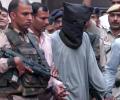
The National Investigation Agency has informed a Delhi court that Mumbai attack accused Tahawwur Rana could spill the beans on the ongoing and future terror plans of outfit Lashkar-e-Taiba and its chief Hafiz Saeed for India.
A US court in California has dismissed a status conference motion moved by imprisoned Pakistani-origin Canadian businessman Tahawwur Rana, who is sought for his involvement in the 2008 Mumbai terror attack, stating that it anticipates a ruling on his extradition to India within 30 days.

India has strongly rejected Pakistan's claims on Kashmir, calling it a Union Territory and dismissing the Pakistan Army Chief's statement about it being the country's "jugular vein." India also rejected Pakistan's claim that Tahawwur Rana, a Mumbai terror attack accused, is a Canadian citizen and that it has nothing to do with him. India's External Affairs Ministry spokesperson stated that Pakistan's reputation as the "epicentre" of global terrorism will not diminish. Rana's extradition is a reminder that Pakistan needs to bring other perpetrators of the Mumbai terror attacks to justice, according to India.

'All I know is that Rana is innocent... He is very honest and god fearing. He will share his last morsel with a man in need. I do not know how he got involved in all this,' Rana's father-in-law Rana M Akhtar told a TV channel in Chicago.

Filing the Writ of habeas corpus through his attorney, Rana, 62, challenged his extradition by the Government of India. Rana's extradition would violate the United States-India extradition treaty in two respects, his attorney argued.

Tahawwur Rana, an accomplice of convicted terrorist David Headley, faces up to 30 years in prison during his sentencing in a United States court on for providing material support to the Pakistan-based Lashkar-e-Tayiba involved in Mumbai attacks as well as for backing a plot to strike a Danish newspaper.
Magistrate judge Jacqueline Chooljian on Thursday ordered the defence attorneys and prosecutors to file additional documents by July 15, which was reported by a US news agency.

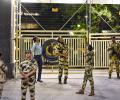
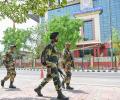
Security has been heightened outside the Patiala House Court in Delhi ahead of the expected appearance of Tahawwur Rana, a key accused in the 2008 Mumbai terror attacks. Rana, who was extradited from the US, is likely to be produced in court on Thursday. The Delhi Police and paramilitary forces are carrying out thorough security checks to prevent any untoward incidents.
 © 2026 Rediff.com - Investor Information - Advertise with us - Disclaimer - Privacy Policy - Sitemap - Feedback - About us - Terms of use - Grievances