
Low-level lightweight radars; very short-range air defence systems (launchers and missiles); remotely piloted aerial vehicles; loitering munitions, including vertical take-off and landing systems; different kinds of drones; bullet-proof vests; ballistic helmets; quick-reaction fighting vehicles -- heavy and medium; and night sights for rifles (aiming devices that are visible in low light).

The revelation may have come late in the century but the Congress disclosed on Thursday, May 29, 2025, that the Indian Army conducted six surgical strikes against Pakistan during UPA-2, the Congress-led United Progressive Alliance government's second term in power.

The Pakistani military fired unprovoked shots across the Line of Control (LoC) in Kashmir for a second consecutive night, triggering retaliatory action from Indian troops. This escalation follows heightened tension between India and Pakistan after the Pahalgam terror attack that killed 26 civilians. Despite the exchange of fire, no casualties were reported. India has imposed a series of punitive measures in response to the attack, including the suspension of the Indus Waters Treaty and closing the Attari land-border crossing. Pakistan has responded in kind, closing its airspace to Indian airlines and suspending trade with India.
Jammu and Kashmir was peaceful last night with no hostilities between the Indian and Pakistani militaries along the Line of Control and the International Border.
'With a military-led strategy to counter terrorism emanating from Pakistan, India has clearly signalled that it would respond decisively to future terrorist threats.'

Earlier, at 4:39 am, the district collector had also advised residents to keep lights off and avoid going near windows, roads, balconies, or terraces.
Pakistani troops continued to violate the ceasefire along the Line of Control (LoC) by resorting to unprovoked firing in Jammu and Kashmir's Poonch and Kupwara districts, army officials said. This was the fourth consecutive night that Pakistan resorted to unprovoked firing along the LoC and came amid heightened tension between New Delhi and Islamabad following last week's terror attack in Pahalgam. Indian troops responded swiftly and effectively.

The firing exchanges are taking places in five districts out of seven border districts of Jammu and Kashmir. So far, there has been no firing reports along International Border in Samba and Kathua districts.
This marked the sixth consecutive night of ceasefire violations by Pakistan along the LoC, amidst heightened tensions between New Delhi and Islamabad following a recent terror attack in Pahalgam on April 22.

Pakistani troops continued unprovoked small arms firing in different sectors along the Line of Control (LoC) in Jammu and Kashmir for the 10th consecutive night, prompting effective retaliation by the Indian army. The ceasefire violations, which started after the April 22 terror attack in Pahalgam, were reported from eight places across five districts in the Union Territory during the intervening night of Saturday and Sunday. Indian Army responded promptly and proportionately to the unprovoked firing, a defence spokesperson said.

'Operation Sindoor is still ongoing. The Prime Minister himself said that blood and water cannot flow together, that talks and terrorism cannot go together. So how can we have a cricket match with a country that indulges in terrorism?'

It is considered one of the most crucial appointments within the Indian Army, according to an official statement from the Ministry of Defence.

People along the Line of Control and International Border in the Jammu region continue to live under the shadow of death, with unexploded mortar shells fired by Pakistani troops still embedded in farmlands and residential areas even though hostilities have stopped for nearly a week. IMAGE: Kindly note that this image has been posted for representational purposes only. Photograph: / Rediff.com Despite the May 10 understanding between India and Pakistan, locals describe the border areas as a 'death trap'. Sixty-two-year-old Balvinder Singh, who returned to his home in Pargwal sector on May 14, recounted a narrow escape. "Two shells exploded in our compound, damaging our house. Three more landed on our farmland. We were terrified and told our family to stay away from the fields until the Army could help," Singh told PTI. Army engineers later came to the village and safely defused the unexploded shells, bringing a temporary sense of relief. "Fear is writ large on the faces of people to these death traps in border hamlets", he said. Scenes of destruction are evident rooftops torn apart, broken houses, windows punctured by shrapnel, and carcasses of cattle lying in pools of blood. The acrid smell of gunpowder still lingers in the air. Sardar Gurmeet Singh faced a similar ordeal. His family could not re-enter their home as a live mortar shell had sunk into the compound in a village close to the International Border. "The army's bomb disposal squad removed it after four days, allowing us to finally enter, back home," he said. Indian Army engineers have launched a sweeping clearance operation across border districts, defusing over 80 unexploded shells in the past five days -- including 6 in Pargwal, 19 in Rajouri, 42 in Poonch, and 12 along the IB. "These shells, mostly 120 mm calibre, have a range of 15 to 30 km and pose a serious threat to both civilian and military targets," an Army officer said. "Many of them were fired by Pakistan during recent hostilities." On May 7, the Indian Army launched Operation Sindoor, conducting precision strikes on nine terror hubs in Pakistan and Pakistan-occupied Jammu and Kashmir (PoJK) in response to the April 22 terror attack in Pahalgam that killed 26 people, most of them tourists. The subsequent retaliation by Pakistan pushed the region to the brink of war. From 7 to 10 of May, 27 civilians were killed and over 70 injured in Pakistani shelling in the Jammu region. Farid Din Gujjar, a resident near the border, expressed fear about returning to his fields. "Several shells created deep craters in our paddy land. We cannot resume work until all unexploded ordnance is cleared. It's a death trap," he said. Army units, in coordination with Jammu and Kashmir Police, have evacuated high-risk zones and issued stern warnings to residents not to touch any suspicious objects or unexploded shells. In one major operation, 42 live shells were safely destroyed in the Poonch villages of Jhullas, Salotri, Dharati and Salani. "All safety protocols were followed. The shells posed a serious danger to local lives," an Army spokesperson said, calling the effort a 'continued commitment to protect civilians and restore normalcy'. Poonch saw the vast majority of deaths due to shelling. Security officials said that Pakistan used a mix of mortar shells, armed drones, and missiles during the shelling spree, specifically targeting civilian habitations and border towns in Jammu, Samba, Kathua, Rajouri, and Poonch. As clearance operations continue, the border residents are slowly returning to their homes, but with caution, fear, and lingering uncertainty about shelling that may yet happen in the future.

The landmine exploded when the troops were patrolling in a forward area in Digwar sector this afternoon, the officials said.
In a statement on Thursday, the Indian Army said that the ceasefire on the LoC is intact.

BCCI secretary Devajit Saikia said that an invitation has been extended to chiefs of all three Armed forces, top-ranked officers and soldiers for the IPL 2025 final on June 3.
India has warned Pakistan against its unprovoked firings along the Line of Control (LoC) in Jammu and Kashmir as the directors general of military operations of the two armies spoke on the hotline amid the escalating tensions over the Pahalgam terror attack.

The Indian Army responded in a measured and effective manner to the provocation.

The security forces are on high alert after Tuesday's terror attack in Pahalgam left 26 people, mostly tourists, dead.
'Indian Army officers always lead their men into battle or combat. Pakistani officers are seldom seen at the front.'

Army Chief General Upendra Dwivedi visited Kashmir to review the security situation following the Pahalgam attack earlier this week that left 26 people dead, mostly tourists. The visit comes less than 24 hours after Pakistan resorted to small arms firing along the Line of Control (LoC) in Jammu and Kashmir.

Villagers living near the International Border and Line of Control in Jammu are on high alert following the recent terror attack in Pahalgam, preparing underground bunkers and accelerating crop harvesting. The incident has heightened security concerns despite a renewed ceasefire agreement between India and Pakistan in 2021. Residents are demanding swift action against the perpetrators and their handlers.
Pakistan's troops have engaged in unprovoked firing along the Line of Control (LoC) and International Border (IB) in five districts of Jammu and Kashmir, prompting retaliation from the Indian Army. This marks the eighth consecutive night of such incidents, following heightened tensions stemming from a recent terror attack in Pahalgam. Civilians residing along the LoC and IB are preparing their bunkers in anticipation of potential escalation.

Two terrorists were killed on Wednesday as an infiltration bid was foiled along the Line of Control in Jammu and Kashmir's Baramulla district, officials said. The Army said the infiltration bid was foiled in Uri Nala of the north Kashmir district. The troops on the LoC challenged and intercepted the infiltrators, resulting in a "heavy" firefight, the army said. Large quantity of weapons, ammunition and other war-like stores have been recovered from the terrorists, it said, adding, the operation is in progress.

India has to fill in all the critical gaps in missiles, ammunition, sensors and stockpile in the fastest possible manner, focusing on the critical instruments that worked this time, asserts Shekhar Gupta.

We have nothing to gain by raising our concerns internationally as our narrative has got entangled with several controversial concepts in the United Nations, asserts Ambassador T N Sreenivasan.
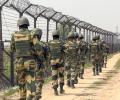
The United States has issued an advisory cautioning against travel to the immediate vicinity of the India-Pakistan border and the Line of Control due to terrorism and the potential for armed conflict and to the provinces of Balochistan and Khyber Pakhtunkhwa.

India has accused Pakistan of breaching an understanding reached earlier on Saturday to stop military actions. Foreign Secretary Vikram Misri said there have been repeated violations of the understanding since the evening, and that the Indian armed forces are giving an appropriate response.
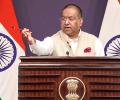
India expects Turkiye to strongly urge Pakistan to end its support to cross-border terrorism, said ministry of external affairs spokesperson, Randhir Jaiswal during the weekly briefing on Thursday.
The real heroes of Operation Sindoor were not the armed forces or political leadership, but the ordinary citizens of India who refused to fall into the trap of communal provocation, asserts Colonel Anil A Athale (retd).

On Thursday, intensified shelling along the Line of Control and reports of drone and missile activity triggered anxiety across IPL camps.

The US has issued a 'Do Not Travel' advisory for Jammu and Kashmir citing potential for terrorist attacks and violent civil unrest. The advisory, issued on Wednesday, comes a day after a deadly terror attack in Pahalgam that killed 26 people, mostly tourists. The advisory also warns against traveling within 10 kilometers of the India-Pakistan border.

US President Donald Trump has called for an end to the escalating tensions between India and Pakistan, expressing concern over the situation and offering to help resolve the conflict. Trump said he wants to see the two countries "stop" and work it out, adding that he has "good relationships" with both nations. He said he hopes the hostilities will end "very quickly", expressing sadness over the situation.

Meanwhile, a precautionary blackout has been enforfced in the multiple areas amid the esclating tensions between India and Pakistan.
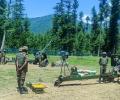
'The precision strikes were well planned and excellently executed. The world will be studying this operation.'
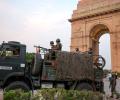
Bollywood celebrities have extended support to the nation and offered prayers for the safety and well-being of the people.
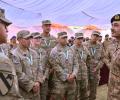
'Trump's sons, and the son of Trump's Mideast envoy Steven Witkoff, are in the crypto business and recently signed deals with Pakistan's crypto council.' 'It may not be coincidental that not long before the Trump-Munir meeting, the head of Pakistan's crypto council met with Trump's White House crypto policy czar.'
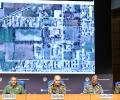
'We completely destroyed at least three posts, an ammunition depot, fuel storage facility, and gunnery, among other targets. Our retaliation was so devastating that it will take Pakistan at least 8-12 months to rebuild, possibly longer'
'Unlike the surgical strikes and the Balakot air strikes across the LoC, we have gone further inside Pakistan and raised the bar of escalation.'
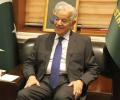
Last week, Information Minister Atta Tarar had said that 24-36 hours were important, fearing a possible strike by India. However, the time passed and there was no action by India.
 © 2026 Rediff.com - Advertise with us - Disclaimer - Privacy Policy - Sitemap - Feedback - About us - Terms of use - Grievances