

'Operation Sindoor is still ongoing.'
'The prime minister himself said that blood and water cannot flow together, that talks and terrorism cannot go together.'
'So how can we have a cricket match with a country that indulges in terrorism?'
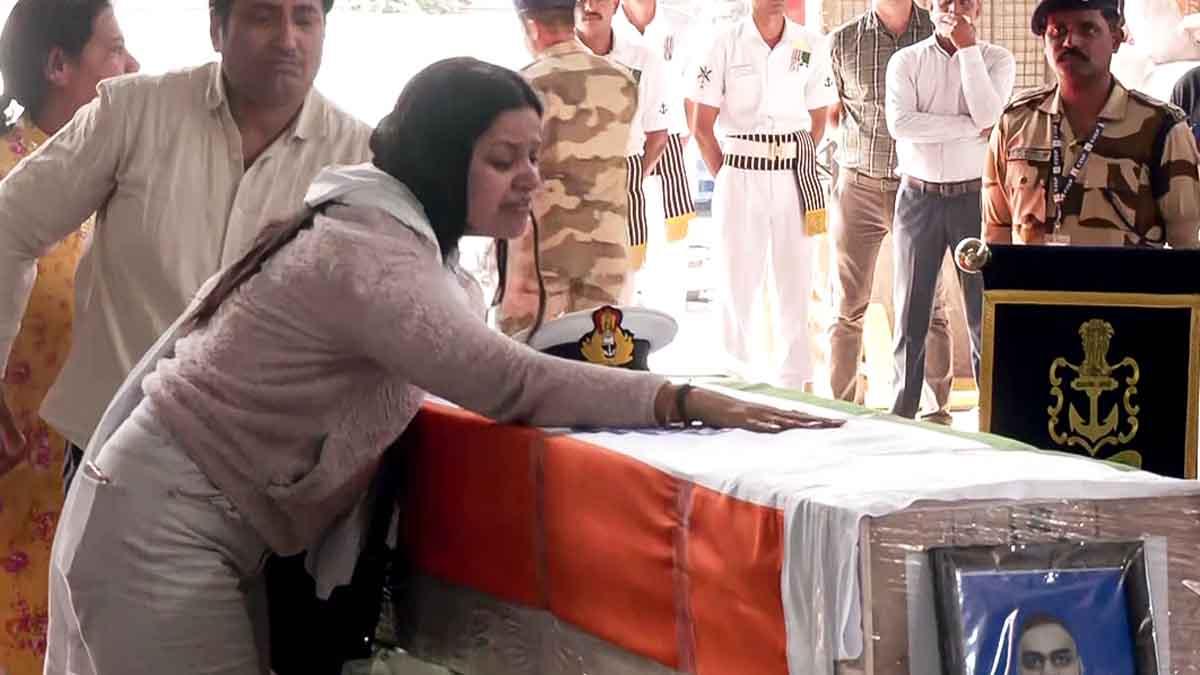
On April 22, 2025, terrorists ambushed a group of tourists in Pahalgam, Jammu and Kashmir, killing 25 Indian citizens and one Nepali national in one of the deadliest targeted attacks in recent years.
The massacre triggered widespread outrage across India, with the government vowing strong retaliation. On May 7, India launched Operation Sindoor, a calibrated military strike on terrorist camps across the Line of Control.
The government said the operation sent a 'clear and hard' message to Pakistan and reiterated its long-standing doctrine that 'blood and water cannot flow together'-- a reference to the decision to suspend the Indus Waters Treaty in protest against cross-border terrorism.
Yet, months later, the Centre has come under fire for permitting India to participate in the Asia Cup, which is being hosted in a hybrid format in the United Arab Emirates between September 9 and 28.
India is set to play against Pakistan in the UAE on September 14, 2025.
Critics argue this undermines the moral clarity of India's stand against terrorism. Among the sharpest voices is AIMIM MP Asaduddin Owaisi.
In an interview with Prasanna D Zore/Rediff, Owaisi slams the government for what he sees as a 'double standard'-- stopping trade, downgrading diplomatic ties, but allowing cricket to continue.
In your Parliamentary speech on July 28, you questioned the government's decision to allow India-Pakistan cricket matches just months after the Pahalgam terror attack, while trade and diplomatic ties remain severed.
Do you believe the Indian government is sending a contradictory message to the terrorists that even if you spill the blood of Indians, we'll play cricket?
You (the Government of India) are sending the wrong message to a country that has been sponsoring, promoting, aiding and abetting terrorism for years. What happened in Pahalgam would not have occurred without direct or indirect abetting by Pakistan's army and ISI.
When we have stopped all trade -- direct and indirect -- the ruling party argues this is a 'bilateral' matter. But we're not trading with them at all. The Wagah border is closed. The Indus Water Treaty is in abeyance. Their aircraft cannot use Indian airspace. Their ships cannot enter our waters. So where is the need to play this match?
Operation Sindoor is still ongoing. The prime minister himself said that blood and water cannot flow together, that talks and terrorism cannot go together. So how can we have a cricket match with a country that indulges in terrorism?
You asked whether the government had 'the courage to invite the families of Pahalgam victims' to watch the India-Pakistan match. Could you elaborate on that sentiment and the moral dilemma it reflects?
What I said is on record. Why should I need to elaborate further? It's self-explanatory.
So what is the reason you think that the government is allowing India to play against Pakistan in the Asia Cup?
That's a question you'll have to ask the government. As a member of Parliament and representative of my political party, I have opposed this decision to play with Pakistan, especially in light of what happened in Pahalgam.
Subsequently, we took action against nine terrorist headquarters, and on the night of the 8th and 9th (of May), the entire border was lit up from Gujarat to Rajasthan to Punjab to Jammu and Kashmir.
Today (on July 29), the prime minister said in his speech that Pakistan launched 1,000 missiles, loitering munitions and drones against India. That is why I am questioning the government.
Despite these statements by the prime minister why do you think the government is still letting India play Pakistan?
I'm not a government spokesperson. You'll have to ask the government. How can I speak on their behalf?
Do you see a disconnect between the government's posture on India's strategic security and allowing sports on the pretext of it being a bilateral issue? What broader signal might this inconsistency send internationally?
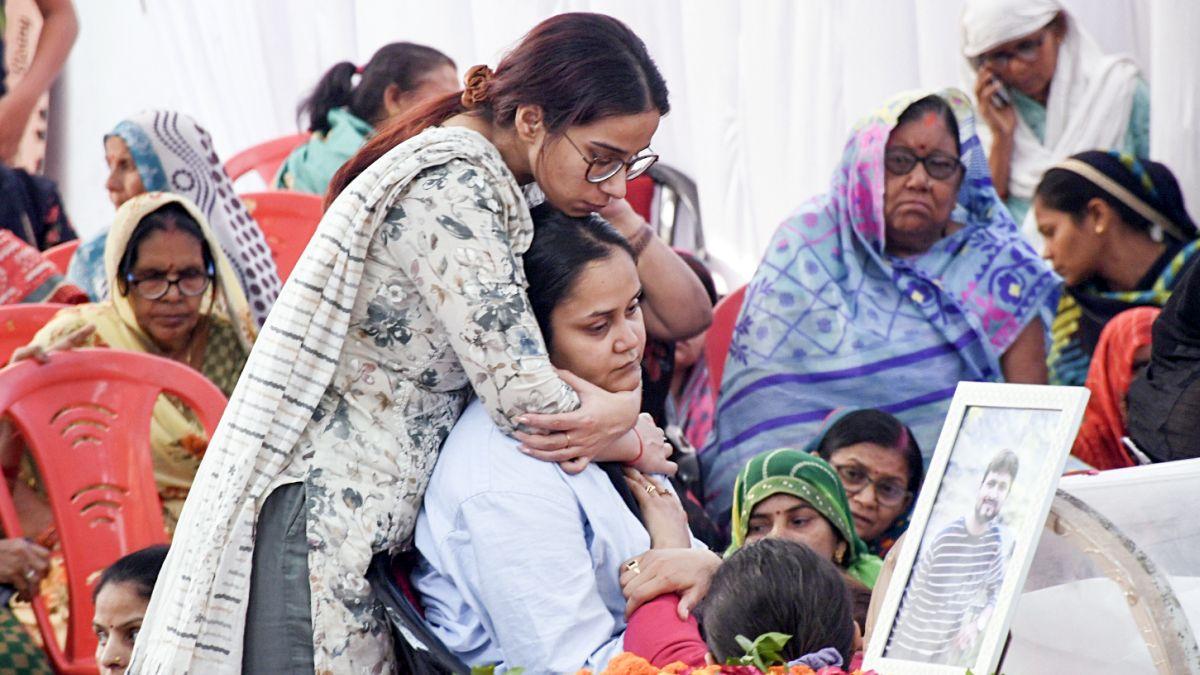
Every political party, including mine from day one, has demanded that Pakistan be put on the FATF list (Financial Action Task Force is an international watchdog that monitors countries for weak anti-money laundering and counter-terrorism financing measures).
This morning (July 29 in Parliament), the (Union) home minister (Amit Shah) said that forensic reports have matched the weapons used by the three terrorists killed yesterday in Dachigam.
The forensic reports are clear -- those weapons (two AK-47s, one American M9) and empty shells have been matched with those used to kill 25 Indians at Pahalgam. Their bodies have also been identified by people who gave them food and shelter.
We must bring this proof to the attention of all important countries worldwide. The next automatic step the government must take is to bring Pakistan to the FATF grey list. Whether we're talking to G7 countries or GCC countries, this is proof of these killers. The home minister also said their names appear on Pakistan's wanted list.
These are three important pieces of evidence. We knew they came from Pakistan. We knew they were Pakistani-sponsored. When we're asking for Pakistan to be put on FATF, I don't know how we can play sports with them. It will be very disheartening to the families who lost their loved ones at Pahalgam.
(Though Pakistan was removed from the grey list in October 2022), the fresh evidence of Pakistani involvement in terrorism (as categorially stated by the home minister in Parliament on July 29) -- including forensic reports and weapons matching from the Pahalgam attack -- the country should be placed back on this international monitoring list for terrorism financing.
Are you going to yourself boycott the India-Pakistan matches when they will be aired and would make efforts to create public opinion for the boycott of these matches?
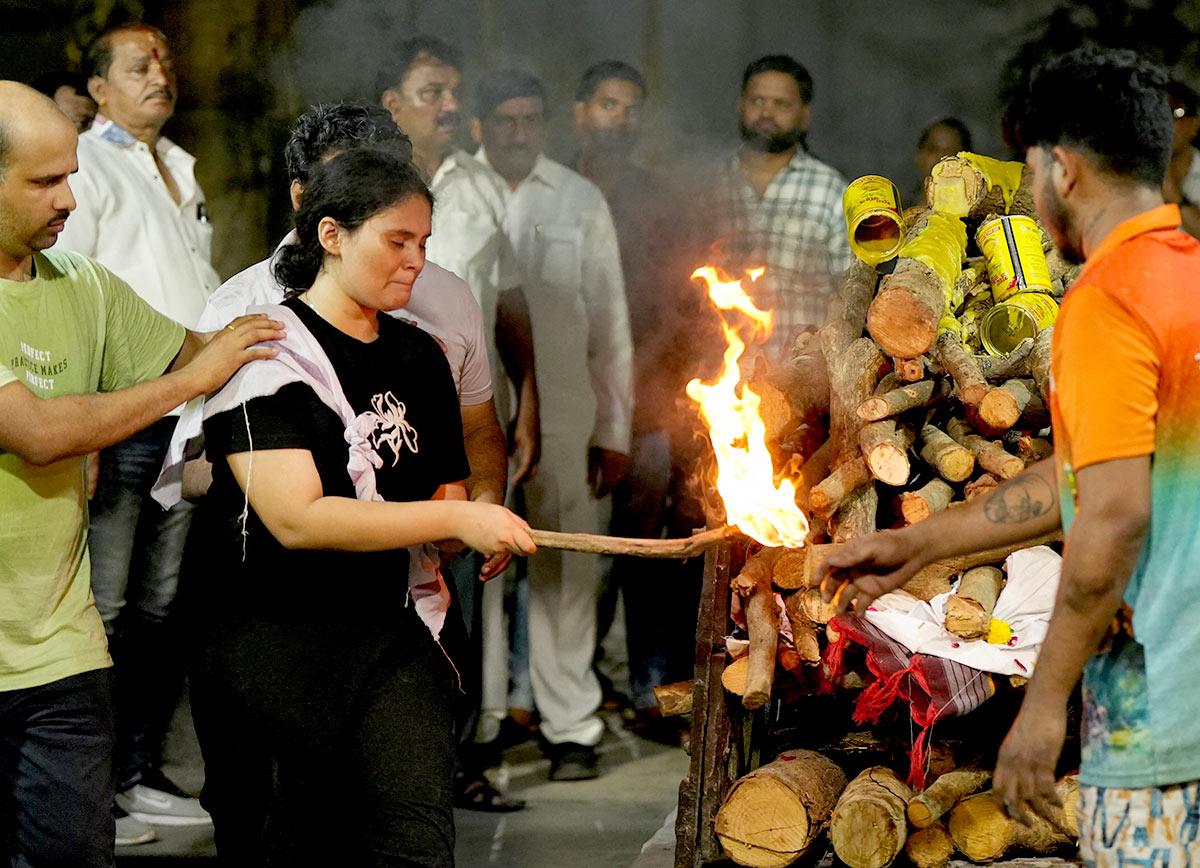
I have said in Parliament that my conscience does not permit me to watch this cricket match. I will not watch it. Everyone has an opinion, and this is mine. This is what I've said.
Do you plan to create public opinion against India playing Pakistan?
What I said in Parliament, the entire nation heard. That's good enough. When we speak in Parliament, we're not only addressing the government but also speaking to the biggest panchayat of our country. The whole country hears what their elected representatives are saying.
I have laid down my opinion. I will not force anyone or stop anyone, but everyone has the right to freedom of expression. It's up to the people what they want to do. I cannot impose my views on them.
As a citizen of India and as an elected representative, what message would you like to give the people of India?
I have given my message. It's up to the people and the government. Can anyone impose their views on others? Everyone has a Constitutional right.
Would you believe that this government has double standards when it comes to playing cricket with Pakistan?
I am surprised that this government has allowed our cricket team to play a match with Pakistan at this point in time.
When we have no diplomatic relationship whatsoever, we have thrown out seven or eight officers of the Pakistani embassy in Delhi. We are not issuing visas. We are not allowing any Pakistani, even those seeking medical treatment, to come to India.
No trade is going on directly or indirectly. Now, how can you say this (the cricket match between India and Pakistan) is a bilateral thing?
The skies are not going to fall if we don't play (Pakistan) for some time. That is my view. But at the end of the day, I cannot superimpose my views on others.
Would you ask the Indian cricket team to boycott matches with Pakistan?
I don't want to go to that extent. My question was to the government; they (the Indian cricket team) are playing only because the government has allowed them. So my representation and opposition was to the government, and I've done my job.
Do you think such contradictory messages embolden the terrorists in Pakistan and their masterminds in Pakistan?
You must ask the ruling party all these questions. I cannot answer them.



 © 2026