

India has to fill in all the critical gaps in missiles, ammunition, sensors and stockpile in the fastest possible manner, focusing on the critical instruments that worked this time, asserts Shekhar Gupta.
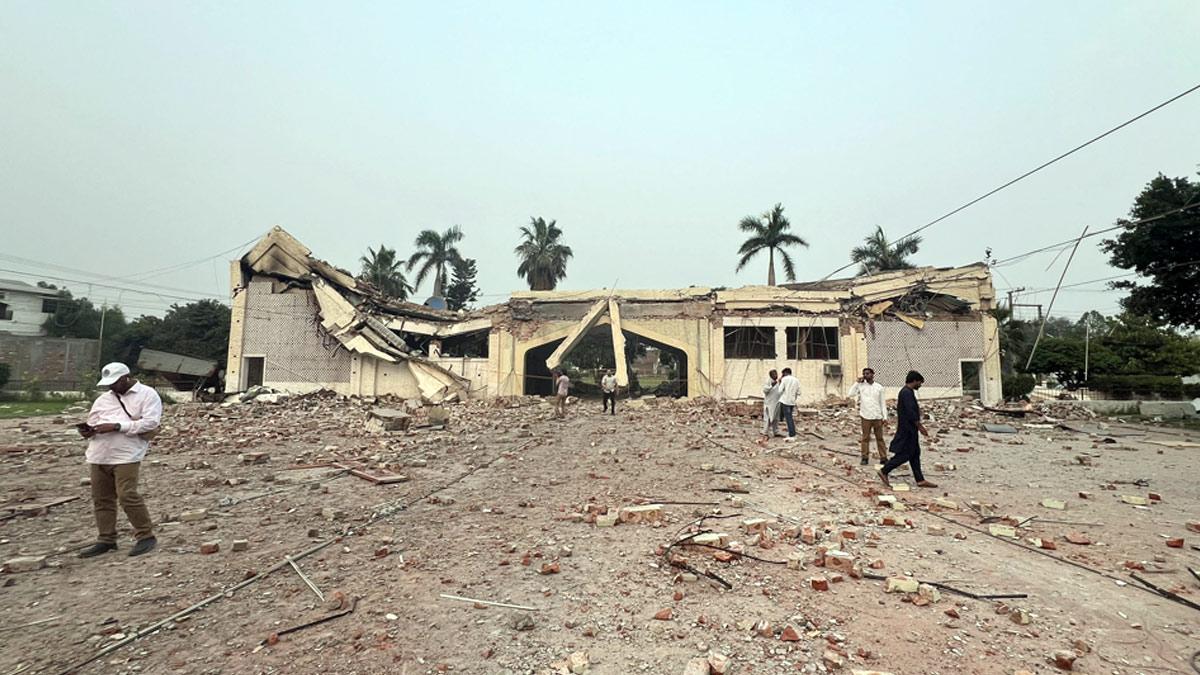
While it is only India that still formally calls Operation Sindoor an unfinished business, both countries are seeing it as something of a trailer.
Or a prelude to the next round. Not an issue fought to any conclusion.
The subcontinent's record tells us this is not the best place to be in. We have a precedent in the short Kutch conflict of April 9, 1965.
Both sides called a truce, but the first full-scale India-Pakistan war followed five months later.
Pakistan launched the war having learned the wrong lessons from Kutch. We might hope for better sense six decades later. But hope isn't a plan or strategy.
It takes a lot for Pakistan to accept defeat, liberation of Bangladesh in 1971, or a clear capitulation in Kargil, for example.
Anything less than inarguably decisive, you can count on them to call it a victory.
And once they psych themselves into a 'see we won that little war' state of mind, you can expect them to come back, sooner rather than later.
At this point, each side is drawing its own lessons. Just hours before I sat down to write this column, Lieutenant General Rahul Singh, one of the three deputy chiefs of army staff, had reflected on some lessons learnt and pointers for the future.
This is good thinking. At least one side (the good side, us), isn't mindlessly celebrating victory, but thinking ahead. This too has parallels with Kutch.
India drew its lessons, too, more sensibly and realistically, and the result was a strategic victory in the subsequent war.
A strategic victory for India because Pakistan was the only side with an objective (grabbing Kashmir) and started the war.
The objective was denied, and it was forced back on the defensive across the entire frontier.
A stalemate, with the aggressor and first-mover Pakistan on the defensive, was victory for India.
In the end, the difference was the lesson the two sides drew from Kutch.
India was now preparing for a counter-offensive towards Lahore and Sialkot, in case Pakistani pressure on Kashmir mounted.
It's a recorded fact that it was sometime in the summer following the Kutch ceasefire that then defence minister Y B Chavan, then home minister Gulzari Lal Nanda along with top army commanders met at the XI Corps headquarters in Jalandhar, and conferred on plans to open new fronts into Pakistani Punjab if needed.
This plan, Operation Riddle, was months in the making.
This was a post-Kutch learning and preparation for India. The most succinct and uncomplicated reading I would recommend is War Despatches by Lieutenant General Harbakhsh Singh, then Western Army commander.
Western Command then included J&K too. Kutch is our most forgotten war, though it lasted much longer (April 9 to July 1) than the 87 hours of Op Sindoor.
There are parallels in the learnings from both.
The 'lesson' Pakistan learnt became its establishment's grandest miscalculation. It concluded that Lal Bahadur Shastri accepted defeat in agreeing to a ceasefire and international mediation.
That was just the impetus it needed to launch Operation Gibraltar first (massive armed infiltration in Kashmir) followed by Operation Grand Slam, the big armour thrust aimed at taking Akhnoor and cutting off much of Kashmir.
While we hope and pray for peace and stability, we have to keep that history in mind. The Pakistani military's brain, I have said multiple times, is not located in its head.
Theirs is located somewhere lower down in the anatomy that I'd rather not elaborate on.
The nation with the higher stake in peace and progress must prepare for the miscalculations of an adversary that compulsively thinks tactically.
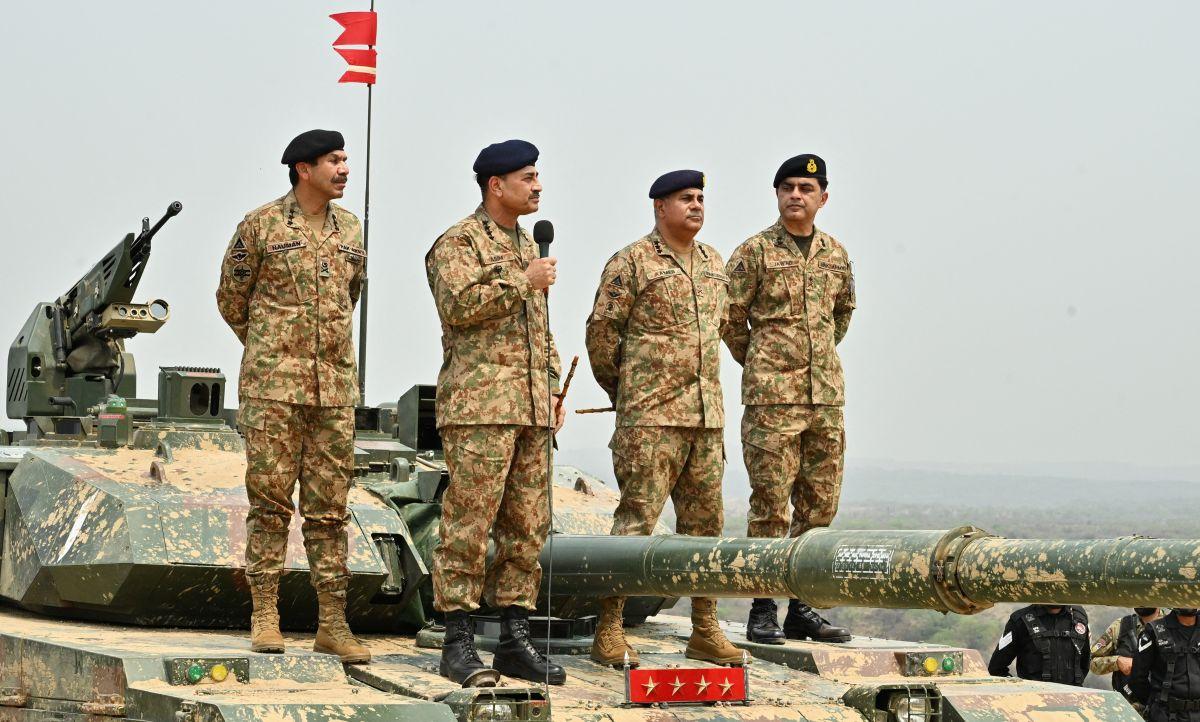
As we had noted, Asim Munir has limited time. While Pakistan's army will continue to own the country, his own lease over his army isn't permanent.
In time, probably over the next few months, he will see challenges to his unconstitutional and un-institutional power from his uniformed peers and the politicians.
What's the meaning of un-institutional? In the past, Pakistan's military dictators have had their army take over power formally as an institution.
In this indirect takeover, not only has Munir collected that additional star, he has also grabbed political power as an individual. This is too cosy to last. He's the first to know it.
That's why you can count on his impatience leading to a new adventure. He'd think, learning erroneously from Sindoor as his military ancestors did from Kutch, that another skirmish will be good.
That India's stakes in stability, its economic growth are too high for it to risk a longer conflict.
The big powers will move in. He would think short conflicts like these will keep India off-balance, destabilise the Kashmir Valley but most importantly, protect his own public support.
He'd think he has India gamed. A terror attack in Kashmir, the inevitable military response from India, and then a few days of dust-up.
It will also keep the region 'internationalised'.
His first move with Pahalgam, he'd think, succeeded in shifting the world's understanding of the issue in the subcontinent from terrorism to nuclear conflict.
So he's got something to work on. We've already told you where in their bodies their brains rest.
We can't time when this miscalculation will come, but it's nearly inevitable. India, therefore, needs a graded plan -- for six months, two years, which takes us closer to the next general election, and five years, respectively.
Five years should be the deadline for us to build deterrence to a level where this Munir, or another, won't have the same temptations.
For the six months India has to fill in all the critical gaps in missiles, ammunition, sensors and stockpile in the fastest possible manner, focusing on the critical instruments that worked this time.
Brahmos and SCALP missiles, long-range 'smart' artillery shells (Excalibur category), make the multi-layered air defences much denser.
Naval platforms should also have their vectors topped up and war wastage reserves built.
Most of this can be done domestically and on a war footing.
Not the usual Acceptance of Necessity (AON) today and trials 18 months hence. Remember, you said Op Sindoor is not yet over.
Over two years, India must have at least two more (more than that isn't impossible) of Beyond Visual Range (BVR) capable fighters.
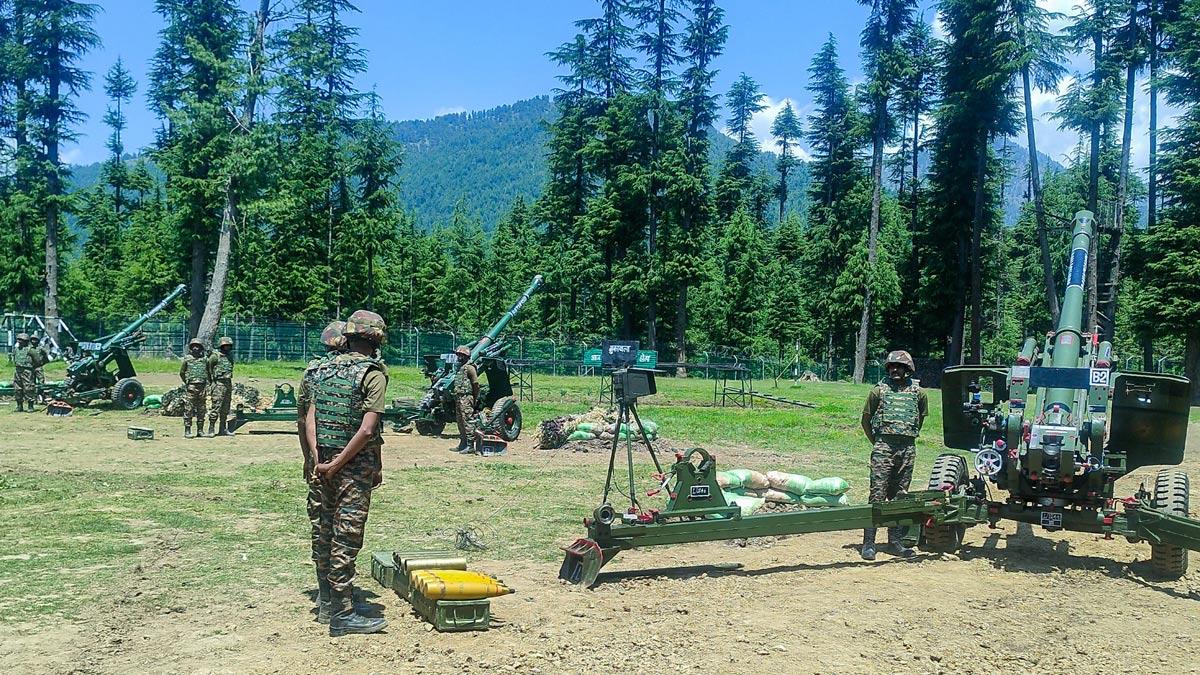
Long-range artillery should be improved and increased to a level that it becomes a pulverising deterrent in itself.
You can have most of it made here and some smart ammunition bought from overseas. This will be quality with quantity.
And over five years, begin with upping your defence spending from 1.9 to 2.5 per cent of GDP over the next three years, and then keep it there for the following two.
It will be a stretch, but India can afford it.
Our national resolution has to be that if we get five years, there will never be an occasion when India will be outranged, out-gunned or out-watched in a conflict with Pakistan even for a few hours. Despite the Chinese.

Focus on economic growth, diplomacy and alliances alongside. All of that goes without saying. But you cannot do any of this without guaranteeing your own security.
I'd borrow the advice to India from Israel's Ambassador Reuven Azar at a conclave: Strengthen your defence and liberalise your economy, Because, he elaborated, for investors to come in, they have to have the confidence that your defence is strong.
To think that this is a strategic lean-back period will be an unforgivable historic blunder.
This is a lean-forward, all-hands-on-the-deck moment. The success of Op Sindoor is a success to savour, but more importantly, it's impetus for the future.
By special arrangement with The Print
Feature Presentation: Aslam Hunani/Rediff





 © 2026