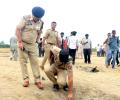
Indian Armed Forces brought down a number of these drones using kinetic and non-kinetic means.

Lieutenant General Shakti Gurung deserves to be complimented in telling his life story and that of his people, as subaltern communities within this vast and diverse nation of ours clamour for recognition and a plea for their voices to be heard and their aspirations to be met, notes Lieutenant General Gautam Moorthy.
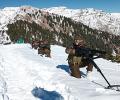
A brief exchange of fire took place along the Line of Control (LoC) in the Poonch district of Jammu and Kashmir on Sunday. Indian Army soldiers retaliated to fire from a forested area across the LoC, and the exchange lasted for a short period. No damage was reported on the Indian side. The incident comes after several cross-border incidents last week, including an IED explosion that killed two army personnel. The ceasefire violation along the borders in J&K has become infrequent since India and Pakistan renewed the ceasefire agreement on February 25, 2021.

The Indian Air Force conducted precision strikes on terror hideouts in Pakistan, targeting a Jaish-e-Mohammad communication network housed in a primary health centre in Tehra Kalan village. The communication setup was essential for planning and coordinating activities with infiltrated terrorists in Jammu and Kashmir. The strikes aim to dismantle the communication network and hinder the terrorists' ability to operate.
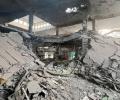
'I am worried that Pakistan will still feel compelled to take substantive military action beyond this apparent drone activity.' 'If so, the crisis could persist for a while more and dangerous days are still ahead.'

Following the Pahalgam terror attack, the Indian Army launched Operation Sindoor, targeting Pakistani terror infrastructure and posts in the Poonch sector of Jammu and Kashmir. Over 600 artillery shells were fired in three days, decimating 20 Pakistani posts used for infiltrating terrorists into India. The precision strikes crippled enemy logistics, material, and morale, prompting retaliatory attacks by Pakistan on civilian areas. Despite the retaliation, Indian Army officers described the operation as a success, highlighting the high morale of the troops and the effective coordination between artillery and air defense units. The article details the intensity of the artillery shelling and the impact on both sides, highlighting the strategic significance of the Poonch sector and the ongoing tension between India and Pakistan.

Congress leader Udit Raj criticized party colleague Shashi Tharoor for his reported remarks that India breached the Line of Control (LoC) for the first time during the 2016 surgical strike on a terror base, saying he should be declared a "super spokesperson of the BJP". Raj argued that India had crossed the LoC in 1965 and 1971, and that the UPA government had also conducted surgical strikes. Tharoor had reportedly said that India breaching the LoC to conduct a surgical strike was "something we had not done before". This is not the first time Raj has criticized Tharoor for his comments on India-Pakistan relations. Last month, Raj had hit out at Tharoor for his reported "no country has 100-per cent foolproof intelligence" remarks, questioning how Tharoor could be giving the BJP a "clean chit" on the Pahalgam terror attack. Tharoor had hit back at Raj, saying the latter is a former BJP MP and "is better qualified to understand who speaks for the BJP".
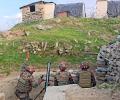
A bench of Justices Navin Chawla and Shalinder Kaur rejected the petition by the Indian Army Lieutenant, who served as a 'Troop Leader' of a squadron, against the termination order passed on March 3, 2021, that dismissed him from the Indian Army without pension and gratuity.

This came after Pakistan People's Party chairman Bilawal Bhutto Zardari on Saturday stated that Pakistan's Prime Minister Shehbaz Sharif had tasked him to lead a delegation to present Pakistan's case on the recent escalations of tensions between the two nations.
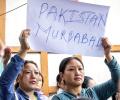
The Pakistani flag has been removed from the historic table at Raj Bhavan in Shimla where the Simla Accord was signed, a day after Pakistan suspended the 1972 agreement. The suspension came in response to India's retaliatory actions following a terrorist attack in Jammu and Kashmir. The Simla Accord, signed by Indira Gandhi and Zulfikar Ali Bhutto, aimed to settle issues bilaterally and maintain peace at the Line of Control. However, Pakistan's frequent violations of the agreement have led to its suspension, raising concerns about the future of India-Pakistan relations.
11, 13, 15 are not some random odd numbers but the number of days that Prime Minister Narendra Modi took to act against Pakistani terror strikes on Indian soil.
'Will this near-war, India's strongest military response so far, buy India another seven years of deterrence?' asks Shekhar Gupta.
India fully utilised its military modernisation budget in 2024-2025 -- the first time in five years -- and signed a record Rs 2 trillion defence contracts.

The Pakistan Army continued shelling along the Line of Control (LoC) in four sectors of Jammu and Kashmir, prompting a befitting response by the Indian Army, officials said on Thursday. The intensity of cross-border firing was less than Wednesday, when Pakistan Army carried out one of the most intense artillery and mortar shelling in years targeting the forward villages in J-K following missile strikes by India as part of 'Operation Sindoor'.

Pakistan military spokesperson Lieutenant General Ahmad Sharif Chaudhry told a hurriedly called press conference in Islamabad at around 4 am that th Pakistan air force's Nur Khan (Chaklala, Rawalpindi), Murid (Chakwal) and Rafiqui (Shorkot in Jhang district) airbases were targeted.
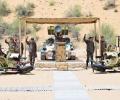
'War is not an answer. War is not a solution.' 'Deterrence is a solution. We should have the stick with us with which we can beat Pakistan.'

Tensions between the Congress and its leader Shashi Tharoor escalated on Thursday with the party saying he was very much part of their family but had erred in claiming that surgical strikes against Pakistan were held for the first time in 2016.

Pakistan's decision to talk to India on May 10 stemmed from realisation that it will suffer more if its operation continues, Gen Chauhan said.

A series of blasts took place in Srinagar city as the security agencies brought down a drone that was seen hovering over Batwara area of the city, close to an army installation, officials said.

Tensions between India and Pakistan are escalating following last week's dastardly terror attack in Pahalgam that claimed 26 lives.
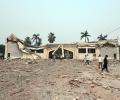
A former Pentagon official, Michael Rubin has said that India targeted terror infrastructure with precision, and it was able to blunt Pakistan's response following the recent strikes.
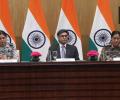
Colonel Sofiya Qureshi revealed that 300 to 400 drones were deployed across 36 locations, with several being shot down by Indian forces using both kinetic and non-kinetic methods.
"It is shocking to note that Turkey, the second-largest arms supplier to Pakistan after China, has played a key role in modernising Pakistan's navy and enhancing its aerial warfare capabilities. "This defence collaboration is not just commercial; it is ideological, targeting the stability of South Asia and emboldening Pakistan's military adventurism," SJM national co-convenor Ashwini Mahajan said in a statement.

India's Foreign Secretary Vikram Misri said on Thursday that the choice of de-escalation is with Pakistan, as India only responded to the April 22 Pahalgam terror attack, which killed 26 people. He added that Pakistan has been escalating the situation with cross-border terrorism against India for decades.

Tharoor said his remarks were preceded by a reference to the several attacks that have taken place in recent years alone, during which previous Indian responses were both restrained and constrained by India's responsible respect for the LoC and the IB.
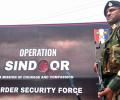
Their shared brief: To assert India's case with clarity, rebut hostile narratives, and secure enduring partnerships for global counter-terror cooperation.

India's recent missile strikes on nine terrorist locations in Pakistan and Pakistan-occupied Kashmir (PoK), including Bahawalpur, mark a significant escalation in the long-standing military tensions between the two nations. This article provides a historical overview of the Indo-Pak military confrontations, tracing their roots back to the 1947 war following India's independence and the partition of the sub-continent, and highlighting key conflicts such as the 1965 war, the 1971 Bangladesh Liberation War, the 1999 Kargil War, the 2016 Uri attack, and the 2019 Pulwama attack.

In a post on X, the additional directorate general of public information posted: "Pakistan again violates the Ceasefire Agreement by firing artillery in Bhimber Gali in the Poonch-Rajouri area. Indian Army is responding appropriately in a calibrated manner."

Authorities in Jammu and Kashmir on Sunday asked border villages residents, who were evacuated to safer places in view of cross border shelling by Pakistan, not to rush back to homes as they are yet to sanitise and clear these areas of any unexplored shells.

The reopening brought a sense of relief to students, teachers, and parents across the region.
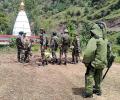
'Unfortunately, India and Pakistan could learn a 'lesson' from this conflict that will make them more likely to use these weapons against each other in the future.' 'Rounds of missile and drone attacks could be more routine features of their hostility, just like artillery fire has become a familiar fact of life along the Line of Control.'
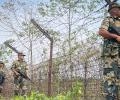
The Border Security Force (BSF) is set to receive government approval for 16 new battalions, comprising around 17,000 personnel, and two forward headquarters for its western and eastern commands. The move aims to strengthen security along the India-Pakistan and India-Bangladesh borders, respectively. The new battalions and headquarters are part of a larger plan to address evolving security dynamics and challenges in the border regions.

Abdullah, who visited the shelling-affected areas of Uri, including Salamabad, Lagama, Bandi and Gingal in north Kashmir's Baramulla district, also said that he would take up the demand for building individual bunkers in these areas with the Centre.

A senior government official confirmed that after a meeting with other stakeholders, the decision has been taken and airlines and airport authorities have been informed about it.
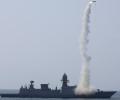
The visuals show the BrahMos anti-ship and anti-surface cruise missiles being launched from a fleet of warships, including Kolkata-class destroyers and Nilgiri and Krivak-class frigates, reaffirming the Navys operational prowess.

The political and ideological differences between the Congress and Shashi Tharoor is no longer a matter of whispers.

China appears determined to upgrade Pakistan's military capabilities, sufficient to ensure local parity with India, alerts former foreign secretary Ambassador Shyam Saran.

Pakistani drones were intercepted by Indian air defence in Jaisalmer. Explosions were heard and flashes seen in the sky.
For the first time, the Data Security Council of India assembled a joint task force to source threat intelligence at the origin and ensure coordinated action across the cybersecurity spectrum.
'Pakistan is economically very weak and will not be able to sustain a war for long.'
 © 2026 Rediff.com - Advertise with us - Disclaimer - Privacy Policy - Sitemap - Feedback - About us - Terms of use - Grievances